Get your free personalized podcast brief
We scan new podcasts and send you the top 5 insights daily.
Even when world leaders agree on climate action, their commitments are fragile. As administrations change, countries frequently reverse course (e.g., the U.S. and the Paris Agreement), destroying the confidence needed for sustained global effort.

Related Insights
While it may be technically possible to power the world with solar and wind, the speaker argues it's practically infeasible. The required global "super grid" to manage intermittency and geography involves political and financial capital that makes it a fantasy.
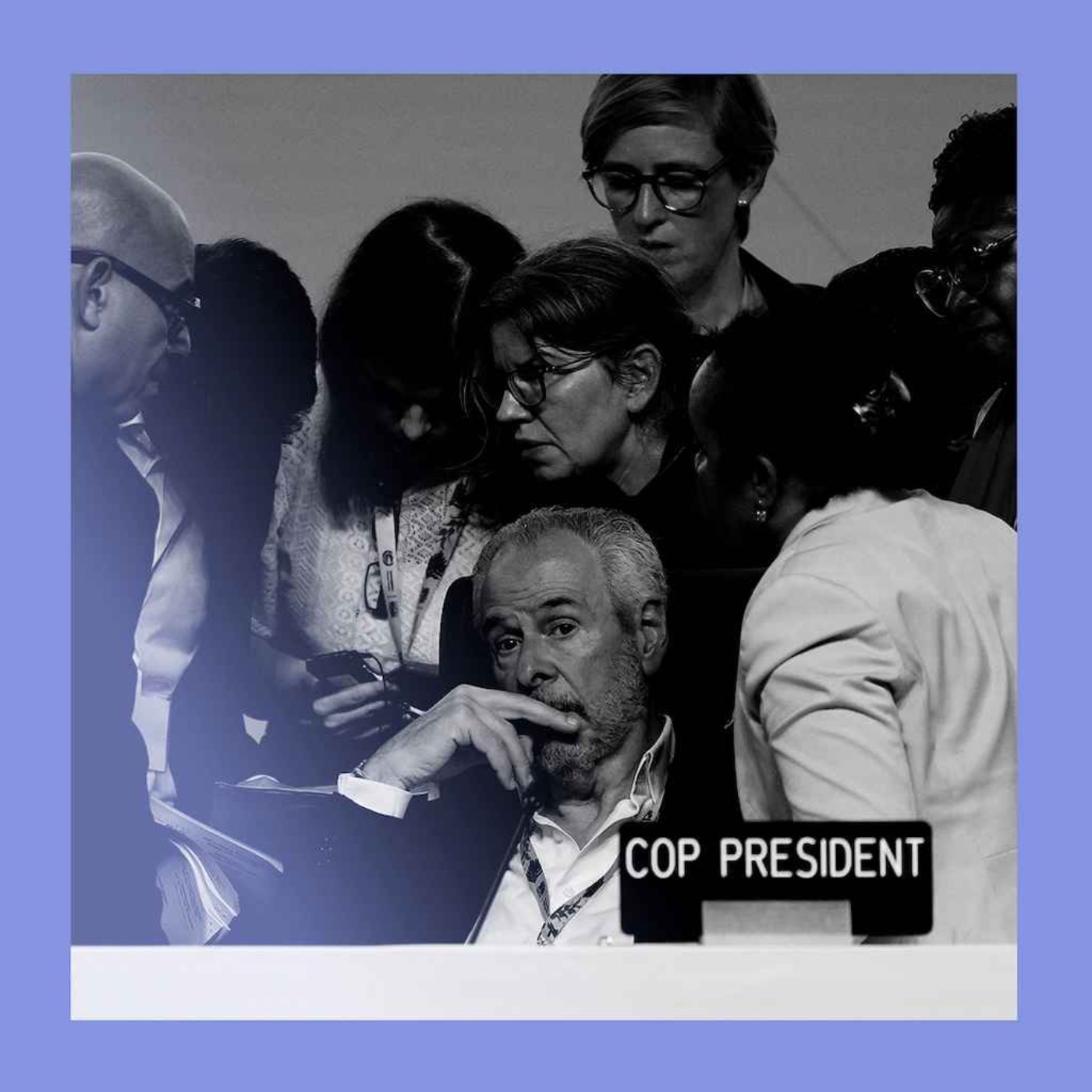
While individual COP meetings are increasingly viewed as ineffective, the cumulative impact of the multilateral process is significant. Climate models following the 2009 Copenhagen COP projected 3.5°C of warming, whereas today's projections are down to 2.3-2.5°C, demonstrating the process's underlying value despite recent frustrations.
Trump's 'hokey pokey' with tariffs and threats isn't indecisiveness but a consistent strategy: make an agreement, threaten a severe and immediate penalty for breaking it, and actually follow through. This makes his threats credible and functions as a powerful deterrent that administrations lacking his perceived volatility cannot replicate.

Despite developing the world's cheapest solar power, China remains addicted to coal for political, not economic, reasons. Countless local governments in poorer regions depend entirely on coal mining for revenue and employment. This creates a powerful political inertia that the central government is unwilling or unable to overcome, prioritizing local stability and energy security over a complete green transition.

Deteriorating debt fundamentals are a known long-term risk, but markets often remain complacent until a specific political event, like an election or leadership change, acts as a trigger. These upheavals force an immediate re-evaluation of what is sustainable, transforming abstract fiscal worries into concrete, costly market volatility.

Frustrated by the inability to include a fossil fuel phase-out roadmap in the official COP30 text, the Brazilian presidency is pursuing the initiative independently. This signals a shift where critical climate actions may now occur in parallel to, or even bypass, the formal UN multilateral structure, representing a fragmentation of climate governance.
Businesses can adapt to stable, even unfavorable, policies. However, constant, unpredictable policy changes create an environment of ambient chaos where long-term capital investment is impossible. The lack of continuity, not the specific tariffs, is the primary reason industrial construction spending has turned negative.

The traditional relationship where economic performance dictated political outcomes has flipped. Now, political priorities like tariff policies, reshoring, and populist movements are the primary drivers of economic trends, creating a more unpredictable environment for investors.

The political challenge of climate action has fundamentally changed. Renewables like solar and wind are no longer expensive sacrifices but the cheapest energy sources available. This aligns short-term economic incentives with long-term environmental goals, making the transition politically and financially viable.

Geopolitical adversaries with long-term leadership, like Iran, view the U.S.'s frequent changes in administration as a temporary inconvenience rather than a fundamental policy shift. They see the U.S. as an "obnoxious guy on the bus" whom they can simply ignore and outlast by staying their course.
