Get your free personalized podcast brief
We scan new podcasts and send you the top 5 insights daily.
Josh Wolf credits his cynical, "squinty-eyed" worldview from growing up around Coney Island's "carnival barkers" and "hucksters" as a crucial skill for distinguishing brilliant founders from frauds in venture capital.
![[REPLAY] Josh Wolfe – Seeing the Lux (Capital Allocators, EP.65) thumbnail](https://static.libsyn.com/p/assets/f/b/7/6/fb76e1c8bfb69e8dd959afa2a1bf1c87/CA_Square_logo_light_background_6.26.24.jpg)
Related Insights
Venture capitalists thrive by adopting one of two distinct personas: the "in the flow" consensus-driver focused on speed and connections, or the "out of the flow" contrarian focused on deep, isolated work. Attempting to straddle both paths leads to failure.

The worst feeling for an investor is not missing a successful deal they didn't understand, but investing against their own judgment in a company that ultimately fails. This emotional cost of violating one's own conviction outweighs the FOMO of passing on a hot deal.

Growing up in the Midwest instills humility and strong relationship-building skills, assets in venture capital. However, this can translate into a lack of aggression and pushiness, a potential handicap in the hyper-competitive Silicon Valley environment where it can lead to missed opportunities early on.

Disagreeing with Peter Thiel, Josh Wolf argues that studying people who made willful mistakes is more valuable than studying success stories. Analyzing failures provides a clear catalog of what to avoid, offering a more practical and robust learning framework based on inversion.
Investor Mark Rampolla argues that a brand's potential is capped by its leader's personal development. His firm seeks self-aware founders committed to "inner work," believing this psychological resilience is a key predictor of building a billion-dollar company.

Investors naturally develop 'scar tissue' from past failures, leading to increased cynicism that can prevent them from backing ambitious, non-obvious ideas. The best investors intentionally fight this bias by balancing their experience with a 'beginner's mind.' While pure naivete is dangerous, so is excessive cynicism, and finding the intersection between the two is critical for venture success.
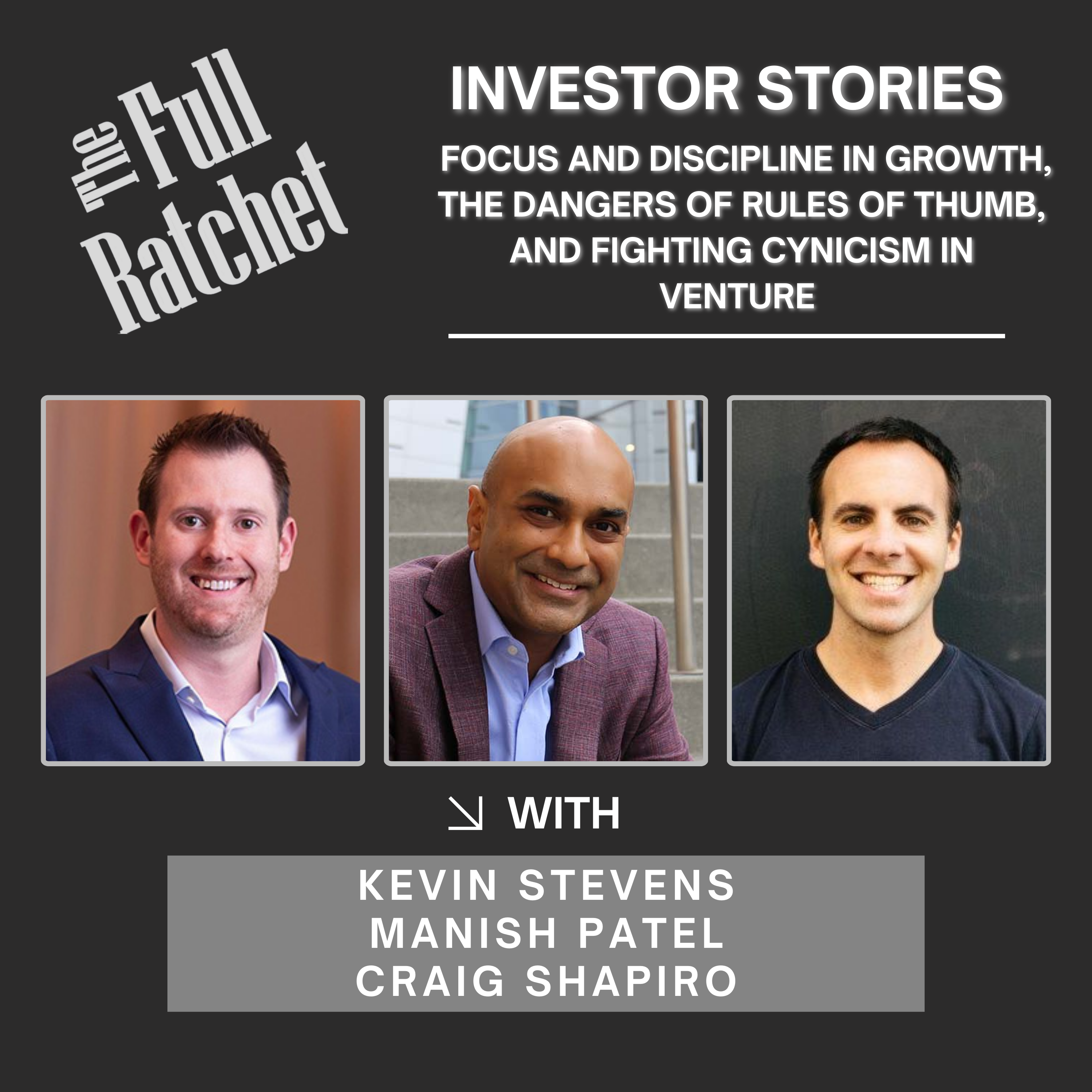
Experienced VCs may transition from rigid analytical frameworks to an intuitive search for outliers. Instead of asking if a business plan 'makes sense,' they look for unusual qualities that challenge their worldview and hint at massive potential.

Lonsdale recounts passing on brilliant founders with seemingly terrible ideas, only to watch them pivot and build billion-dollar companies like Cursor. The lesson for early-stage investors is to prioritize backing exceptional, world-class talent, even if their initial concept seems flawed, as they possess the ability to find a winning strategy.

The most valuable skill from scouting isn't talent evaluation, but developing a "BS detector" from interviewing hundreds of prospects. Cross-referencing claims and watching people act in their self-interest provides a powerful lesson in the human element of due diligence and the overriding power of incentives.

The most driven entrepreneurs are often fueled by foundational traumas. Understanding a founder's past struggles—losing family wealth or social slights—provides deep insight into their intensity, work ethic, and resilience. It's a powerful, empathetic tool for diligence beyond the balance sheet.
![Martín Escobari - Inside General Atlantic - [Invest Like the Best, EP.449] thumbnail](https://megaphone.imgix.net/podcasts/90e6e3e6-c984-11f0-ae5f-27bb851bdc56/image/608fac468f77cb3014e96336896d96de.jpg?ixlib=rails-4.3.1&max-w=3000&max-h=3000&fit=crop&auto=format,compress)