Get your free personalized podcast brief
We scan new podcasts and send you the top 5 insights daily.
Google is sidestepping a direct confrontation with ChatGPT's text-based dominance. Instead, it's leveraging viral, multimodal models like NanoBanana to drive user acquisition through creative use cases, a domain where OpenAI was previously seen as the leader.

Related Insights
Historically criticized for poor productization, Google is showing a turnaround. Gemini features like 'Dynamic View,' which creates interactive presentations from prompts, demonstrate a newfound ability to translate powerful AI into novel, user-centric products, challenging OpenAI's lead in product-led growth.

While today's focus is on text-based LLMs, the true, defensible AI battleground will be in complex modalities like video. Generating video requires multiple interacting models and unique architectures, creating far greater potential for differentiation and a wider competitive moat than text-based interfaces, which will become commoditized.
Google's strategy of integrating its AI, Gemini, directly into its widely-used Chrome browser gives it a massive distribution advantage over standalone tools like ChatGPT. By making AI a seamless part of the user's existing workflow, Google can make its tool the default choice, which marketers must optimize for.

Contrary to popular narrative, Google's AI products have likely surpassed OpenAI in monthly users. By bundling AI into its existing ecosystem (2B users for AI Overviews, 650M for the Gemini app), Google leverages its massive distribution to win consumer adoption, even if user intent is less direct than visiting ChatGPT.

While ChatGPT is still the leader with 600-700 million monthly active users, Google's Gemini has quickly scaled to 400 million. This rapid adoption signals that the AI landscape is not a monopoly and that user preference is diversifying quickly between major platforms.

While ChatGPT still dominates (90% usage), Google Gemini has surged from 33% to 51% adoption in just one year. This rapid growth is likely driven by its deep integration into the Google Workspace ecosystem that businesses already use and pay for.

As competitors like Google's Gemini close the quality gap with ChatGPT, OpenAI loses its unique product advantage. This commoditization will force them to adopt advertising sooner than planned to sustain their massive operational costs and offer a competitive free product, despite claims of pausing such efforts.
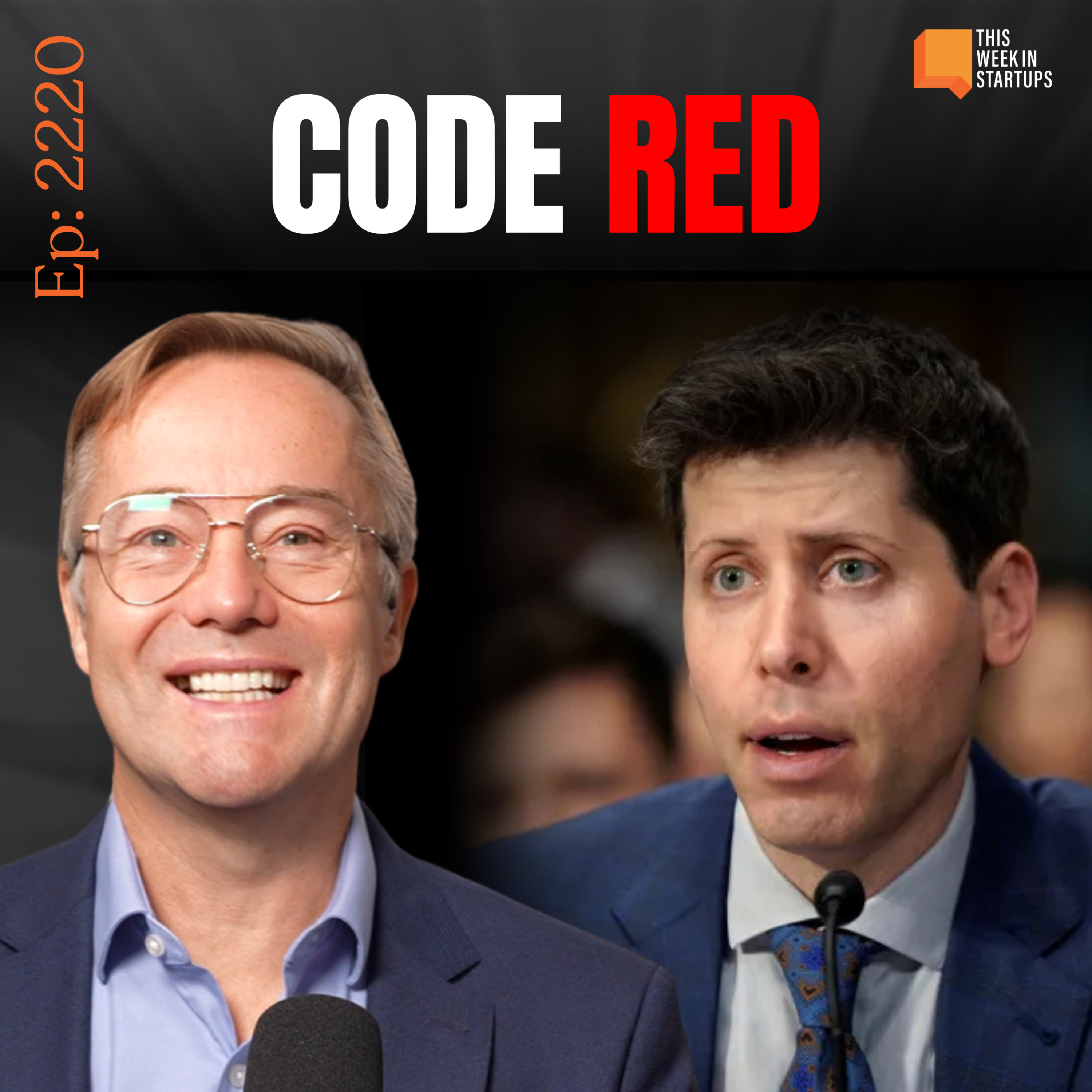
OpenAI is now reacting to Google's advancements with Gemini 3, a complete reversal from three years ago. Google's strengths in infrastructure, proprietary chips, data, and financial stability are giving it a significant competitive edge, forcing OpenAI to delay initiatives and refocus on its core ChatGPT product.
While ChatGPT remains dominant, Google's Gemini has doubled its web traffic share in the last year as ChatGPT's has fallen. This trend mirrors the historical browser wars where an early leader like Netscape was eventually overtaken. Brands must now prioritize their visibility and strategy within the burgeoning Gemini ecosystem.

Gemini is converting daily ChatGPT users not just with model capabilities, but with superior UX like better response sizing and perceived speed. Crucially, the trust in the Google brand for search is transferring to its AI, making users more confident in its reliability, even with less complex reasoning.