Get your free personalized podcast brief
We scan new podcasts and send you the top 5 insights daily.
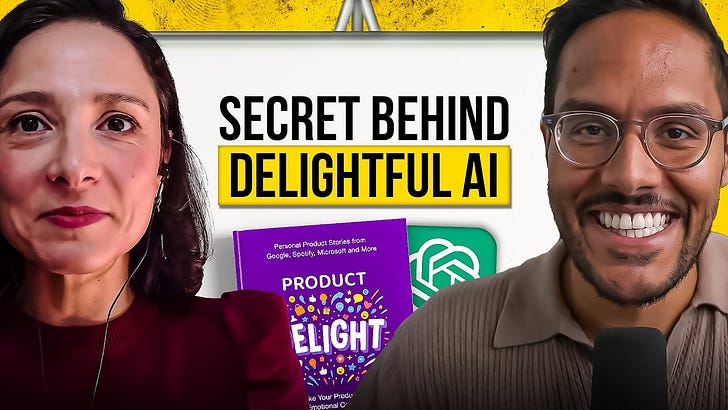
Individual music taste isn't random; it's a unique profile based on seven dimensions: authenticity, realism, novelty, melody, lyrics, rhythm, and timbre. Each person has a 'sweet spot' on each dimension, a Goldilocks zone that triggers a pleasurable neurochemical release. Understanding this framework can decode personal preference in any domain.

Related Insights
The hit "Discover Weekly" playlist was meant to serve only new music. Its success was accidental, stemming from a bug that inserted familiar songs. This revealed a key principle of delight: pure novelty can be jarring, and blending it with familiarity is crucial for user adoption and comfort.
Most people consume content passively based on what algorithms recommend. To cultivate taste, one must actively seek diverse and niche content beyond bestseller lists and trending topics, driven by personal curiosity rather than convenience.
Dylan Field defines taste not as an innate gift but as a point of view developed through a repeatable process. It involves experiencing something, asking "why do I like or dislike this?", and understanding the canon that led to its creation. This allows you to build a framework for judgment.

Technical talent is not the primary driver of resonant creative work. The key ingredient is 'taste'—an unteachable ability to discern what will be emotionally pleasing and impactful to an audience. This intuitive sense separates good creators from great ones.

Concepts like good taste or judgment aren't magical human traits but are a form of "embedded measurement" in our brains. This data, collected through unique, lived experiences (especially edge cases), is not yet digitized and thus remains a key differentiator from AI models trained on public data.

'Taste' is a collection of specific preferences, not an abstract feeling. Document what makes an output 'good' by creating universal rules (e.g., 'write at a ninth-grade level,' 'avoid cheesy quotes,' 'no em dashes'). Feeding these documented rules to an AI transforms your subjective taste into repeatable instructions for consistent results.

True taste is not an innate gift but a developed skill of seeing subtle patterns. By consuming vast amounts of material in a domain—like Kobe Bryant watching game tapes—one builds an intuitive library that leads to refined discernment and unique creation.
The best AI models are trained on data that reflects deep, subjective qualities—not just simple criteria. This "taste" is a key differentiator, influencing everything from code generation to creative writing, and is shaped by the values of the frontier lab.

AI tools enable "vibe coding," where you describe a desired outcome or feeling (e.g., "make the crowd go wild") rather than technical specifications. This decouples taste (what you want) from skill (how to make it), opening creative fields to non-experts.

Despite the dominance of platforms like Spotify, there's a growing fatigue with algorithmic recommendations. Consumers feel this approach can be impersonal and lead to a "lowest common denominator" experience, creating a market opportunity for brands that offer authentic, human-led taste-making and curation.
