Get your free personalized podcast brief
We scan new podcasts and send you the top 5 insights daily.
Elon Musk consistently shifts the core mission of his companies (Tesla, Twitter, SpaceX) to align with new, more immediate commercial opportunities like AI, framing them as stepping stones to the original, grander vision.

Related Insights
The sequential mergers of X with xAI, then with SpaceX, and potentially Tesla, signal the formation of a single entity. This "Musk Industries" would leverage shared manufacturing learnings and AI development across cars, rockets, robots, and social networks, creating powerful synergies.
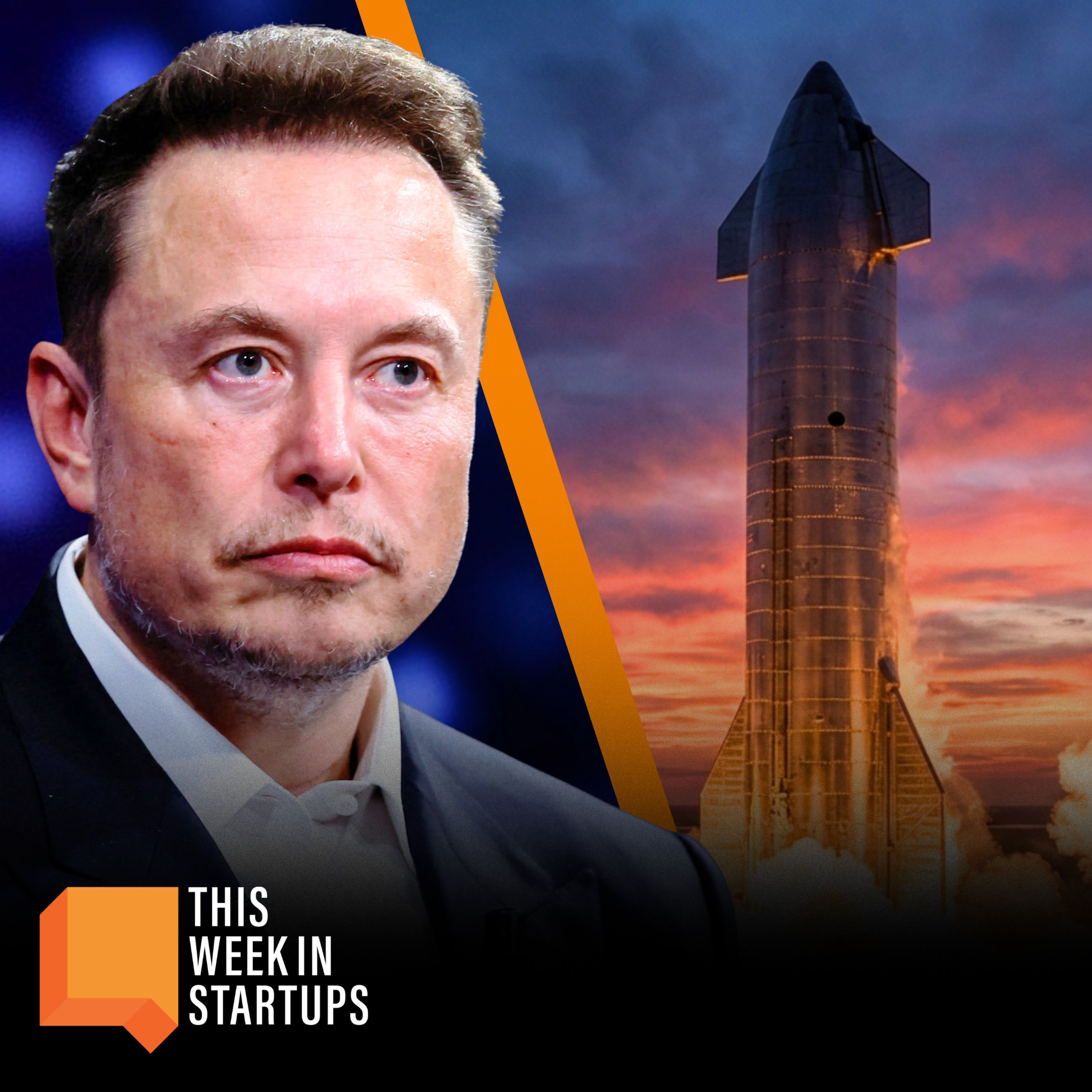
Musk's statement that xAI "was not built right the first time" reveals a willingness to completely overhaul a venture's core strategy. This approach relies on his unique ability to attract elite talent and fresh capital for radical pivots, even at massive valuations.

Musk's sense of purpose isn't just a mission statement. It's a core operational pillar that justifies immense risk and fuels persistence through repeated failures, enabling him to pursue ventures others deem irrational.

Musk's ventures are interpreted not as separate businesses, but as a unified mission to safeguard humanity's future. SpaceX aims to make us multi-planetary to avoid a single point of failure, while Neuralink seeks to merge humans with AI to prevent a runaway superintelligence. His entire portfolio is an attempt to build off-ramps from extinction-level events.

According to a former top executive, Elon Musk believes the EV car business has been "won by China" and is making a hard pivot to focus Tesla's future on humanoid robots and autonomous vehicles. This strategic shift explains recent decisions like canceling the affordable car model and de-emphasizing the supercharger network.

Musk's decisions—choosing cameras over LiDAR for Tesla and acquiring X (Twitter)—are part of a unified strategy to own the largest data sets of real-world patterns (driving and human behavior). This allows him to train and perfect AI, making his companies data juggernauts.

Whenever Tesla's core automotive business faces headwinds—like falling market share or intense competition—Elon Musk introduces a new, futuristic narrative, such as the Optimus robot. This strategy aims to reposition the company as an AI leader and distract investors from underwhelming auto industry fundamentals.

Musk's promotion of orbital data centers is a strategic narrative to justify merging his capital-starved xAI into SpaceX. This allows him to fund his AI ambitions and compete with rivals like OpenAI, driven more by ego and a desire for attention than immediate technical feasibility.
Visionary projects like Tesla's Optimus robot are often strategic distractions. CEOs like Elon Musk use them to shift investor focus from immediate challenges, such as declining revenues and fierce competition, maintaining a high valuation based on future promises rather than current performance.

Elon Musk's new stock award plan reveals a strategic pivot for SpaceX's upcoming IPO. The focus has moved from the long-term goal of a Mars colony to the more immediate, AI-centric vision of building a massive network of data centers in space. This reframes the investment thesis for potential shareholders.