Get your free personalized podcast brief
We scan new podcasts and send you the top 5 insights daily.
Musk's ventures are interpreted not as separate businesses, but as a unified mission to safeguard humanity's future. SpaceX aims to make us multi-planetary to avoid a single point of failure, while Neuralink seeks to merge humans with AI to prevent a runaway superintelligence. His entire portfolio is an attempt to build off-ramps from extinction-level events.

Related Insights
The sequential mergers of X with xAI, then with SpaceX, and potentially Tesla, signal the formation of a single entity. This "Musk Industries" would leverage shared manufacturing learnings and AI development across cars, rockets, robots, and social networks, creating powerful synergies.
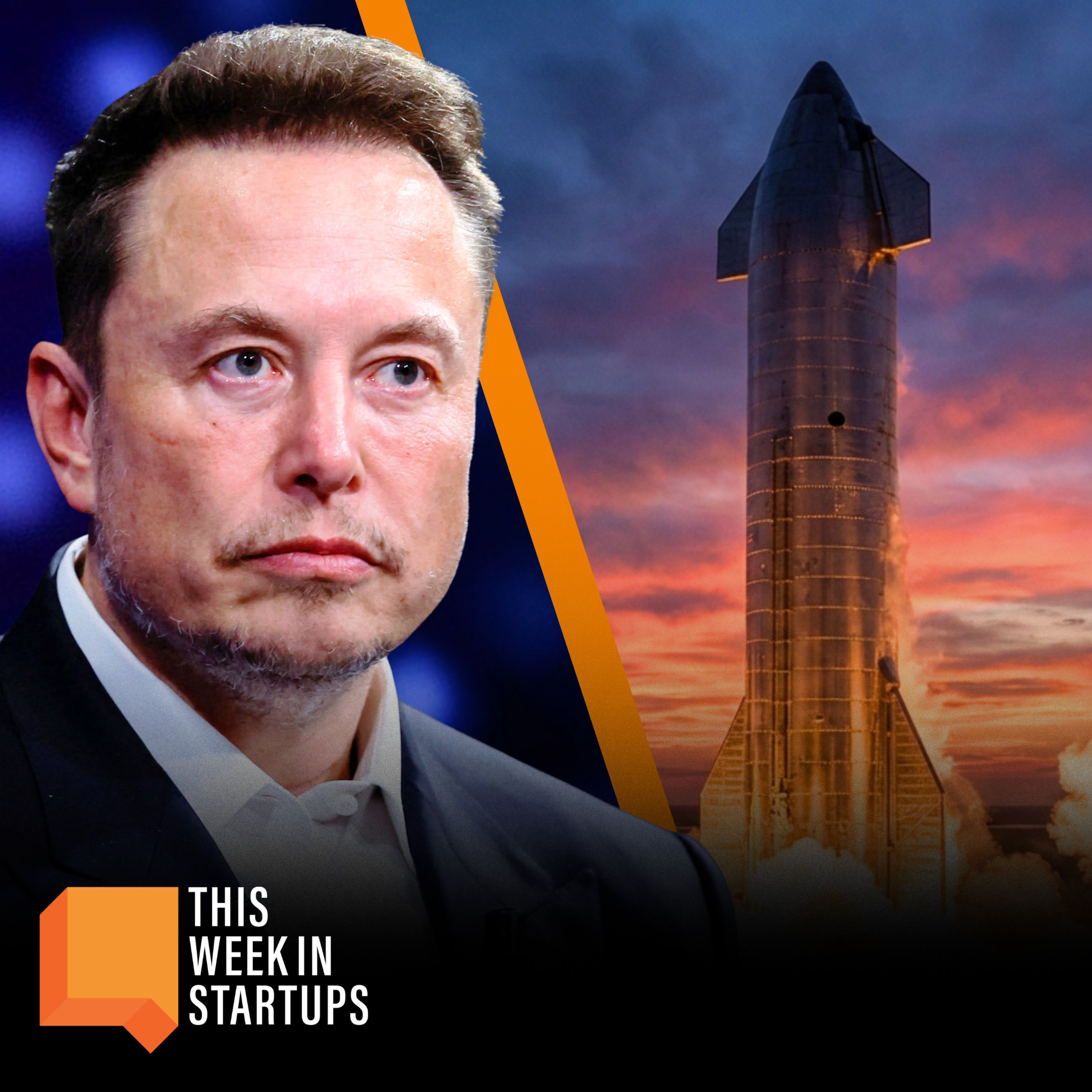
The idea of a single, vertically integrated "Elon Inc." combining SpaceX, X, Tesla, and xAI provides a strategic framework for understanding Musk's moves. This makes seemingly disparate actions, like a potential SpaceX acquisition of XAI, appear as logical steps toward a larger, unified entity.

The shift to a moon base isn't just about faster space colonization. It's a strategic move to build massive AI and quantum computing data centers off-planet. This bypasses terrestrial energy regulations and solves the immense cooling requirements for these systems, positioning SpaceX to dominate the AI landscape.

Musk's long-standing resistance to a SpaceX IPO has shifted due to the rise of AI. The massive capital raise is primarily aimed at establishing a network of space-based data centers, a strategic convergence of his space and AI ventures, rather than solely funding Mars colonization.

Elon Musk's focus was on Mars as a backup for humanity. DeepMind CEO Demis Hassabis shifted his perspective by positing that a superintelligent AI could easily follow humans to Mars. This conversation was pivotal in focusing Musk on AI safety and was a direct catalyst for his later involvement in creating OpenAI.

The merger combines SpaceX's rocketry with XAI's AI development. The official rationale is to build cost-effective, environmentally friendly data centers in space to meet the massive compute demands of future AI, a vision that leverages SpaceX's continually falling launch costs to make space-based supercomputing feasible.

Elon Musk's plan to merge SpaceX with xAI is a strategic move to build a vertically integrated powerhouse. This deal combines SpaceX's physical infrastructure, satellite network, and massive revenue from Starlink with xAI's artificial intelligence ambitions, creating a single entity that controls both the digital and physical layers of a new tech ecosystem.

The merger of Elon Musk's seemingly disparate SpaceX and xAI is being justified by the powerful narrative of creating "data centers in space." This story provides the necessary conceptual bridge for investors, transforming SpaceX's valuation from a pure aerospace company to a future pillar of global AI infrastructure.

Musk's decisions—choosing cameras over LiDAR for Tesla and acquiring X (Twitter)—are part of a unified strategy to own the largest data sets of real-world patterns (driving and human behavior). This allows him to train and perfect AI, making his companies data juggernauts.

By giving AI the core mission to 'understand the universe,' Musk believes it will become truth-seeking and curious. This would incentivize it to preserve humanity, not out of morality, but because humanity's unpredictable future is more interesting to observe than a predictable, sterile world.