Get your free personalized podcast brief
We scan new podcasts and send you the top 5 insights daily.
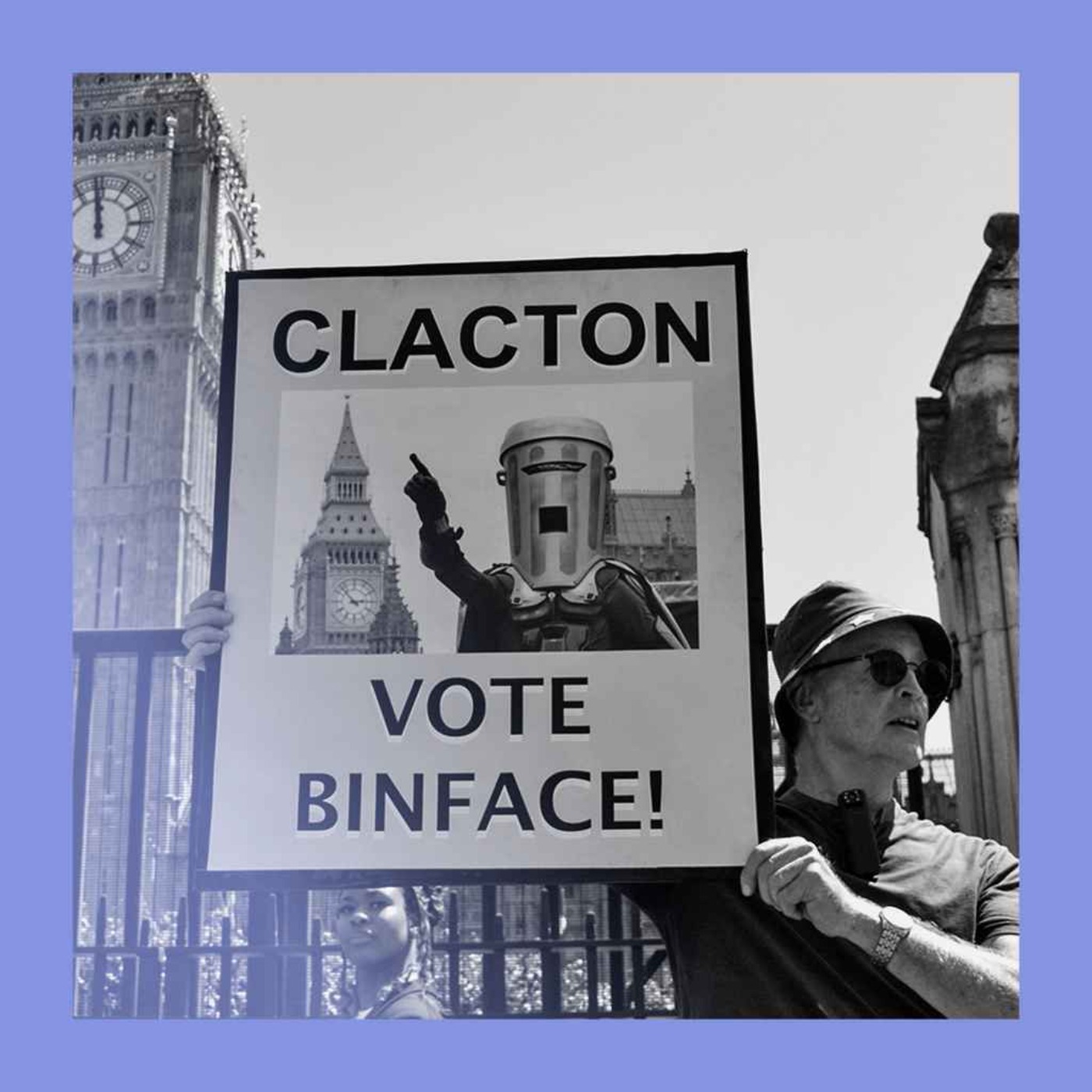
The UK by-election is a farce because incumbent Nigel Farage initiated it without compulsion, not because of the joke candidate Count Binface. Satirical figures serve to highlight the absurdity of actions by mainstream politicians, acting as a mirror to the political system's flaws.
Related Insights
Elected officials have little real power. Their primary function is theatrical: to create a plausible public narrative that justifies policies serving the private corporate interests of their lobbyist funders. The left vs. right paradigm is a distraction to obscure this reality from the populace.

Mark Twain saw humorists as having a critical role: to challenge authority and consensus. He argued that irreverence is the "champion of liberty" because despots fear a laughing public more than anything else. This frames satire not just as entertainment, but as a vital tool for maintaining a free society.

While satire has its place, British political culture may lean too heavily on lightheartedness and relentless mockery. During a time of societal and economic stagnation, this cultural tendency could be preventing the nation from engaging more seriously with its pressing political duties.
The appeal of a populist leader lies in their rejection of traditional political norms. When the electorate feels betrayed by the established "political class," they gravitate toward figures whose rhetoric is a deliberate and stark contrast, signaling they are an outsider.

Historically, figures like Hitler were initially dismissed as buffoons. This perceived lack of seriousness is a strategic tactic, not a flaw. It disarms civil opponents who can't operate in that space, captures constant media attention, and causes observers to fatally underestimate the true threat. The defense to "take him seriously, not literally" is a modern manifestation of this pattern.
Politicians often operate as actors in a performative 'kabuki theater' for the public. Their words and actions are scripted not by genuine belief or policy goals, but by the interests of their financial backers and the need to secure reelection.

According to Jane Fonda, authoritarian leaders thrive on an image of being impermeable and inevitable. Humor and ridicule are powerful weapons against this because they expose weakness and humanity, which authoritarians cannot tolerate. A comic making fun of a dictator shatters the carefully constructed facade of invincibility.

In polarized environments, expressing constant rage only provokes reciprocal anger. Satire, however, can be a more effective persuasion tool. It encourages opponents to see the absurdity in their own positions, leading to self-awareness and potentially changing their minds, something direct confrontation rarely achieves.

Salman Rushdie posits that humor is more than just entertainment; it is a potent tool against oppression. He observes that dictators and narrow-minded individuals are characteristically humorless and that satire can provoke them more effectively than direct criticism, making it a crucial element in the struggle for free expression.

Engaging controversial figures through a comedic lens serves as a powerful humanizing agent. It punctures their self-serious persona and tests their ability to laugh at the absurdity of their own position. This can disarm audiences who expect confrontation and instead reveal a more relatable, self-aware individual.
