Get your free personalized podcast brief
We scan new podcasts and send you the top 5 insights daily.
While satire has its place, British political culture may lean too heavily on lightheartedness and relentless mockery. During a time of societal and economic stagnation, this cultural tendency could be preventing the nation from engaging more seriously with its pressing political duties.
Related Insights
Mark Twain saw humorists as having a critical role: to challenge authority and consensus. He argued that irreverence is the "champion of liberty" because despots fear a laughing public more than anything else. This frames satire not just as entertainment, but as a vital tool for maintaining a free society.

The speaker argues that the UK's cultural and political mindset is so entrenched that only a severe crisis can force a change. He believes things must get much worse—fiscally and socially—for the populace to abandon failing policies and embrace a necessary paradigm shift. This is the core of his "accelerationist" view.

The show's themes of shabby gentility, class obsession, and post-war neuroses mirrored the UK's mid-70s mood of economic decline and social strangulation, making it a rich historical text beyond simple comedy.

Despite accurately identifying severe economic and social challenges facing Britain, Keir Starmer's Labour government has proposed policies considered too small and shallow. There is a significant mismatch between the gravity of his diagnosis and the scale of his proposed solutions, leading to criticism that his administration is not meeting the moment.

The UK's pervasive culture of cynicism and complaint stifles creative ambition. In contrast, the American market exhibits a relentless, forward-moving energy that is more supportive of risk-taking, even if it appears delusional to Brits.

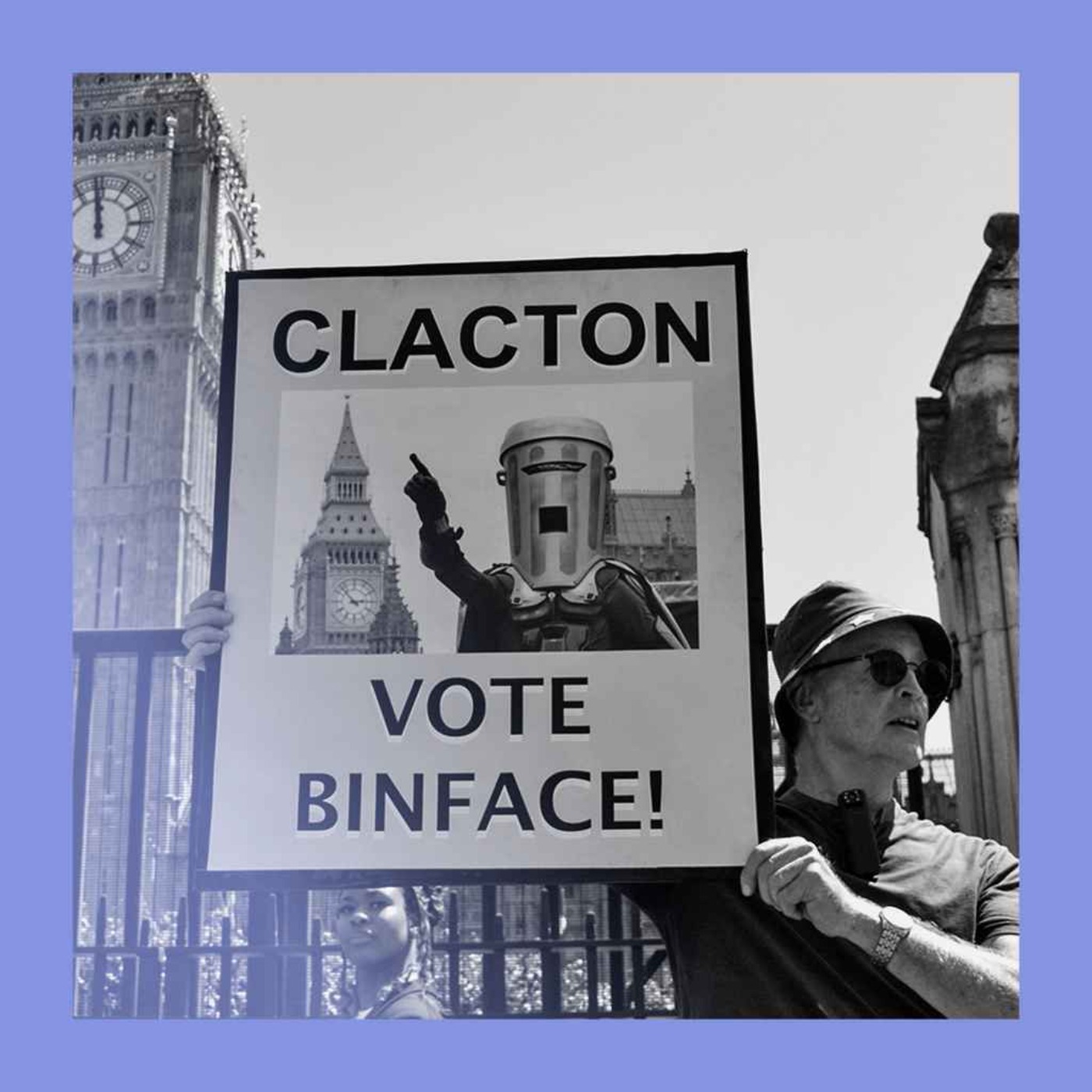
The UK by-election is a farce because incumbent Nigel Farage initiated it without compulsion, not because of the joke candidate Count Binface. Satirical figures serve to highlight the absurdity of actions by mainstream politicians, acting as a mirror to the political system's flaws.
In polarized environments, expressing constant rage only provokes reciprocal anger. Satire, however, can be a more effective persuasion tool. It encourages opponents to see the absurdity in their own positions, leading to self-awareness and potentially changing their minds, something direct confrontation rarely achieves.

Salman Rushdie posits that humor is more than just entertainment; it is a potent tool against oppression. He observes that dictators and narrow-minded individuals are characteristically humorless and that satire can provoke them more effectively than direct criticism, making it a crucial element in the struggle for free expression.

Political discourse deliberately pivots to highly emotional, tribal "culture war" topics because they elicit a strong, visceral public response. This serves as a powerful distraction from more complex but fundamentally destructive economic issues like currency debasement and national debt, which are the true drivers of societal decay.

Academic culture prioritizes deconstructing complex systems and understanding historical government failures. This critical approach, while valuable, can paralyze officials, making them less able to act decisively and solve basic, practical problems like issuing permits or cleaning streets efficiently.
