Get your free personalized podcast brief
We scan new podcasts and send you the top 5 insights daily.
In an AI-native company, the founder's hands-on involvement is an asset during the MVP stage but becomes the primary constraint at launch. Decision-making and support requests stall. The solution is for the founder to rigorously audit their own tasks and categorize them into what can be fully automated, delegated, or truly requires founder judgment.

Related Insights
Even among founders of AI-first companies, the most pressing issue is not technology but the cultural and operational challenge of integrating humans and agents. The primary struggle is getting teams to work with agents effectively and figuring out how roles must change.

Founder effectiveness requires a two-phase approach. First, build the operational "machine" of the company—hiring, processes, and product. Only then can the focus shift to identifying and resolving the single biggest bottleneck. Fixing bottlenecks before a system exists is ineffective.

AI can rapidly execute the 'build' and 'measure' steps of a feedback loop, but true 'learning' is still done by the human founder. Offloading the entire process to AI without deep personal engagement will slow you down, as the machine cannot replicate the founder's capacity for insight.

With AI accelerating development, the key challenge is no longer building faster; it's getting completed features through legal, marketing, and other operational hurdles. Organizations must now re-engineer these internal processes to match the new pace of creation.

For founders, AI tools are excellent for quickly building an MVP to validate an idea and acquire the first few customers—the hardest step. However, these tools are not yet equipped for the large-scale, big-picture thinking and edge-case handling required to scale a product from 100 to a million users. That stage still requires human expertise.

The most effective AI companies don't try to automate everything. They ask which specific, repetitive task creates the most value when partially automated. This pragmatic approach delivers measurable results by using AI to augment human workers, not replace them.
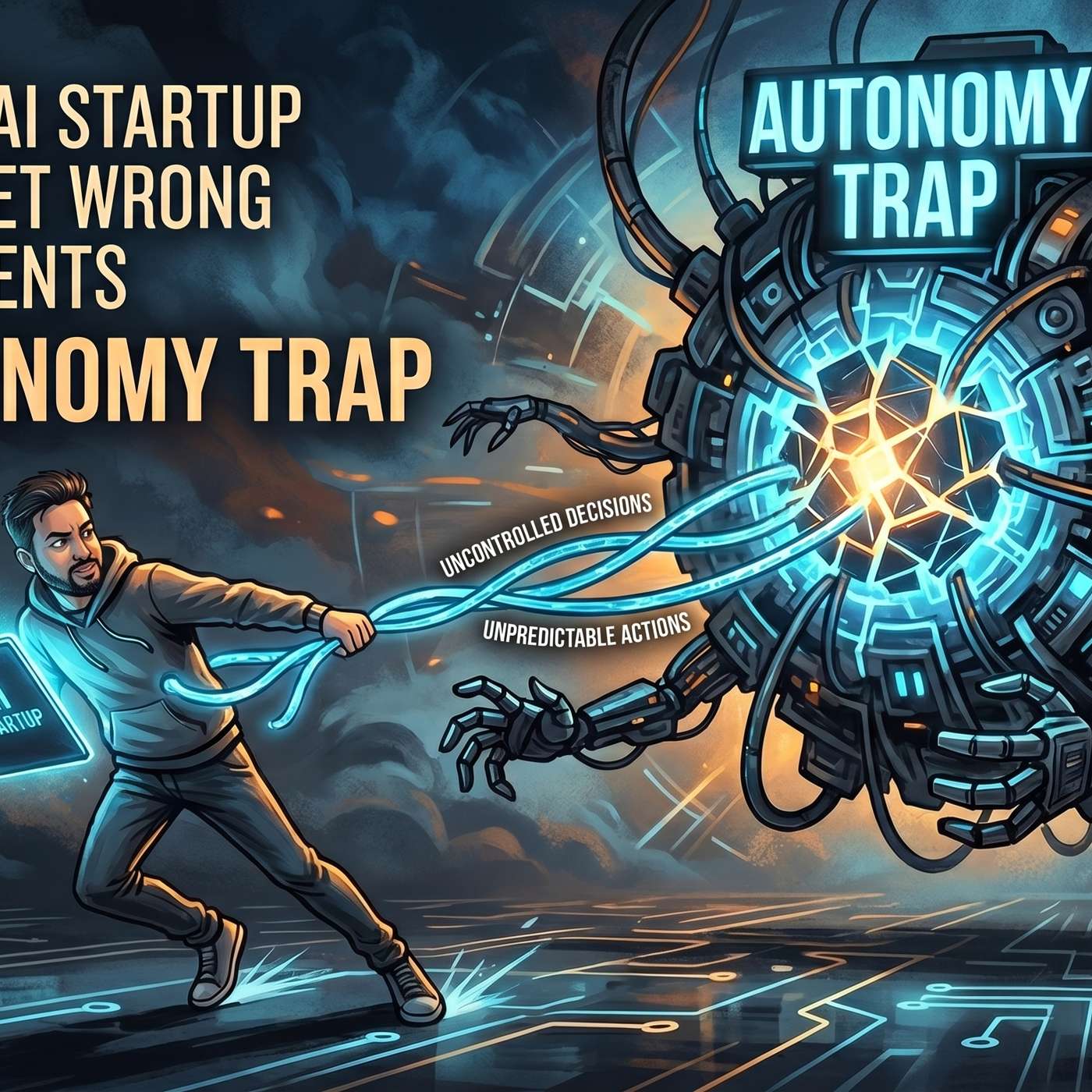
Founders shouldn't expect AI to automate a business function instantly. Real-world adoption is a gradual "glide path" where automation scope increases over time. This requires building systems that facilitate human-AI interaction, allowing humans to coach the AI and vice versa for a smooth transition.

The very traits that help a founder succeed initially—doing everything themselves, obsessing over details—become bottlenecks to growth. To scale, founders must abandon the tools that got them started and adopt new ones like delegation and trust.

AI adoption stalls from the top because CEOs don't have automatable "tasks"; they have people who do tasks for them. Lacking hands-on use, they fail to see AI's value as a strategic "thought partner." To lead effectively, executives must personally engage with these tools for brainstorming and decision-making.

To build an effective AI product, founders should first perform the service manually. This direct interaction reveals nuanced user needs, providing an essential blueprint for designing AI that successfully replaces the human process and avoids building a tool that misses the mark.
