Get your free personalized podcast brief
We scan new podcasts and send you the top 5 insights daily.
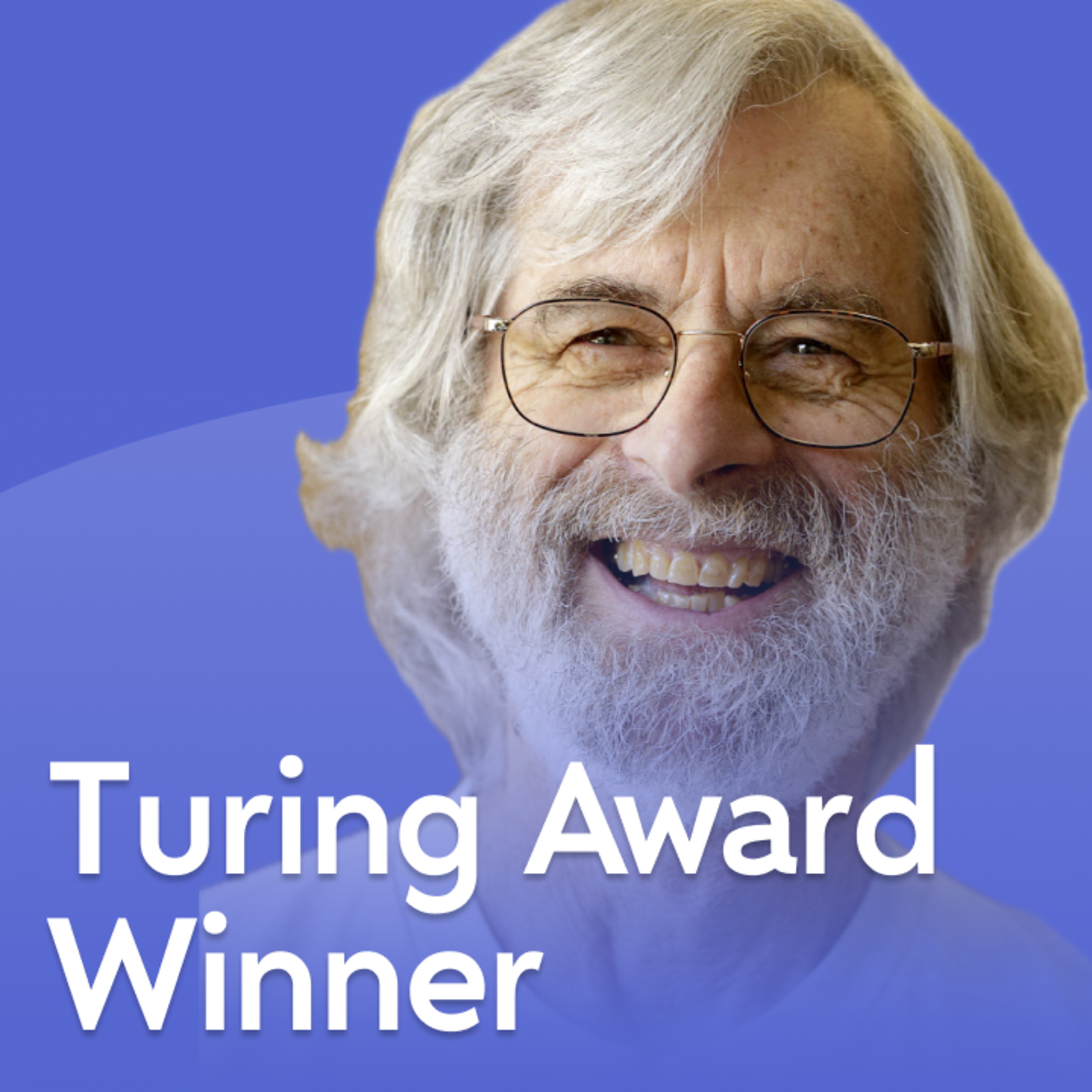
Lamport offers a blunt assessment of intelligence, echoing the Dunning-Kruger effect. He attributes his own success not to "raw intelligence" but to a specific gift for abstraction that comes easily to him. This contrasts sharply with those who overestimate their abilities because they lack the competence to recognize their own shortcomings.
Related Insights
Intelligence is often used as a tool to generate more sophisticated arguments for what one already believes. A higher IQ correlates with the ability to find reasons supporting your stance, not with an enhanced ability to genuinely consider opposing viewpoints.

The speaker warns against observing a group of peers and creating a composite "super-peer" in one's mind. One person is a great presenter, another a great leader, and a third a great communicator. Comparing your individual skills to this imaginary, perfect colleague is a recipe for imposter syndrome.

Our brains are wired for survival, not growth, causing them to fixate on past threats to avoid future danger. This makes negative self-talk and self-doubt the brain's default setting, not a personal failure. Even top performers like Albert Einstein and Sonia Sotomayor experienced imposter syndrome, demonstrating it's a feature of the human condition.

The more people learn about a subject, the more they realize how much they don't know. This contradicts the idea that expertise leads to arrogance. Novices, who are unaware of a field's complexity, are often the most overconfident.

People who scored 90%+ in school often have a bias towards complexity. They feel a need to justify their intellect by solving complex problems, which can cause them to overlook simple solutions that consumers actually want. The market rewards simplicity, not intellectual complexity.

Intelligence is a rate, not a static quality. You can outperform someone who learns in fewer repetitions by simply executing your own (potentially more numerous) repetitions on a faster timeline. Compressing the time between attempts is a controllable way to become 'smarter' on a practical basis.

The speaker views his lack of natural academic talent as a "superpower." This self-awareness forced him to abandon competing on raw intelligence and instead develop a more robust system of consistency and accountability, which ultimately proved more effective for long-term success.

Praising kids for being "smart" reinforces the idea that intelligence is a fixed trait. When these students encounter a difficult problem, they conclude they lack the "magic ingredient" and give up, rather than persisting through the challenge.

Many highly proficient individuals are driven by a deep-seated fear of being the opposite of what they project. An exceptionally beautiful person may feel ugly, a highly successful person may feel like a failure, and a very competent person may feel useless. Their public persona is a massive compensatory mechanism for this internal lack.
A powerful way to combat imposter syndrome is to see undeniably competent people express it. This social signal reframes the feeling from a personal failing to a common phenomenon among high-achievers. Witnessing this helps you realize the feeling is not an accurate reflection of inadequacy, prompting you to re-evaluate your own self-doubt.
