Get your free personalized podcast brief
We scan new podcasts and send you the top 5 insights daily.
While carbon fiber seems lighter, Musk switched to steel for Starship because a specific grade of stainless steel has a similar strength-to-weight ratio at cryogenic temperatures. It's also 50 times cheaper, easier to weld, and its higher melting point reduces the mass of the heat shield, making the final rocket weigh less.
Related Insights
The entire strategy of building data centers in space is only economically feasible because SpaceX's Starship is projected to increase launch capacity by 20 times and drastically lower costs. This specific technological leap turns a sci-fi concept into a viable business model.
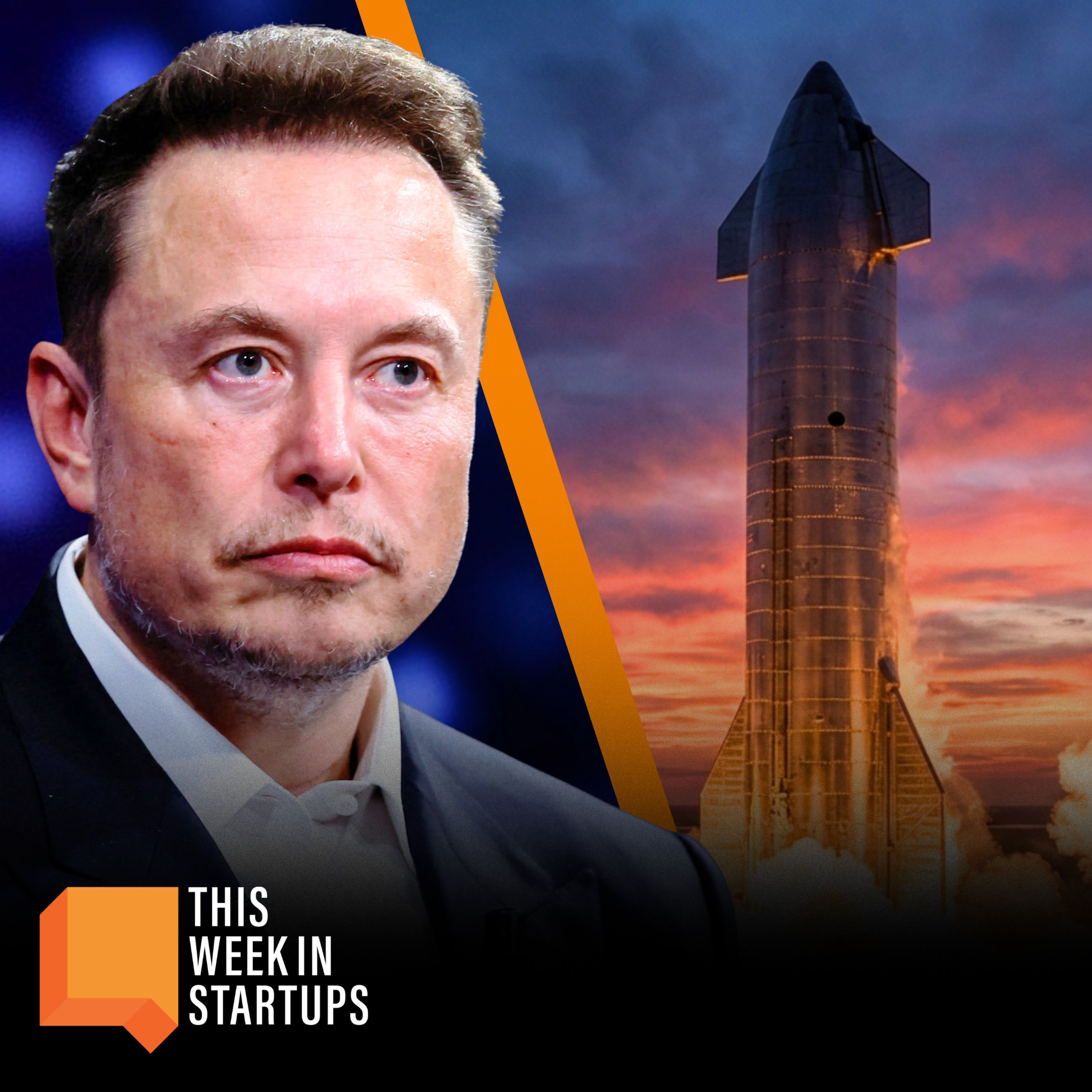
Unlike current rockets, Starship is designed for full and rapid reusability. This aircraft-like operational model is projected to drop the cost per kilogram to orbit from over $1,400 to potentially as low as $10, enabling an economic revolution for space-based infrastructure.

The long-term vision isn't just launching data centers, but manufacturing them on the moon. This would utilize lunar resources and electromagnetic mass drivers to deploy satellites, making Earth's launch costs and gravity well irrelevant for deep space expansion.
Skepticism around orbital data centers mirrors early doubts about Starlink, which was initially deemed economically unfeasible. However, SpaceX drastically reduced satellite launch costs by 20x, turning a "pipe dream" into a valuable business. This precedent suggests a similar path to viability exists for space-based AI compute.

Tesla's most profound competitive advantage is not its products but its mastery of manufacturing processes. By designing and building its own production line machinery, the company achieves efficiencies and innovation cycles that competitors relying on third-party equipment cannot match. This philosophy creates a deeply defensible moat.

Musk refutes resource scarcity arguments against a sustainable future. He notes that Earth's most common elements are iron and oxygen, with abundant silicon (sand). This means the core materials for iron-phosphate batteries and solar panels are not a limiting factor for global-scale deployment.
Zipline's 50% cost reduction for its next-gen aircraft wasn't just from supply chain optimization. The primary driver was a design philosophy focused on eliminating components entirely ("the best part is no part"), which also improves reliability.

Beyond technology, Tesla's durable advantage is its 'capacity to suffer'—a willingness, driven by Elon Musk, to endure extreme hardship like 'manufacturing hell' to solve problems. This allows the company to pursue innovations that more risk-averse competitors would abandon.

Lukas Czinger reveals that the unique, seemingly organic structure of the 21C hypercar's chassis is not a human aesthetic choice. It is the output of proprietary AI software that performs a weighted optimization based on inputs like load forces, crash safety, and material properties to generate the lightest possible design that meets all performance requirements.
Anduril prototypes drone frames by milling them from solid metal blocks. While extremely wasteful and expensive for mass production, this method bypasses the slow and costly process of creating molds for casting, drastically reducing latency during the critical iterative design phase and getting products to market faster.