Get your free personalized podcast brief
We scan new podcasts and send you the top 5 insights daily.
Unlike financial traders who can quickly reverse a bad position, institutions like government agencies and media outlets find retractions too costly to their status and careers. They often 'stand by' flawed work rather than admit error, creating a system that lacks the self-correcting mechanisms necessary for finding truth.

Related Insights
Corporate financials require maker-checker systems, audit trails, and severe penalties for fraud. Scientific research data often lacks these controls, with no audit trails or meaningful penalties for errors. This disparity suggests we should apply at least as much skepticism to academic papers as to financial reports.
Ford and the Department of Agriculture both claimed 75% of tractors used different fuels. Neither was interested in resolving the discrepancy, instead preferring to assert their expertise. This shows how institutions can prioritize being seen as an authority over being correct, perpetuating misinformation and institutional failure.
We over-rely on the reputations of institutions like Ford or government departments. Their past successes create a 'brand halo' that leads us to accept their data uncritically, even when it's contradictory. Our systems lack a reliable mechanism to challenge flawed institutional pronouncements after they are made official.
Lying is an inherent function of all powerful institutions throughout history, not an exception. Meetings in government often focus on 'what' to tell the public, not 'how' to tell the truth. Examples like asbestos in baby powder and the dangers of opioids show a pattern of denial that can last for decades before the truth is admitted.

When media outlets collectively push a single narrative, it becomes consensus reality. If the story is later proven false, they retract it in unison. This "school of fish" behavior provides safety in numbers, making it impossible to hold any single journalist or outlet accountable for being wrong.

Contrary to popular belief, publication in a top academic journal doesn't guarantee a study is correct. The social sciences lack the precise experimental validation of hard sciences, allowing incorrect theories to have "long legs and survive" due to a lack of rigorous, focused scrutiny from peers.

While commercial conflicts of interest are heavily scrutinized, the pressure on academics to produce positive results to secure their next large institutional grant is often overlooked. This intense pressure to publish favorably creates a significant, less-acknowledged form of research bias.
When FDA leaders publicly contradict the consensus of top scientific experts in a specific field, they risk severe, lasting damage to their academic and professional reputations. This can render them 'unhirable' for the lucrative industry or academic positions that former regulators often take after their government service.

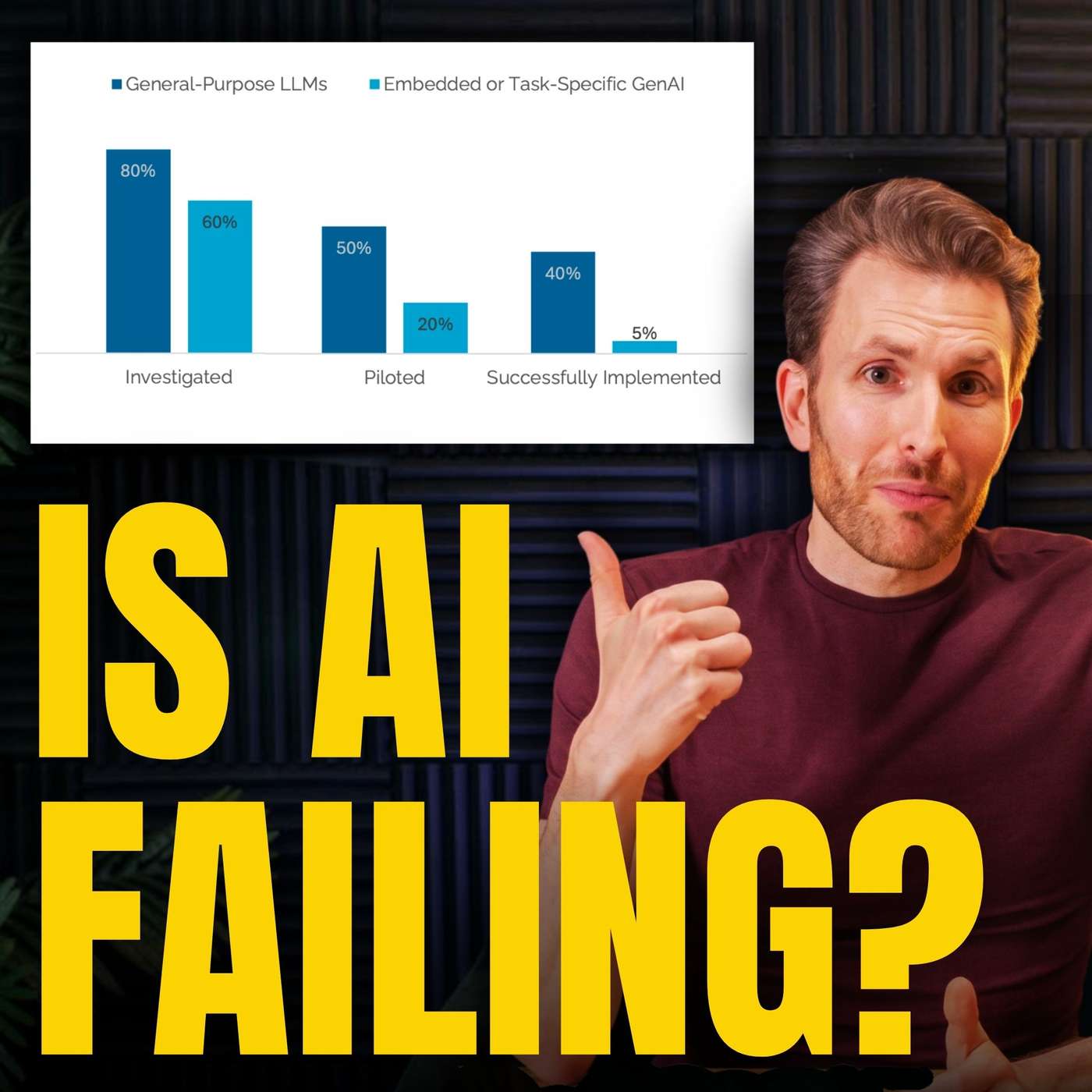
A flawed study went viral because it carried the "MIT" brand, prompting media to report on it without scrutiny. The actual report was gated behind a request form, preventing journalists from fact-checking its questionable claims. This combination allowed a misleading narrative to shape market sentiment and public opinion before it could be debunked.
After publishing a famous paper, economist Emily Oster spent years gathering better data that invalidated her own findings. She then published a new paper retracting her original conclusion—a rare and commendable act of intellectual honesty that should be celebrated.