Get your free personalized podcast brief
We scan new podcasts and send you the top 5 insights daily.
Years of focusing on MVPs has weakened the ability of product teams to imagine magical, delightful features. AI prototyping tools make ambitious ideas easier to build, helping teams reignite their creative muscles and aim for awesome products, not just viable ones.

Related Insights
Jay Parikh, Microsoft's EVP of Core AI, champions a culture of 'more demos, less memos.' He argues that AI tools enable teams to produce 15 product iterations in 15 minutes, making showing a working demo far more effective and creative than writing a planning memo.

Traditional "writing-first" cultures create communication gaps and translation errors. With modern AI tools, product managers can now build working prototypes in hours. This "show, don't tell" approach gets ideas validated faster, secures project leadership, and overcomes language and team barriers.
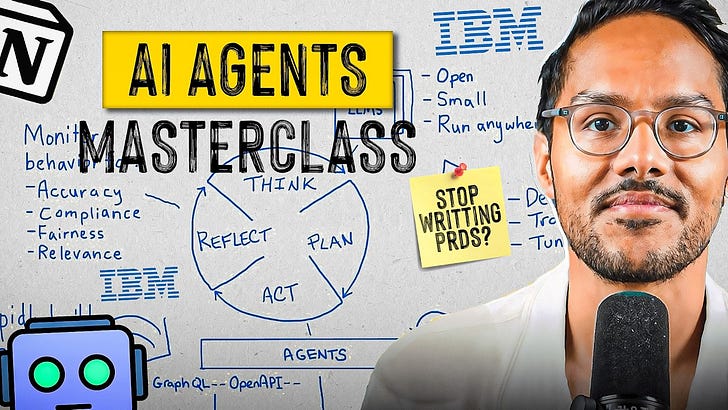
In AI, low prototyping costs and customer uncertainty make the traditional research-first PM model obsolete. The new approach is to build a prototype quickly, show it to customers to discover possibilities, and then iterate based on their reactions, effectively building the solution before the problem is fully defined.

Historically, resource-intensive prototyping (requiring designers and tools like Figma) was reserved for major features. AI tools reduce prototype creation time to minutes, allowing PMs to de-risk even minor features with user testing and solution discovery, improving the entire product's success rate.
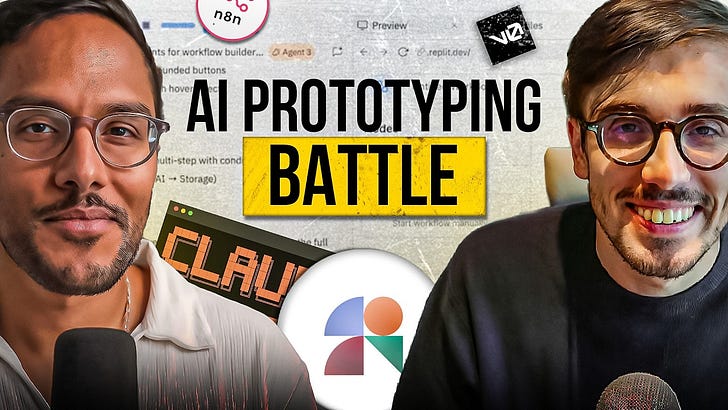
When an engineering team is hesitant about a new feature due to unfamiliarity (e.g., mobile development), a product leader can use AI tools to build a functional prototype. This proves feasibility and shifts the conversation from a deadlock to a collaborative discussion about productionizing the code.

Traditionally, building software required deep knowledge of many complex layers and team handoffs. AI agents change this paradigm. A creator can now provide a vague idea and receive a 60-70% complete, working artifact, dramatically shortening the iteration cycle from months to minutes and bypassing initial complexities.

AI tools that generate functional UIs from prompts are eliminating the 'language barrier' between marketing, design, and engineering teams. Marketers can now create visual prototypes of what they want instead of writing ambiguous text-based briefs, ensuring alignment and drastically reducing development cycles.

Instead of writing detailed Product Requirement Documents (PRDs), use a brief prompt with an AI tool like Vercel's v0. The generated prototype immediately reveals gaps and unstated assumptions in your thinking, allowing you to refine requirements based on the AI's 'misinterpretations' before creating a clearer final spec.

The product development cycle has shifted. Instead of writing a spec, Product Managers use AI coding tools like Bolt.new to build the initial working version of a product. They then hand this functional prototype to engineers for hardening, security, and scaling, dramatically accelerating the process.
Traditional agile development, despite its intent, still involves handoffs between research, design, and engineering which create opportunities for misinterpretation. AI tools collapse this sequential process, allowing a single person to move from idea to interactive prototype in minutes, keeping human judgment and creativity tightly coupled.
