Get your free personalized podcast brief
We scan new podcasts and send you the top 5 insights daily.
Companies often present different stories to equity (growth) and fixed-income (stability) investors. CIO Ed Perks finds the most insightful meetings happen when both analyst types are in the room, forcing a holistic conversation about capital allocation and revealing the real priorities.

Related Insights
Blackstone’s credit decisions are deeply informed by its other business units. Owning QTS, a top data center developer, provides its credit team with proprietary insights for underwriting data center loans. This cross-platform intelligence creates a significant competitive advantage and drives better credit selection.

The pandemic prompted Blackstone's credit arm to shift from siloed business units to a unified structure. They created a horizontal CIO office to connect teams, standardize underwriting, and ensure insights from one area (e.g., private equity) inform decisions in another, creating a more resilient system.

Centerbridge initially sought investors equally skilled in PE and credit, a "switch hitter" model they found unrealistic. They evolved to a "majors and minors" approach, allowing professionals to specialize in one area while gaining significant experience in the other. This fosters deep expertise without sacrificing the firm's integrated strategy.

Treat meetings with various stakeholders (CTO, CFO, COO) as practice sessions. Telling the same story multiple times allows you to observe what resonates, identify weak points, and refine the message before a high-stakes presentation.

Instead of siloing investments, Ed Perks' fund often owns a company's stock, bonds, and convertibles simultaneously. This allows the team to shift allocations based on which part of the capital structure is most attractively priced, capturing value that single-asset investors might miss.
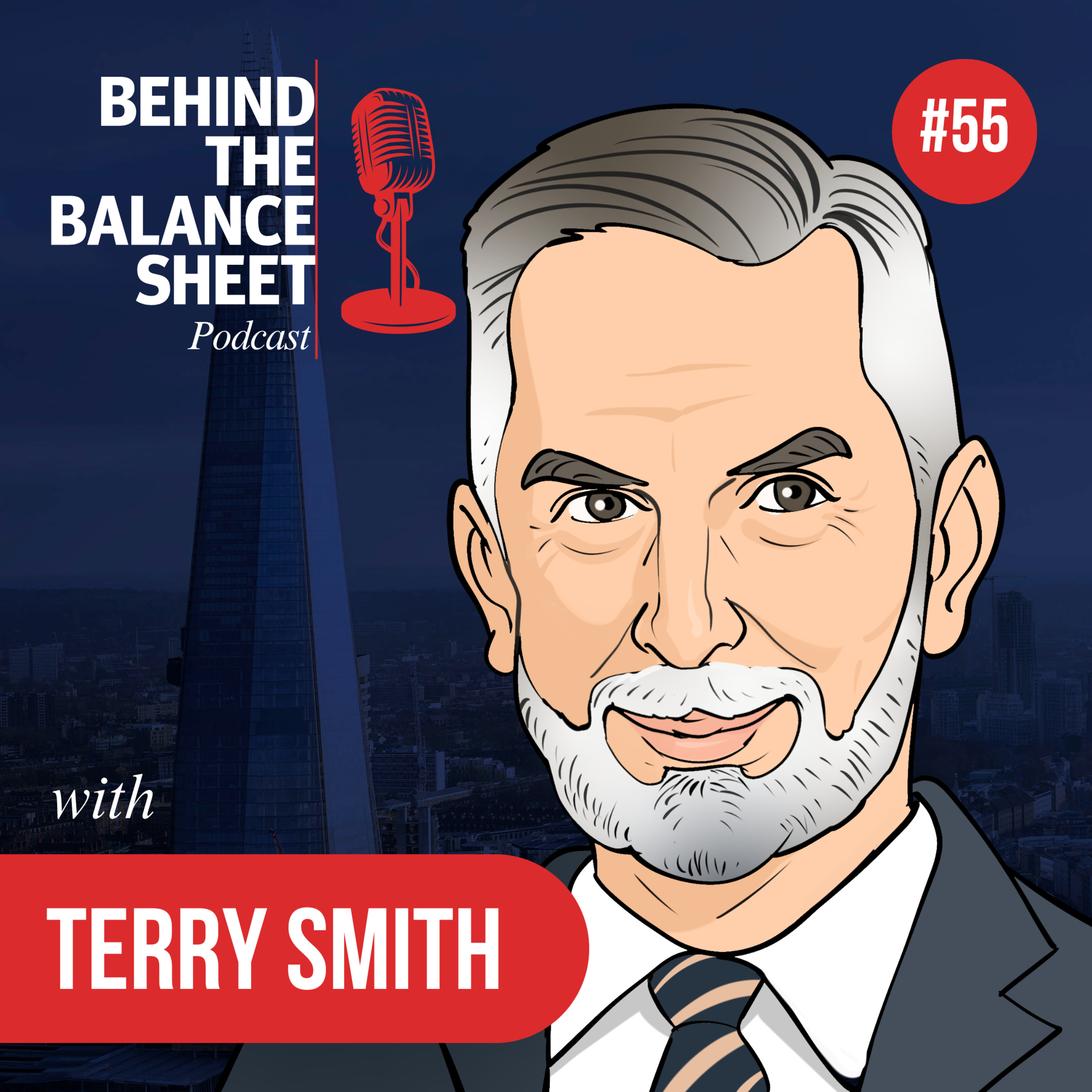
For Terry Smith, deep financial analysis (margins, cash conversion, incremental returns) always comes first. He meets management not for short-term trading updates, but for a singular purpose: to understand their philosophy and metrics for allocating capital between dividends, buybacks, reinvestment, and M&A.
Private equity and investment banking teams know a company inside out, creating blind spots. An external coach with the same limited information as a potential investor can identify confusing messages or unintended negative impressions, preventing costly misinterpretations.

The 2008 financial crisis created opportunities to buy discounted corporate debt, making Apollo realize that providing capital (credit) is fundamentally linked to providing equity in leveraged situations. This insight led them to build their now-massive integrated platform.
A credit investor's true edge lies not in understanding a company's operations, but in mastering the right-hand side of the balance sheet. This includes legal structures, credit agreements, and bankruptcy processes. Private equity investors, who are owners, will always have superior knowledge of the business itself (the left-hand side).
A CEO's role is seeing the same company through the different lenses of various stakeholders (investors, lawyers, scientists). Success requires learning the unique 'language' of each group—their incentives and communication styles—to effectively translate the company's vision and value proposition for each audience.
