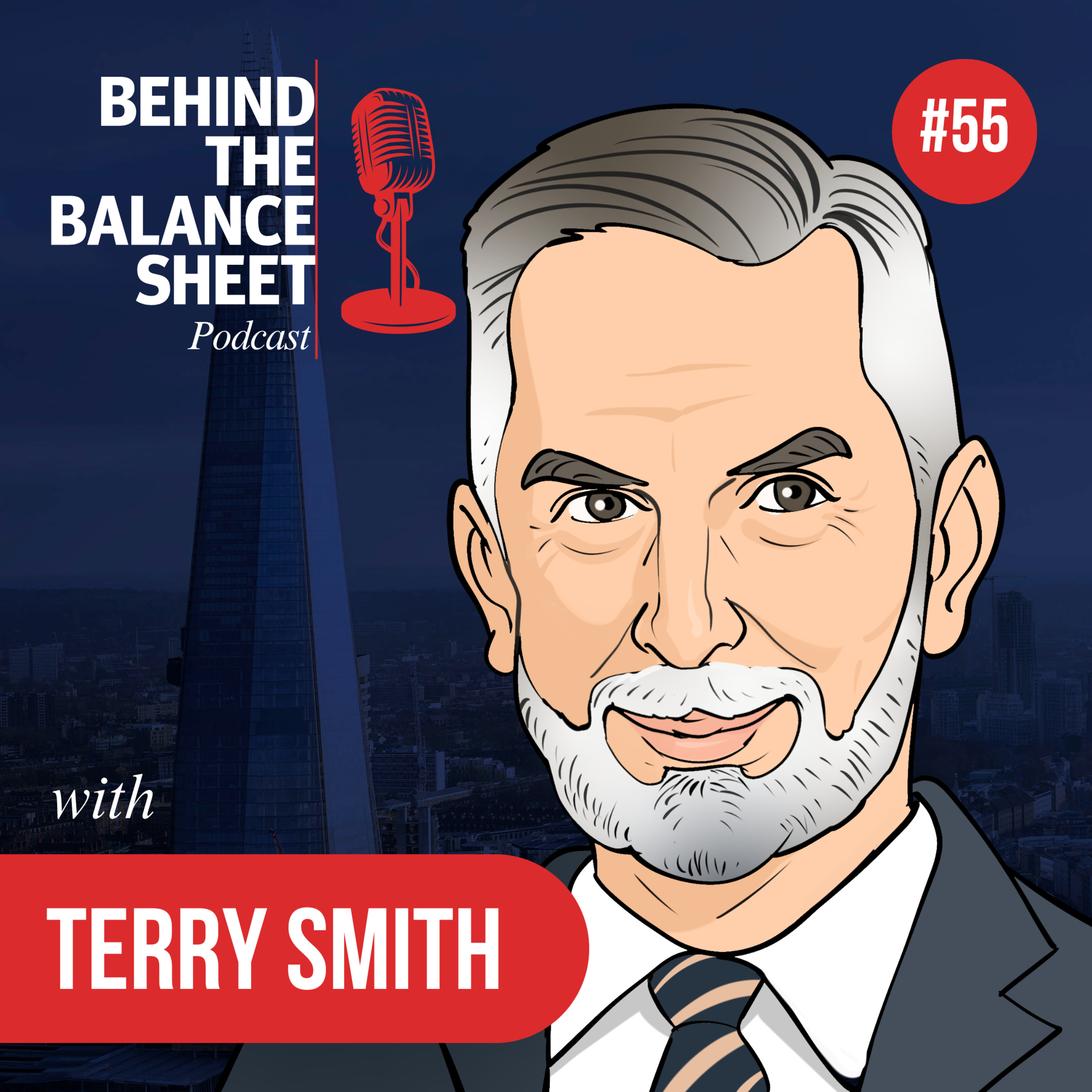
Terry Smith advocates for externalizing your ambition to be the best, even at the risk of public failure. Citing Theodore Roosevelt's 'Man in the Arena' speech, he believes this transparency sets a high bar, fosters accountability, and prevents you from becoming a 'timid soul who never knows either victory nor defeat'.
Terry Smith uses a simple rule of thumb to estimate expected returns: Free Cash Flow Yield + Medium-Term Growth Rate. He used this to explain why Fundsmith's returns would likely decrease from ~15% to ~11% as the starting FCF yield of its portfolio companies dropped from over 6% to 3%.
Terry Smith criticizes UCITS regulations that impose a hard 10% cap on any single stock holding. This rule forces him to sell his best-performing stocks simply because they have appreciated, which he views as counterproductive and unfriendly to investors. He feels 'worried that my biggest stocks will perform well'.
Investor Terry Smith champions 'obliquity,' the idea of achieving great results by not aiming directly for them. Citing the McLaren F1 car—designed to be the best, not the fastest—he argues that focusing on excellence itself, rather than just getting rich, is the true driver of immense success.
When buying a quality company whose stock is falling due to bad news, Terry Smith often buys in three separate tranches. He did this with Fortinet as its growth slowed post-COVID. His rationale is that negative news and earnings warnings often 'come in threes,' and this staggered approach helps manage entry price risk.
Terry Smith believes most analysts don't read full financial reports due to laziness and the futility of fighting the market. If everyone else trades on management's adjusted numbers and headline figures, the lone analyst doing deep accounting work risks looking foolish as the stock moves against their fundamental view.
According to Terry Smith's own team, the single best indicator to sell a stock is when he becomes personally frustrated with management. He cites selling PayPal after its CEO expressed dismay over the war in Ukraine during a meeting, signaling a critical lack of focus on the company's deteriorating fundamentals.
Smith argues that periods of underperformance are an unavoidable feature of any disciplined investment strategy. Rather than panicking and changing course, the correct response is to analyze the cause: was it an execution error, a structural strategy failure, or transient market factors you just have to endure?
Terry Smith contends that passive investing is mislabeled. It's a momentum strategy that forces capital into the largest companies regardless of valuation. With over 50% of AUM in passive funds (up from <10% in 2000), this creates a powerful feedback loop that distorts markets more than the dot-com bubble ever did.
Terry Smith believes a major economic correction is 'massively overdue'. He argues the last normal downturn was in the early 2000s, as the 2008 crisis was mitigated by bailouts that prevented systemic failures (besides Lehman). This lack of 'creative destruction' has left the system vulnerable and imbalanced.
Terry Smith shifted away from some tech holdings because the race for AI and hyperscale data centers is transforming them from capital-light to capital-intensive businesses. This fundamentally changes their financial profile, threatening the high returns on capital that made them attractive investments in the first place.
For Terry Smith, deep financial analysis (margins, cash conversion, incremental returns) always comes first. He meets management not for short-term trading updates, but for a singular purpose: to understand their philosophy and metrics for allocating capital between dividends, buybacks, reinvestment, and M&A.