Get your free personalized podcast brief
We scan new podcasts and send you the top 5 insights daily.
The decision to bomb Iran's Fordow nuclear facility triggered a predictable escalation trap. By losing the ability to track Iran's fissile material with certainty, the U.S. created a panic that pushes it toward a full regime-change strategy—not out of choice, but as the only perceived way to mitigate an unverifiable nuclear threat.

Related Insights
If the U.S. bombing campaign had successfully eliminated Iran's nuclear program, there would be no reason to negotiate. The fact that talks occurred immediately after the strikes was a clear, albeit subtle, indicator that the core objective—securing the nuclear material—had not been met.

While the campaign successfully suppressed Iranian missile launches, it created a wounded, aggrieved regime. This political reality provides a powerful new incentive for Iran to double down on its nuclear program, meaning a tactical victory could directly lead to a long-term strategic catastrophe.

The most critical failure of the U.S. strategy is losing visibility of Iran's nuclear material—enough for 16 bombs. This intelligence gap is the primary driver for conflict escalation, pushing the U.S. towards riskier options like ground invasion to regain control.
The bombing campaign, aimed at regime change, could be counterproductive. Prior to the conflict, Iran's regime was seen as unpopular and frail, potentially heading for collapse or moderation. The external attack risks creating a rally-round-the-flag effect, allowing the regime to consolidate power where mere survival becomes a victory.
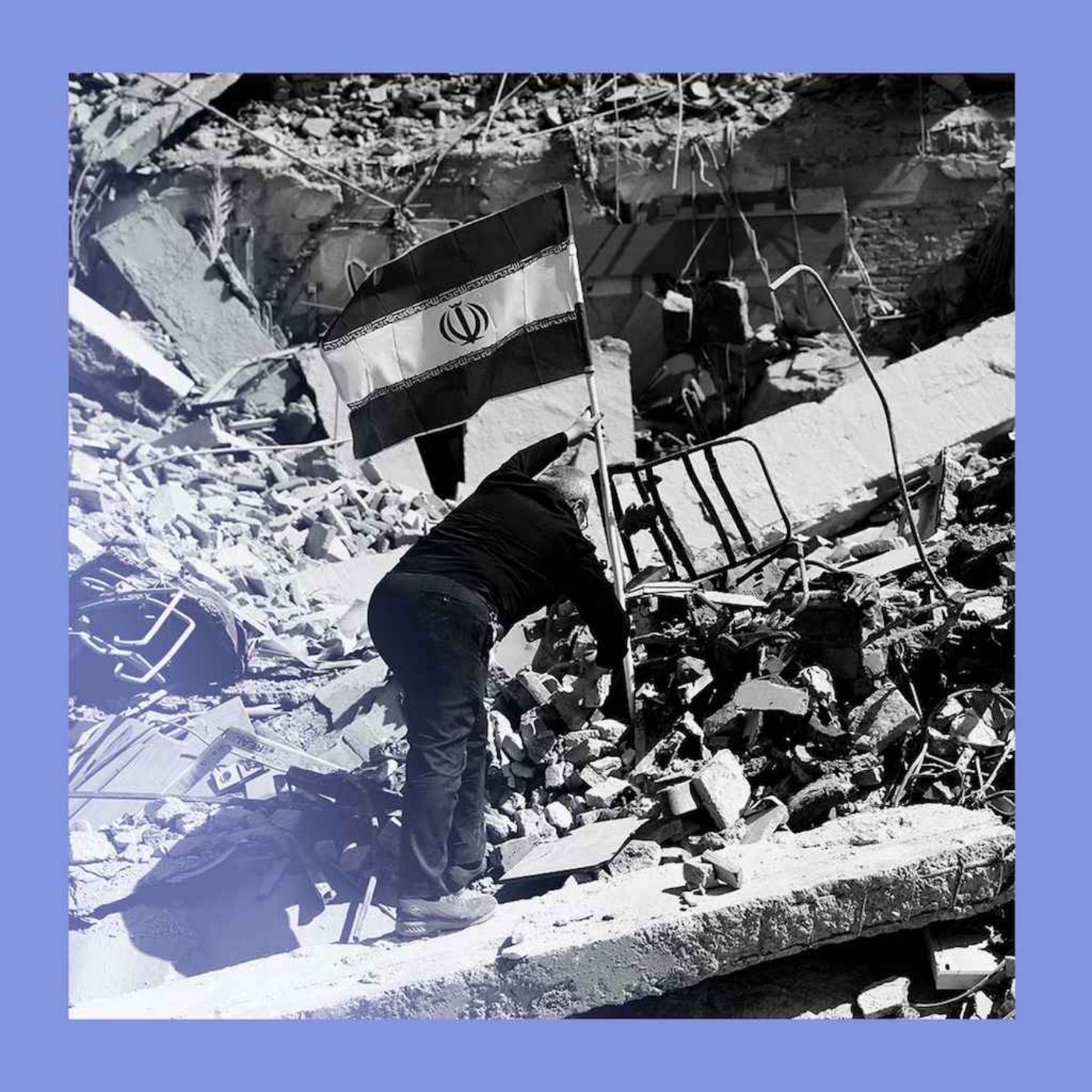
The US is trapped. Withdrawing from Iran would signal imperial collapse, causing allies to defect and the dollar to fail. Therefore, leaders feel forced to double down and escalate, like a gambler chasing losses.

Before the conflict, Iran maintained a "credible but not actual" nuclear program as a deterrent. By assassinating the supreme leader and launching an air war, the US has proven this strategy insufficient, forcing Iran to pursue an actual nuclear weapon for survival.

The conflict progresses through predictable stages: 1) US bombs, strengthening the regime; 2) Iran retaliates by taking the Strait of Hormuz; 3) US considers a ground war. This creates a trap where each step leads to a fork between a ground war or Iran's rise as a world power.

Decades of modeling show that while US bombers can destroy Iran's industrial enrichment facilities, they cannot eliminate the actual enriched material. The material survives under the rubble, allowing Iran to recover it and continue its program, rendering airstrikes ultimately ineffective.
The US presumed a 'decapitation strike' would cause the Iranian regime to collapse from internal mismanagement and popular unrest. This proved false, as the regime's institutionalization and resilience were severely underestimated, leading to a protracted conflict for Washington.

Any outcome short of regime change in Iran cannot be considered a true victory for its adversaries. This is because only a fundamental change in government can reliably guarantee that Iran will not become a nuclear-armed enemy, as any deal with the current theocratic regime is ultimately unenforceable.
