Get your free personalized podcast brief
We scan new podcasts and send you the top 5 insights daily.
Like Apple's Vision Pro, Snap's new glasses will struggle to attract developers without a massive user base. Impressive tech demos are not enough to overcome the classic platform cold-start problem, as developers won't build for an ecosystem with no clear path to monetization.

Related Insights
The same AR glasses technology would earn a startup a billion-dollar valuation. For Snap, which has already spent $3.5B on R&D, the product is viewed negatively by the market because it's judged against the performance of its core ads business, not as a standalone innovation.
Despite analysts viewing live sports as a prime use case for the Apple Vision Pro, Apple's F1 partnership announcement omits plans for immersive 3D or spatial content. This failure to connect a major content acquisition with its new flagship hardware represents a significant missed opportunity to drive hardware adoption.

Despite being a technically impressive product with a strong launch, the Apple Vision Pro is still failing to attract a critical mass of developers. This highlights the extreme difficulty of bootstrapping a new hardware ecosystem, as developers will prioritize established platforms like iOS where the economic opportunity remains larger.
Snap's AR Spectacles are priced in a difficult middle ground. At $2,200, they are too expensive for the mass market where Meta's cheaper Ray-Bans succeed as a lifestyle product. Yet, they lack the dedicated enthusiast ecosystem that allows Apple to sell premium hardware like the Vision Pro, leaving them without a clear target customer.
Unlike the early iPhone era, developers are hesitant to build for new hardware like the Apple Vision Pro without a proven audience. They now expect platform creators to de-risk development by first demonstrating a massive user base, shifting the market-building burden entirely onto the hardware maker.
Demis Hassabis claims previous smart glasses failed not just due to clunky hardware but because they lacked a compelling use case. He argues that a powerful, seamless AI assistant, integrated into daily life, is the "killer app" that will finally drive adoption for this form factor.

The fact that only 3,000 apps have been built specifically for Vision OS is a major red flag. Historically, developers flock to new Apple platforms to gain a first-mover advantage. This lack of enthusiasm indicates the platform's core flywheel—attracting developers to create content that attracts users—is failing.
Snap's core product investment rule is that a new idea must be '10 times better than the next best alternative.' Spiegel cites their early camera glasses as a failure of this principle; they weren't a significant enough improvement over a smartphone or GoPro to justify their existence or command a high price.
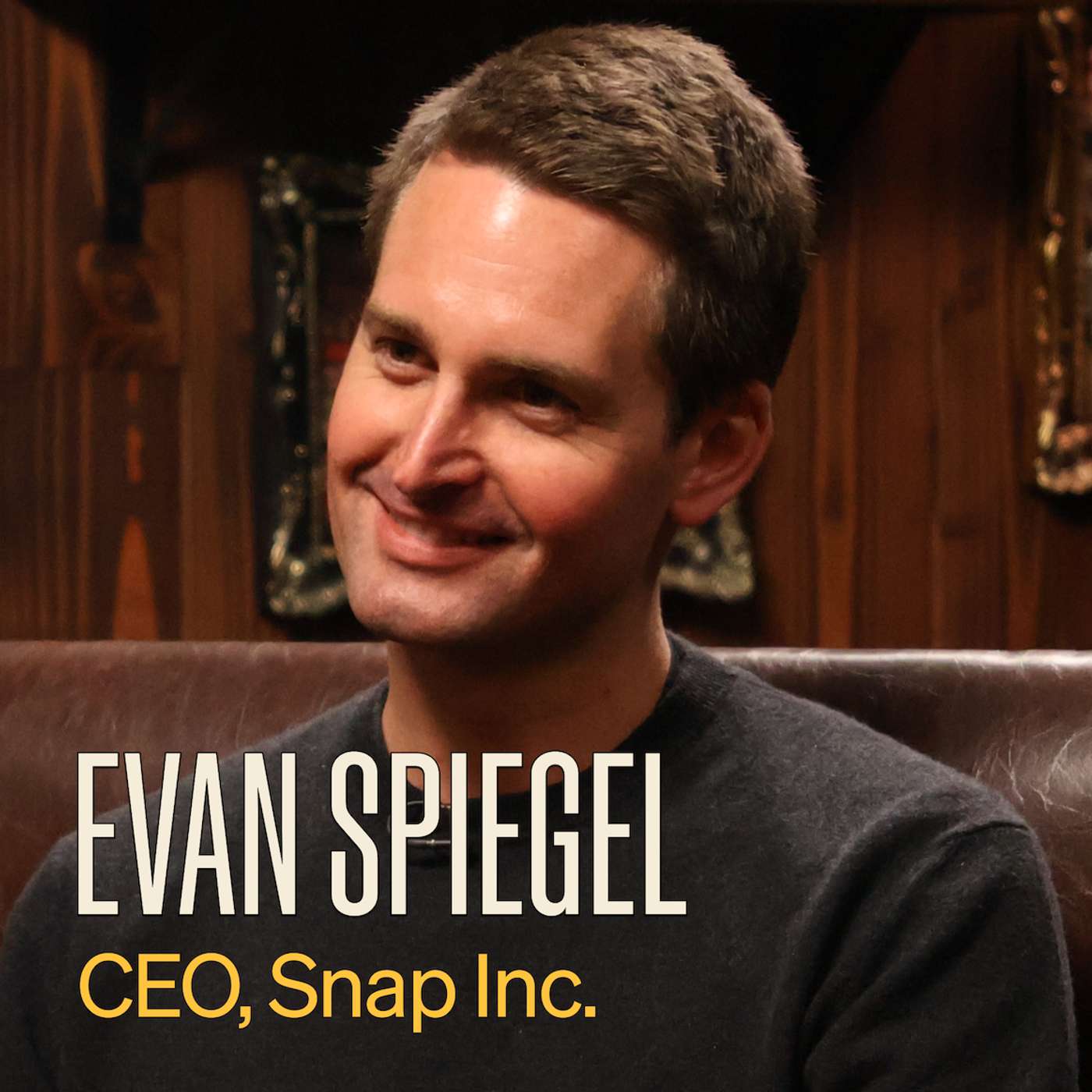
Snap CEO Evan Spiegel sees the winning AR form factor occupying a 'sweet spot': the wearability of normal glasses combined with the spatial computing power of a device like the Vision Pro. This positions Spectacles between today's simplistic 'AI glasses' and fully immersive, but isolating, VR headsets.
While wearable tech like Meta's Ray-Ban glasses has compelling niche applications, it requires an overwhelming number of diverse, practical use cases to shift consumer behavior from entrenched devices like the iPhone. A single 'killer app' or niche purpose is insufficient for mass adoption.
