Get your free personalized podcast brief
We scan new podcasts and send you the top 5 insights daily.
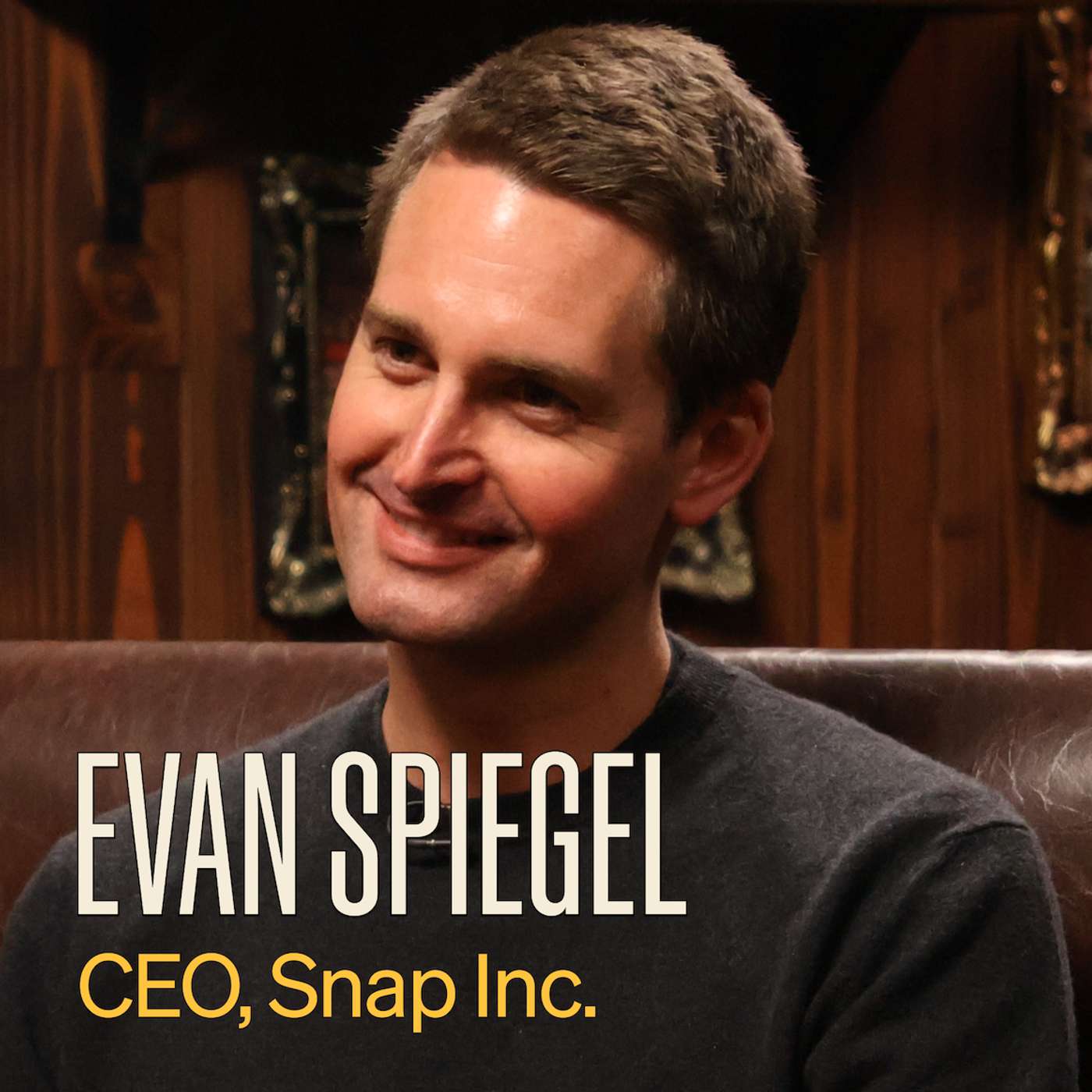
Snap's core product investment rule is that a new idea must be '10 times better than the next best alternative.' Spiegel cites their early camera glasses as a failure of this principle; they weren't a significant enough improvement over a smartphone or GoPro to justify their existence or command a high price.
Related Insights
Snap built its own Linux-based operating system for Spectacles because Android is too bloated and inefficient for a glasses form factor. Spiegel argues that to achieve the necessary performance in a small device, you must own the entire stack, from hardware to a custom-built, lightweight OS.
Startups often fail by making a slightly better version of an incumbent's product. This is a losing strategy because the incumbent can easily adapt. The key is to build something so fundamentally different in structure that competitors have a very hard time copying it, ensuring a durable advantage.
![Palmer Luckey - Inventing the Future of Defense - [Invest Like the Best, CLASSICS] thumbnail](https://megaphone.imgix.net/podcasts/f7c9aa8e-cb8d-11f0-828e-0b281809c10a/image/cc07f91ec47f95abbde771a4956b37b7.jpg?ixlib=rails-4.3.1&max-w=3000&max-h=3000&fit=crop&auto=format,compress)
A slightly better UI or a faster experience is not enough to unseat an entrenched competitor. The new product's value must be so overwhelmingly superior that it makes the significant cost and effort of switching an obvious, undeniable decision for the customer from the very first demo.

While most founders obsess over product-market fit, Evan Spiegel argues that distribution is the key differentiator for modern consumer apps. He cites TikTok (which bought distribution with billions) and Threads (which leveraged Meta's existing network) as prime examples of this principle.

A marginal improvement is insufficient to break customer habits and achieve dominance. Thiel's rule is that a proprietary technology must offer a 10x improvement on a key dimension to gain a true monopolistic advantage, like PayPal did for eBay payments.
OpenAI's browser 'Atlas' might only be a 1.1x improvement over Chrome. This marginal gain is insufficient to drive mass adoption, as users require a 5-10x better experience—like ChatGPT was over Google Search—to switch established habits.
At Snap, all features must receive design approval before shipping. Evan Spiegel views this function as a crucial, intentional bottleneck. While it can slow down development and annoy other teams, he believes it is essential for maintaining a cohesive, high-quality customer experience across the entire product.
Long before AI made it obvious, Snap realized its software features were easily copied. This early insight drove their strategy to build more durable moats by investing in defensible ecosystems (like their AR developer platform) and vertically integrated hardware (Spectacles), which are much harder to replicate.
Snap CEO Evan Spiegel sees the winning AR form factor occupying a 'sweet spot': the wearability of normal glasses combined with the spatial computing power of a device like the Vision Pro. This positions Spectacles between today's simplistic 'AI glasses' and fully immersive, but isolating, VR headsets.
As AI makes software development trivial, traditional competitive moats like large app stores are losing their power. According to Snap's CEO, this disruption makes building difficult physical hardware a more critical strategic differentiator. Companies must focus on defensible, real-world products as software becomes commoditized.
