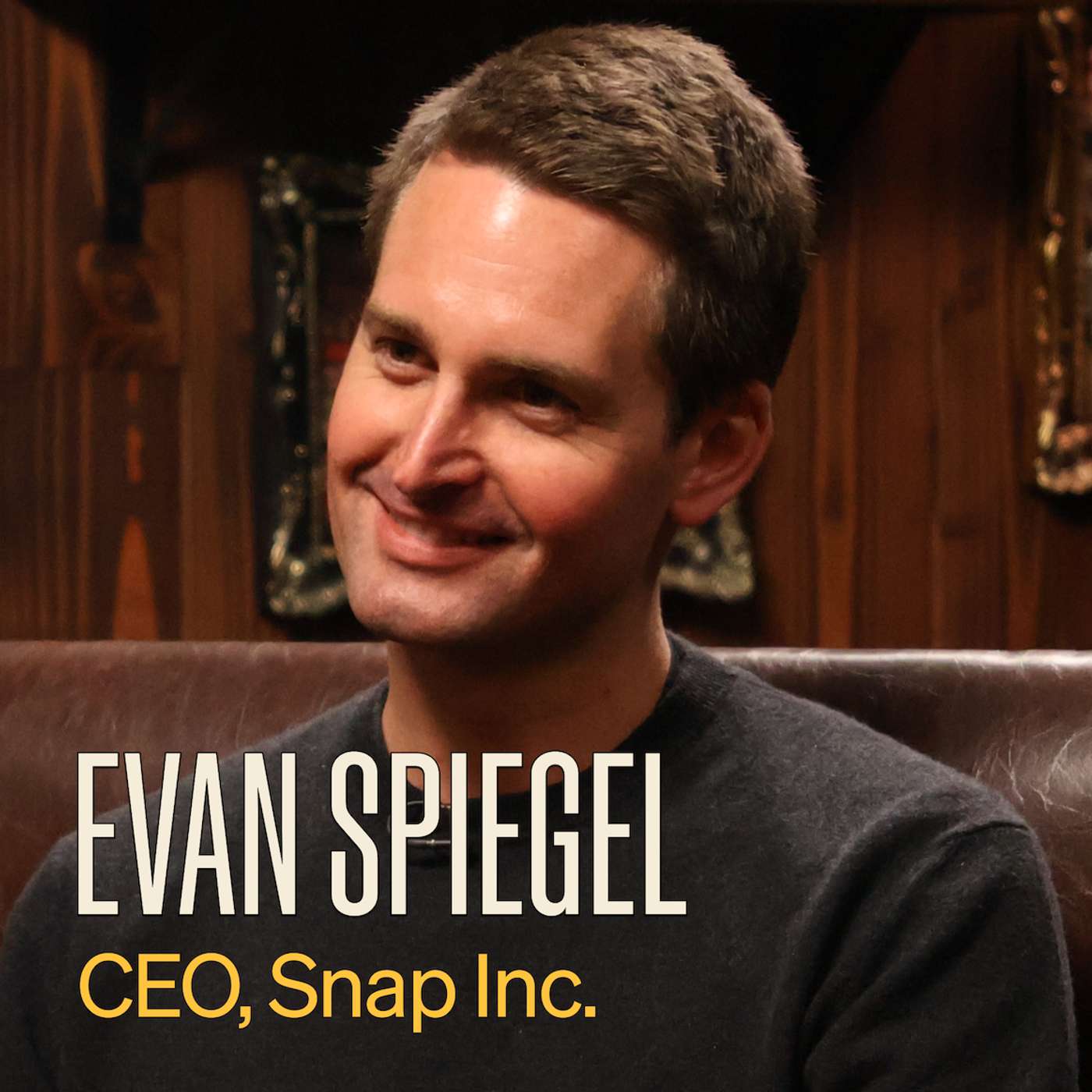
Snap CEO Evan Spiegel sees the winning AR form factor occupying a 'sweet spot': the wearability of normal glasses combined with the spatial computing power of a device like the Vision Pro. This positions Spectacles between today's simplistic 'AI glasses' and fully immersive, but isolating, VR headsets.
Evan Spiegel predicts AR glasses won't immediately replace smartphones. Instead, their first major use case will be displacing large screens. He argues that having a huge, private, portable screen for work or entertainment is a more compelling initial value proposition than full smartphone replacement.
Snap built its own Linux-based operating system for Spectacles because Android is too bloated and inefficient for a glasses form factor. Spiegel argues that to achieve the necessary performance in a small device, you must own the entire stack, from hardware to a custom-built, lightweight OS.
Snap's core product investment rule is that a new idea must be '10 times better than the next best alternative.' Spiegel cites their early camera glasses as a failure of this principle; they weren't a significant enough improvement over a smartphone or GoPro to justify their existence or command a high price.
Evan Spiegel argues the 'killer app' concept is outdated. In the AI era, platforms win not by having one blockbuster app, but by empowering users to easily build bespoke software for their own specific needs. The value shifts from a single hit to a platform for mass personalization and creation.
Spiegel sees AI-powered software development as the key to overcoming the App Store's dominance. Historically, a new platform couldn't compete with millions of existing apps. Now, because AI makes it so easy to write software, a new ecosystem can be populated quickly, neutralizing the incumbent's advantage.
Contrary to Metcalfe's Law, Snapchat found social networks have diseconomies of scale. When users add too many friends, they become uncertain who is seeing their content and feel uncomfortable posting. This 'friend pressure' inhibits engagement and degrades the product's core value.
Snapchat intentionally separates friend-based social interactions from publisher-driven media consumption. Spiegel says combining them creates a perverse incentive to push users to add more friends simply to generate feed content, which ultimately pollutes the core social experience with close connections.
To accelerate iteration and protect intellectual property, Snap manufactures its most sophisticated hardware components, like the waveguides for Spectacles, in-house in the US and UK. This co-location of R&D and manufacturing provides a competitive edge over rivals who fully outsource production.