Get your free personalized podcast brief
We scan new podcasts and send you the top 5 insights daily.
Children's brains are constantly processing overwhelming new data. From a neuroscience perspective, re-watching the same movie or song is a calming behavior that reduces anxiety by presenting familiar, predictable information, providing a respite from the neurological load of constant learning.

Related Insights
The contents of our conscious experience, or "working memory," are ephemeral and fade away unless actively maintained. Focusing on a neutral anchor like the breath isn't just a distraction; it actively starves an anxiety-producing narrative of the cognitive fuel it needs to persist, allowing it to naturally dissipate.

Our nervous system is wired to gravitate towards familiar patterns, confusing them with safety. This is why people unconsciously recreate painful or traumatic childhood dynamics in adult relationships. It is a biological pull toward the known, not a conscious desire for pain, making it a cosmically unfair default setting.

The mind wanders 50% of the time not by accident, but as an evolutionary feature. This "spontaneous thought" acts like a replay function, repeatedly firing neural patterns from recent experiences to strengthen their connections and embed them as long-term memories.
A simple way to regulate your nervous system is to listen to birdsong. From an evolutionary perspective, birds only sing when there are no predators nearby. Hearing them subconsciously signals to our brains that we are safe, which in turn lowers cortisol levels, blood pressure, and breathing rate.

Humans have two attention types: fatigable 'directed attention' for focus and effortless 'involuntary attention.' Nature's 'softly fascinating' stimuli (like waves) engage involuntary attention, allowing our directed attention to recover. This is unlike chaotic urban environments that overwhelm all attentional resources.

Over the same decades that children's independent play has declined, rates of youth anxiety and depression have steadily risen. Unsupervised play is crucial for developing an "internal locus of control," which allows kids to learn they can handle life’s challenges and builds resilience.

Horror can act as a tool for managing generalized anxiety. It hijacks the mind's vigilance cycle, which looks for a threat but can't find one, and provides a specific, identifiable, and controllable fictional threat on screen. Once the movie ends, the threat disappears, triggering the body's relaxation response and calming the nervous system.
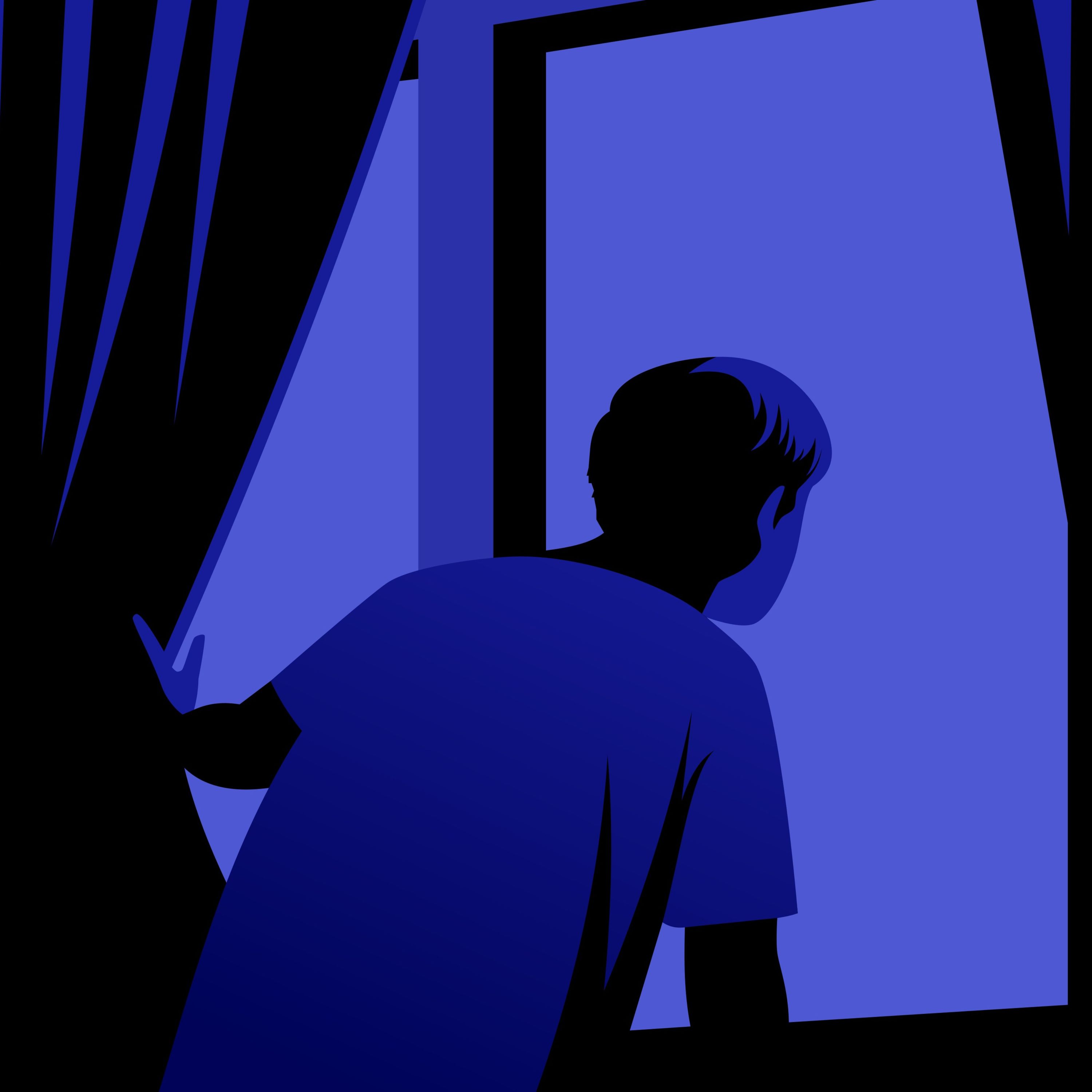
Based on the principles of EMDR, intentionally moving your eyes laterally from side-to-side for about 30 seconds can suppress activity in the amygdala. Neuroscientist Andrew Huberman confirms this is a scientifically validated technique for creating a state of reduced alertness before a stressful event like public speaking.
Research conducted during the COVID-19 pandemic revealed that horror fans exhibited greater psychological resilience and less distress than non-fans. Regularly engaging with frightening fictional scenarios appears to serve as a form of emotional regulation practice, equipping individuals to better handle real-world stress and anxiety.
While repetition is crucial for skill mastery, the brain eventually stops recording familiar experiences to conserve energy. This neurological efficiency causes our perception of time to speed up as we age. To counteract this, one must intentionally introduce new challenges to keep the brain actively creating new memories.