Get your free personalized podcast brief
We scan new podcasts and send you the top 5 insights daily.
Scaling a creator collective does not require clustering around the same niche or topic. Curating distinct, complementary voices that share an ethos of resisting algorithmic manipulation allows networks to pool backend leverage without diluting creator originality.

Related Insights
Stop creating separate social media accounts for different content types. Modern algorithms prioritize serving individual pieces of content to the right audience, regardless of your account's history or niche. A single high-quality post will find its viewers, making account-level siloing obsolete.

In the AI era, a creator's job will evolve from producing content to architecting their community's digital ecosystem. This involves tweaking a custom algorithm to guide AI-generated content, ensuring it aligns with the community's values and delivers specific, positive outcomes for members.

Relying on one platform and its payments is a high-risk strategy due to algorithm volatility. Successful creators build resilience by distributing content across multiple platforms (podcasts, newsletters, websites) and combining revenue from ads, sponsorships, and direct sales.

Instead of creating everything from scratch, Klue's Compete Network began by aggregating content and partnering with existing thought leaders. They provided the production 'plumbing,' allowing creators to focus on their expertise, which accelerated the network's growth and value.

Ben Smith compares YouTube's model to Uber's, arguing it's designed to deal with individual creators, not organized media companies. This "atomization" prevents creators from forming collectives that could negotiate with or exert leverage over the platform, ensuring YouTube retains ultimate power and control.
Klue's Complete Network succeeded by providing production infrastructure ("plumbing") for creators. This allowed talent to focus on their expertise, building an audience through personality-driven content rather than direct brand promotion, a strategy that predated the B2B creator trend.

In a world where AI can easily replicate standard industry advice, creators should identify and champion an "anti-message"—a core belief that goes against the grain. This unpopular but authentic stance attracts a loyal, niche audience.

In response to concerns that AI optimization leads to content sameness, CEO Neal Mohan argues the opposite. He claims YouTube's massive scale and lack of gatekeepers allow millions of hyper-specific, yet large, niche communities to flourish, thereby promoting content diversity rather than homogeneity.
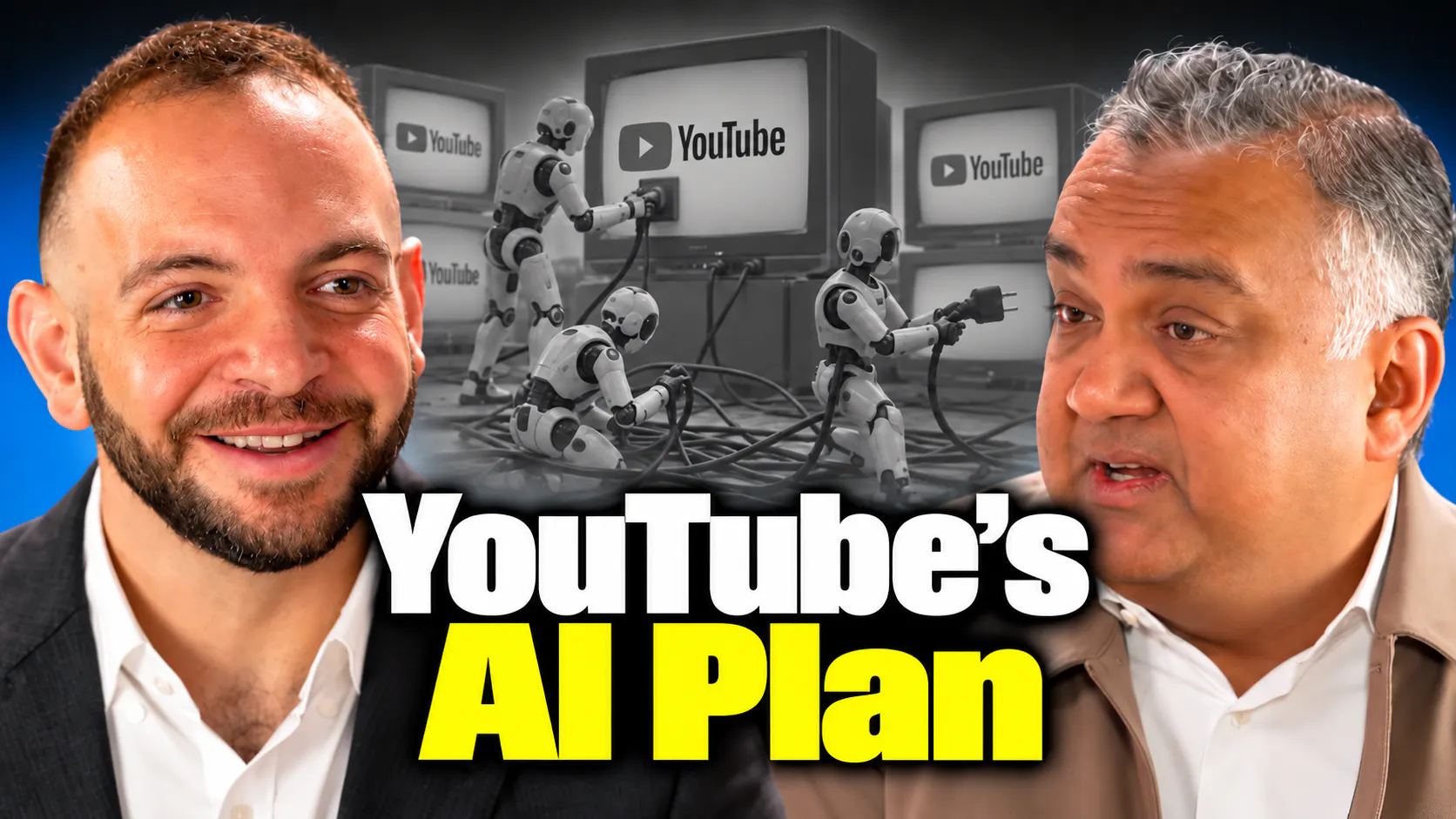
Ben Smith argues that while distribution channels (like social video) pull content towards polarization for maximum engagement, a quality media brand must build the discipline to resist this pull. The focus should be on the target audience's needs, not the platform's algorithm.
Journalist Eric Newcomer rejects the 'rebundling of Substack' theory. He argues that creator-led media outlets have such distinct brands that they won't merge. Instead, the successful model is to scale like a top YouTuber: build a team and brand extensions under a single, strong personality, rather than acquiring other creators.
