Get your free personalized podcast brief
We scan new podcasts and send you the top 5 insights daily.
A modern cultural paradox exists: while reading rates are falling, content *about* reading—podcasts, social media campaigns, and book clubs—is booming. This suggests the public is more engaged with the performance and discussion of reading as a cultural signal than with the solitary, time-consuming act of actually reading a book.

Related Insights
Accepting the narrative that attention spans are shrinking is dangerous. It can lead educators and creators to give up on encouraging deep, focused tasks like reading long novels, thereby causing the very outcome they fear by lowering their expectations and standards.

The value of most self-help content isn't in providing novel information, but in acting as a ritualized reminder of fundamental truths we already know. In a secular world, podcasts and online media have replaced the role of religion in consistently reinforcing core principles, helping people keep essential ideas top-of-mind amidst daily distractions.

Gladwell observes that audio is inherently better at conveying emotion than detailed analysis, which often gets edited out of his podcasts. He suggests this cultural shift from written to oral mediums changes how stories are told and understood, favoring feeling over complex facts.

Human communication is returning to its oral and visual roots. Text, a low-dimensional medium, was a temporary necessity for scalable knowledge storage—a 'parenthesis' in history. As AI makes creating rich media as easy as writing, society will default back to more natural, higher-bandwidth formats like audio and video.

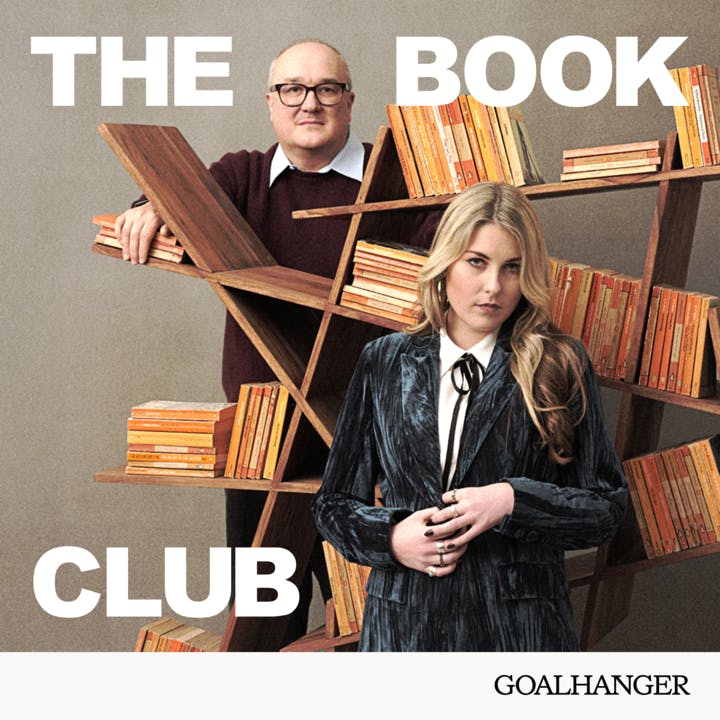
"The Book Club" podcast is designed for two audiences simultaneously. For those who've read the book, it's an enjoyable conversation. For those who haven't, the hosts have "done the reading for you," allowing listeners to appear well-read. This broadens the potential audience beyond just avid readers.
The same technologies accused of shortening attention spans are also creating highly obsessive micro-tribes and fandoms. This contradicts the narrative of a universal decline in focus, suggesting a shift in what we pay attention to, not an inability to focus.
The narrative that attention spans are universally shrinking is incomplete. Media consumption is forming a "barbell" distribution. While ultra-short-form video is exploding, so is ultra-long-form content like three-to-ten-hour podcasts and deep-dive essays. It's the middle-ground, traditional media formats that are being squeezed out.

Instead of everything simply getting dumber, media is splitting into two extremes. Both hyper-short (four-second videos) and hyper-long (four-hour podcasts) content are thriving. It is the middle-length, moderately complex content that is being hollowed out as audiences gravitate towards the poles.
A book's success is measured by the ripples it creates—the podcasts, reviews, and debates it generates. More people engage with the ideas *about* the book than read it. Authors create a "boulder to drop in a lake" to generate waves, not just to sell a physical object.
Long novels, now the gold standard for deep focus, were once considered dangerous “junk food” that distracted people from prayer and duty. This historical pattern suggests our current panic over digital media may be similarly shortsighted and lacking perspective.