Get your free personalized podcast brief
We scan new podcasts and send you the top 5 insights daily.
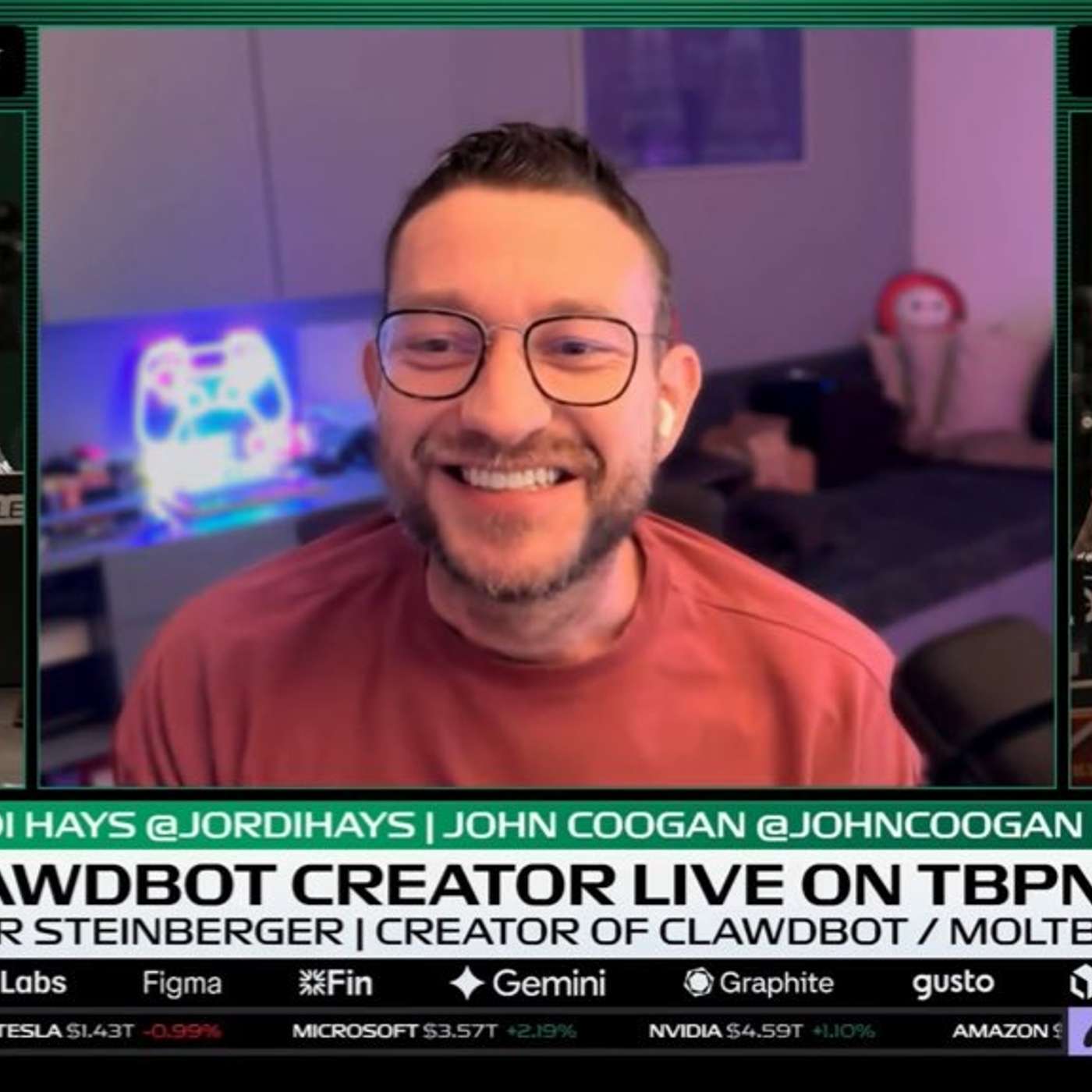
Despite massive traction and investor interest, the creator of the viral AI agent Moltbot insists his primary motivation is having fun and inspiring others, not making money. This philosophy informs his decision to keep the project open-source and resist forming a traditional company, showcasing an alternative path for impactful tech.
Related Insights
In the emerging AI agent space, open-source projects like 'Claude Bot' are perceived by technical users as more powerful and flexible than their commercial, venture-backed counterparts like Anthropic's 'Cowork'. The open-source community is currently outpacing corporate product development in raw capability.

Adopting the philosophy of 'building for dying' (向死而生), the founder views his AI product not just for current productivity, but as a future 'playground.' In a world where AI automates most jobs, the product's purpose will shift to providing fulfillment and the pleasure of 'pretend work.'

The AI industry fixated on consumer agent demos like booking flights. Moltbot's viral adoption reveals the more impactful immediate use case is integrating with the operating system to perform fundamental computer tasks like research, file generation, and reporting. This OS-level utility is proving more valuable than single-purpose consumer actions.

Peter Steinberger's ability to rename Clawdbot to Moltbot in an hour reflects the mindset of a prolific developer with dozens of projects. He doesn't treat names as precious, multi-million dollar decisions but as functional labels. This allows for extreme agility that established companies, who agonize over branding for years, cannot match.
Elon Musk founded OpenAI as a nonprofit to be the philosophical opposite of Google, which he believed had a monopoly on AI and a CEO who wasn't taking AI safety seriously. The goal was to create an open-source counterweight, not a for-profit entity.
Moltbot's creator highlights a key challenge: viral success transforms a fun personal project into an overwhelming public utility. The creator is suddenly bombarded with support requests, security reports, and feature demands from users with different use cases, forcing a shift from solo hacking to community-led maintenance or a foundation.

Instead of designing tools for human usability, the creator built command-line interfaces (CLIs) that align with how AI models process information. This "agentic-driven" approach allows an AI to easily understand and scale its capabilities across numerous small, single-purpose programs on a user's machine.
While creator Peter Steinberger is credited with Moltbot's viral success, he quickly brought on contributors to manage the project. This challenges the popular narrative of solo founders reaching massive scale, highlighting that even hyper-efficient creators need a team to handle rapid growth and operational complexity.
In an environment where Big Tech acquires promising AI startups, building an independent company requires intrinsically mission-driven founders. Factory's CEO argues a founder's "relentlessness" is the key defense against lucrative but mission-derailing acquisition offers.
AI music's primary value isn't just as a professional tool. Suno's CEO explains its success comes from attracting users with a novel party trick (e.g., a funny one-off song) and then retaining them through the unexpectedly joyful and engaging experience of making music.
