Get your free personalized podcast brief
We scan new podcasts and send you the top 5 insights daily.
While the public sees fake videos and chatbots, developers are building self-improving systems. This "hype dichotomy" means society is missing the true significance and speed of AI's development, which is far more advanced than perceived.

Related Insights
A significant credibility gap is forming between AI executives' talk of "superintelligence" and the often buggy, frustrating reality of using current models. This disconnect devalues serious policy discussions and creates cynicism, with observers noting we are in an "extremely capable tool era," not a "new social contract era."

The public AI debate is a false dichotomy between 'hype folks' and 'doomers.' Both camps operate from the premise that AI is or will be supremely powerful. This shared assumption crowds out a more realistic critique that current AI is a flawed, over-sold product that isn't truly intelligent.

While public discourse on AI models often focuses on incremental improvements in common tasks like writing emails, the most profound advancements are happening in specialized fields like science and mathematics. This capability gap creates a disconnect in perceived progress.
People deeply involved in AI perceive its current capabilities as world-changing, while the general public, using free or basic tools, remains largely unaware of the imminent, profound disruption to knowledge work.

A strange dynamic exists in AI, where both the labs building the technology and the safety advocates warning against it amplify the narrative of its world-changing potential. This alignment, regardless of sincerity, contributes to the industry's hype and perceived importance.

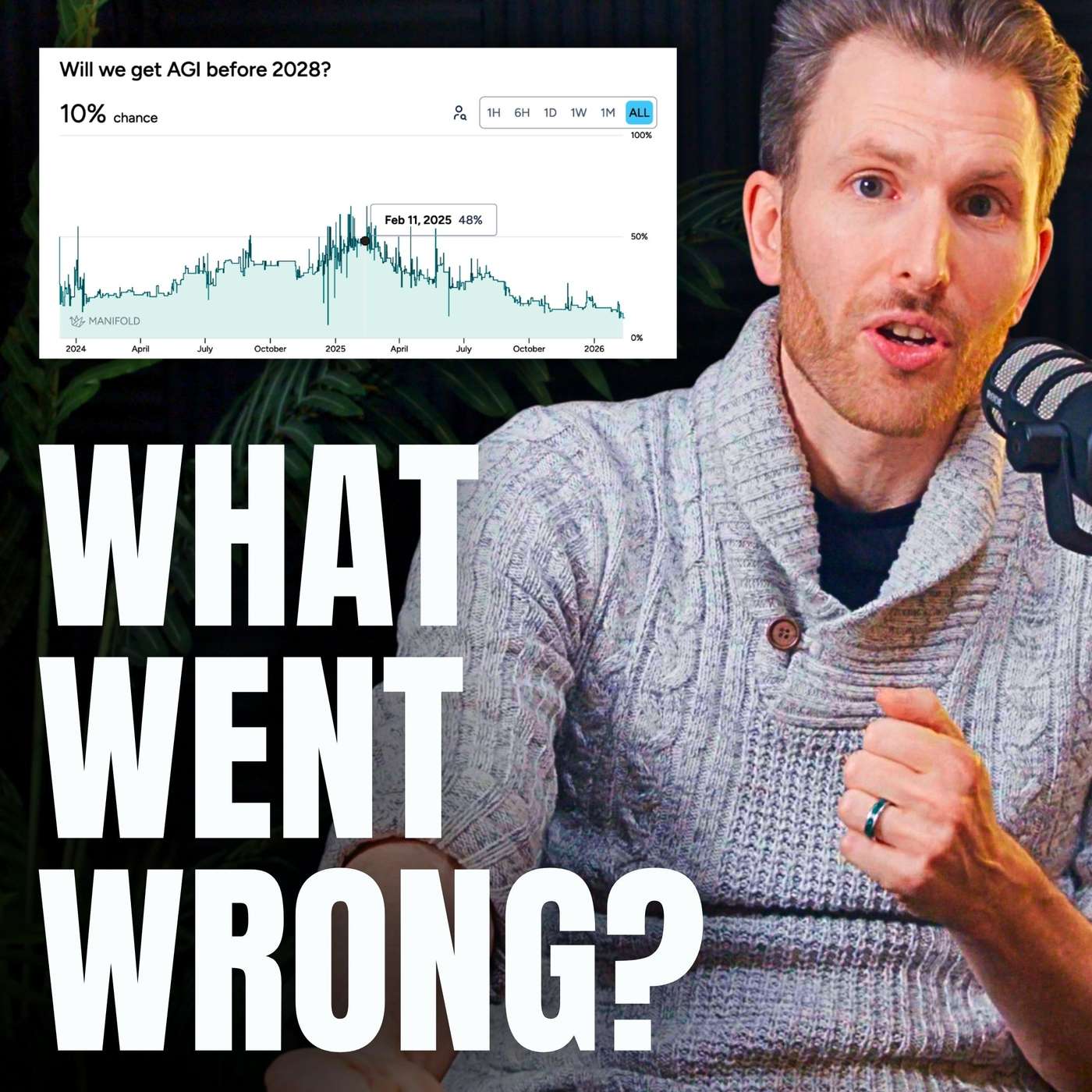
A growing gap exists between AI's performance in demos and its actual impact on productivity. As podcaster Dwarkesh Patel noted, AI models improve at the rapid rate short-term optimists predict, but only become useful at the slower rate long-term skeptics predict, explaining widespread disillusionment.
Many people's last experience with AI was with early ChatGPT in 2023, which was prone to errors. The rapid advancement of models like Claude is creating a shockwave, forcing a re-evaluation of AI's disruptive potential, similar to the societal shifts seen during major technological revolutions.

AI models will produce a few stunning, one-off results in fields like materials science. These isolated successes will trigger an overstated hype cycle proclaiming 'science is solved,' masking the longer, more understated trend of AI's true, profound, and incremental impact on scientific discovery.

Non-tech professionals often judge AI by obsolete limitations like six-fingered images or knowledge cutoffs. They don't realize they already consume sophisticated AI content daily, creating a significant perception gap between the technology's actual capabilities and its public reputation.
The media portrays AI development as volatile, with huge breakthroughs and sudden plateaus. The reality inside labs like OpenAI is a steady, continuous process of experimentation, stacking small wins, and consistent scaling. The internal experience is one of "chugging along."
![[State of RL/Reasoning] IMO/IOI Gold, OpenAI o3/GPT-5, and Cursor Composer — Ashvin Nair, Cursor thumbnail](https://assets.flightcast.com/V2Uploads/nvaja2542wefzb8rjg5f519m/01K4D8FB4MNA071BM5ZDSMH34N/square.jpg)