Get your free personalized podcast brief
We scan new podcasts and send you the top 5 insights daily.
Assault units use heavy "vampire" drones to deliver their heavy gear—rucksacks, armor, ammo—directly to an objective. This allows soldiers to run across exposed terrain "slick" with just a rifle, drastically increasing speed and mobility while reducing physical load and exposure time to enemy fire.

Related Insights
Ukraine has scaled production of new, powerful kamikaze drones capable of striking targets deep behind Russian lines. This closes a critical capability gap, allowing Ukraine to hit command posts, air defense, and logistics hubs that were previously only vulnerable to scarce, high-end munitions.
Skydio's drones are designed as 'force multipliers' where AI handles complex tasks like navigation, obstacle avoidance, and subject tracking. This frees the human operator to focus on high-level mission objectives, like assessing a situation, rather than the mechanics of flying the drone.

In Ukraine, infantrymen often act as observers, calling in drone strikes rather than engaging in firefights. Engaging with small arms can reveal their concealed positions to enemy drones, making them vulnerable. This marks a fundamental shift in the infantry's primary role on a drone-dominated battlefield.
The war in Ukraine marks a historical inflection point in military technology. For the first time since the 19th century, the primary method of killing a soldier is no longer a bullet or artillery shell, but a drone. This fundamentally changes battlefield tactics and defense strategies.

For serious cargo delivery, tilt-rotor hybrid drones are more effective than simple quadcopters. They combine the convenience of vertical takeoff with the energy efficiency of fixed-wing flight, enabling longer ranges (60+ miles) and heavier payloads (40+ lbs).

Drones establish a lethal "kill zone" that restricts ground movement and forces soldiers into hiding. Paradoxically, large logistics drones are also the primary means of survival, delivering all essential supplies like food, water, and ammunition to these otherwise inaccessible frontline positions, enabling the fight to continue.
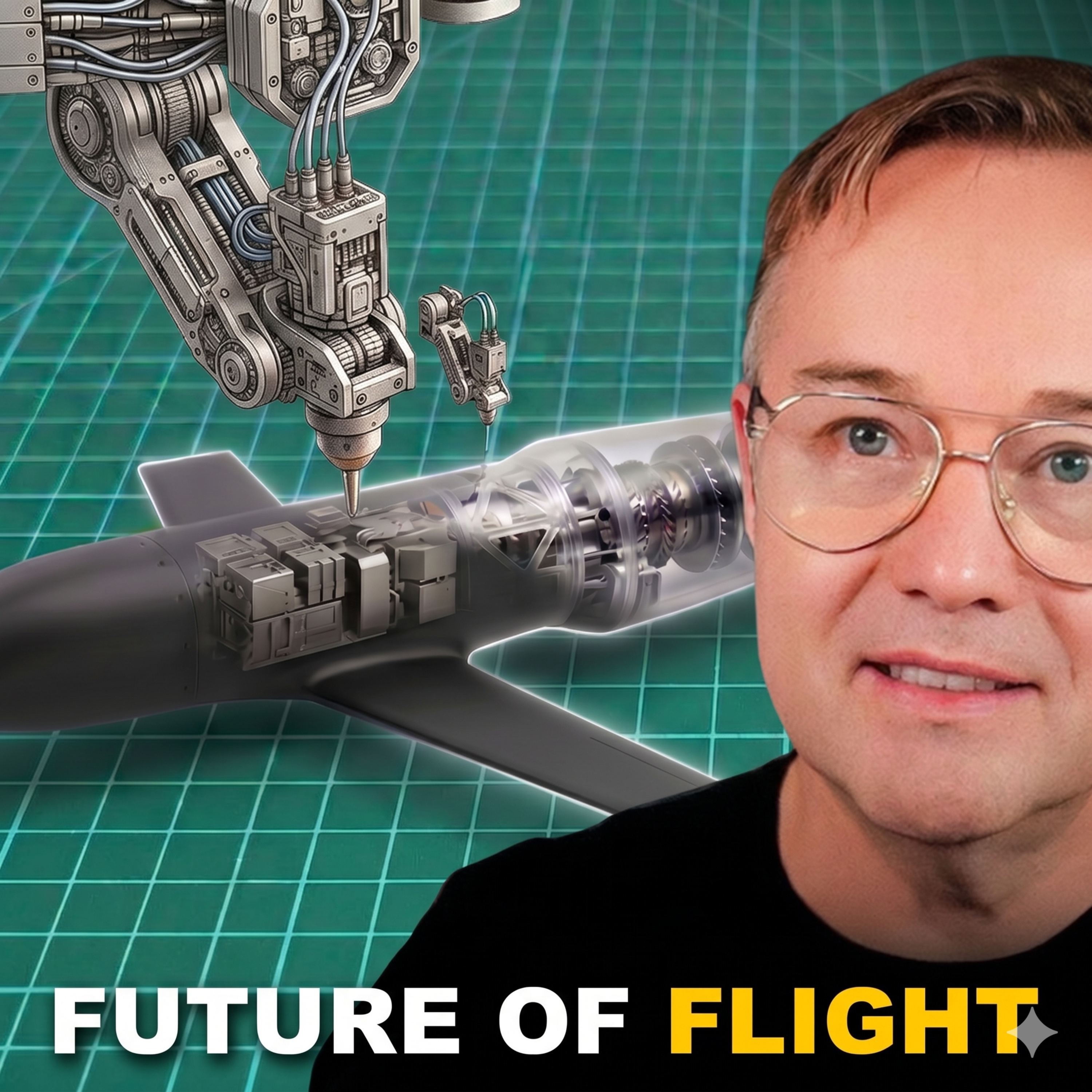
Additive manufacturing enables a new paradigm for military supply chains. Small plastic and metal 3D printers can be placed in standard shipping containers (CONEX boxes) near the front lines, allowing for on-demand production of drones and munitions, increasing responsiveness.
The ubiquitous threat of FPV drones in open terrain has made mid-range (e.g., 400-meter) engagements obsolete. Infantry tactics now polarize between very long-range engagements and immediate close-quarters battle (CQB) inside trenches or buildings, as any time spent exposed in the open is potentially fatal.
The focus on drone technology overshadows its real impact: a fundamental shift in military doctrine. True innovation isn't adding drones to existing units, but replacing entire battalions (e.g., armor) with new drone-centric formations, completely altering force structures and tactics.

The war in Ukraine has evolved from a traditional territorial conflict into a "robot war," with drones dominating the front lines. This real-world battlefield is accelerating innovation at an "unbelievable" pace, driving new solutions for secure communications and autonomous targeting, providing critical lessons for US drone strategy.