Get your free personalized podcast brief
We scan new podcasts and send you the top 5 insights daily.
In Ukraine, infantrymen often act as observers, calling in drone strikes rather than engaging in firefights. Engaging with small arms can reveal their concealed positions to enemy drones, making them vulnerable. This marks a fundamental shift in the infantry's primary role on a drone-dominated battlefield.

Related Insights
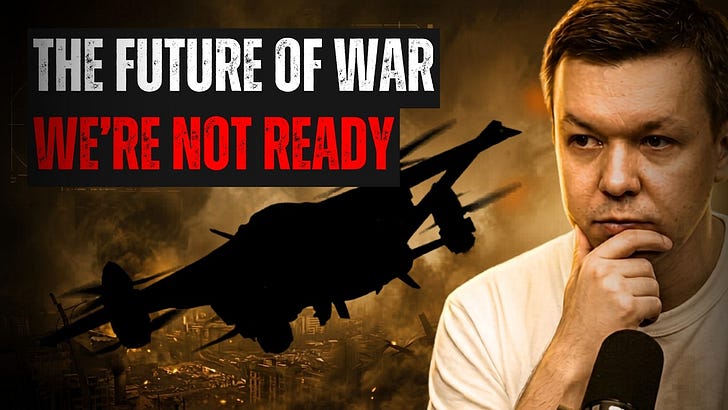
The war in Ukraine marks a historical inflection point in military technology. For the first time since the 19th century, the primary method of killing a soldier is no longer a bullet or artillery shell, but a drone. This fundamentally changes battlefield tactics and defense strategies.

The concept of a clear "front line" is gone. The battlefield is a porous zone where infiltration is constant. Control is better understood not by infantry positions, but by the operational reach and coverage of each side's UAV teams, which dictates who can see and strike within an area.
Artillery was historically called the 'god of war' for causing ~80% of battlefield casualties. In Ukraine, FPV (First-Person View) drones have now taken that role, accounting for 70-80% of casualties on the frontline, fundamentally shifting modern combat dynamics.
Despite drones causing the vast majority of casualties, human soldiers in dugouts remain essential. Their physical presence is what establishes control over territory, as a drone cannot occupy a position. This suggests that the "end of the rifleman" is not as imminent as some predict.
The ubiquitous threat of FPV drones in open terrain has made mid-range (e.g., 400-meter) engagements obsolete. Infantry tactics now polarize between very long-range engagements and immediate close-quarters battle (CQB) inside trenches or buildings, as any time spent exposed in the open is potentially fatal.
A key architect of Ukraine's drone program has pivoted the military's objective away from capturing territory. The new strategy uses drones to target individual Russian soldiers, aiming for a kill rate that exceeds Russia's recruitment rate. This redefines victory as causing a demographic and logistical collapse of the enemy force, rather than controlling land.

The focus on drone technology overshadows its real impact: a fundamental shift in military doctrine. True innovation isn't adding drones to existing units, but replacing entire battalions (e.g., armor) with new drone-centric formations, completely altering force structures and tactics.

Advanced sensors, drones, and satellites make it nearly impossible for either side in the Ukraine war to concentrate large forces without being immediately detected and destroyed. This technological shift enforces a static, sluggish front line characterized by small, dismounted infantry movements.
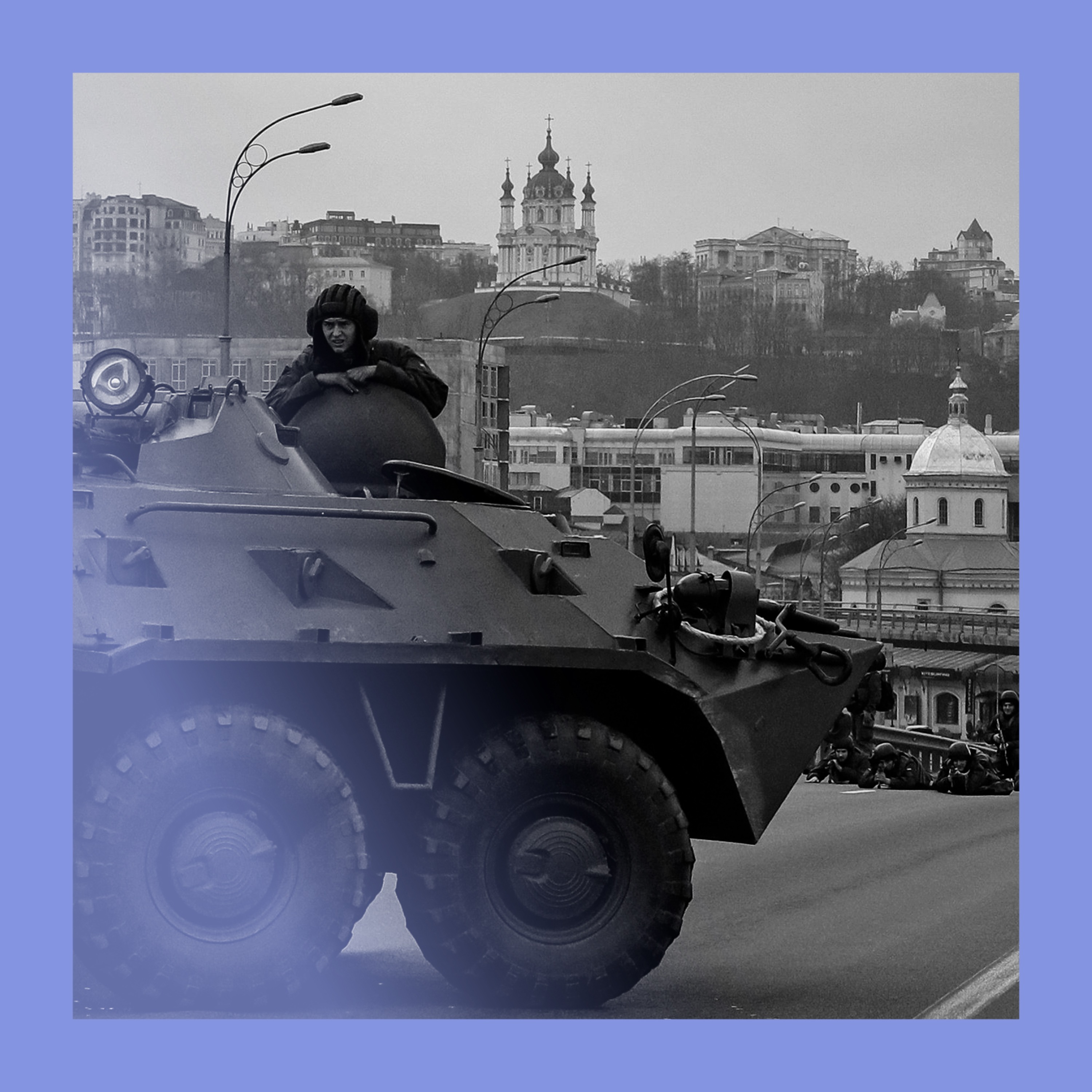
The war in Ukraine has evolved from a traditional territorial conflict into a "robot war," with drones dominating the front lines. This real-world battlefield is accelerating innovation at an "unbelievable" pace, driving new solutions for secure communications and autonomous targeting, providing critical lessons for US drone strategy.

The rise of drones is more than an incremental improvement; it's a paradigm shift. Warfare is moving from human-manned systems where lives are always at risk to autonomous ones where mission success hinges on technological reliability. This changes cost-benefit analyses and reduces direct human exposure in conflict.
