Get your free personalized podcast brief
We scan new podcasts and send you the top 5 insights daily.
An HR chatbot built by an intern at Progeny did more than answer employee questions; it created an objective data source of common concerns. This feedback loop allowed the company to adapt its healthcare and benefits policies based on real, aggregated employee needs.
Related Insights
Boulton & Watt built an internal AI agent that processes customer interview transcripts. It maps findings to core hypotheses, highlighting supporting and contradicting evidence. This keeps the team rigorous and fact-based, counteracting natural founder bias during the discovery process.

When each employee has a personal AI agent, the agents naturally adopt the specializations of their human counterparts. The head of growth's agent becomes the go-to expert on growth metrics, creating a parallel organization of specialized bots that mirrors the human org chart.

Employee feedback is often a mix of nuance, emotion, and contradiction—"culture noise." An AI system analyzes this noise to find specific, contextual signals. It transforms a generic metric like "low trust" into a specific insight like "trust broke after a restructuring," making the problem solvable.

To improve the quality of executive one-on-ones, Progeny created a custom GPT that mimicked its CEO's detail-oriented questioning style. This allowed leaders to pressure-test their ideas and show up better prepared for time-poor, high-stakes conversations.
Expensive user research often sits unused in documents. By ingesting this static data, you can create interactive AI chatbot personas. This allows product and marketing teams to "talk to" their customers in real-time to test ad copy, features, and messaging, making research continuously actionable.
To manage feedback from its large co-design community, Cisco used multiple channels (webinars, 1-on-1s) and AI to synthesize the input. This revealed highly consistent themes across diverse groups, giving them confidence they were addressing the core "reality" of partner needs, not just anecdotes.

To understand how users would naturally interact with their agent, Linear quietly replaced its procedural Slack bot with the new AI. This revealed unexpected behaviors, like users simply typing "@linear do the right thing," providing invaluable real-world usage data.

The barrier to creating AI-powered solutions has dropped dramatically. An HR team member with no AI expertise built a Slack bot trained on the employee handbook to answer common questions, saving hours of repetitive work. Every department should be empowered to identify and automate its own low-value, repetitive tasks using accessible AI tools.

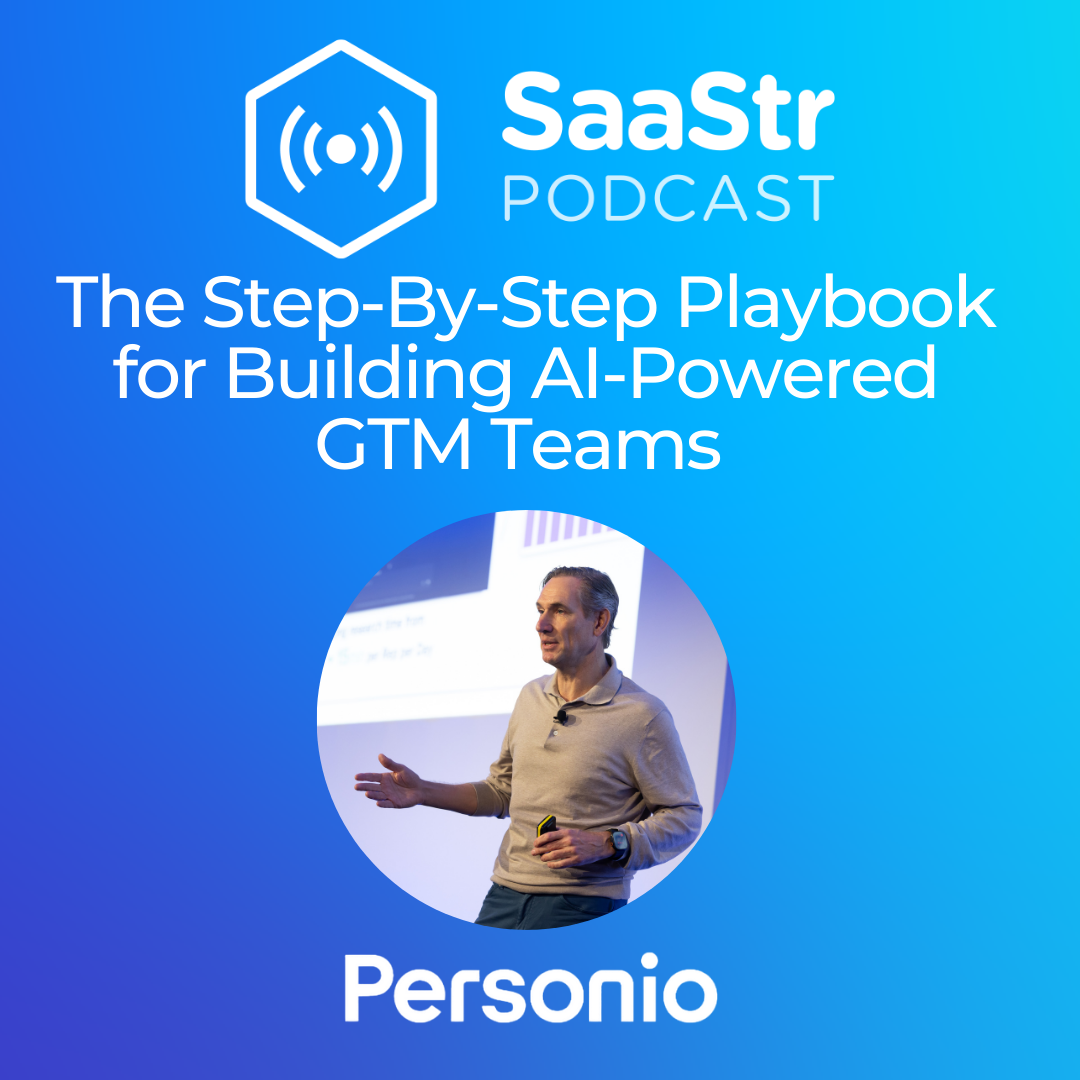
An AI chatbot is not a 'set it and forget it' tool. Personio assigned a specific employee to be accountable for their chatbot, 'Nia.' This person's job is to review the AI's daily outputs, provide feedback, and test in real-time to correct errors like giving legal advice or bashing competitors, ensuring the AI improves continuously.
A custom AI system named Marilyn, built by the CMO and one engineer, has become the central nervous system for Wiz's GTM team. It answers complex questions on competition, product docs, and strategy, even translating content for global teams. This demonstrates the immense ROI of building custom internal AI tools.