Get your free personalized podcast brief
We scan new podcasts and send you the top 5 insights daily.
Marketing powerful AI capabilities with niche or esoteric examples is ineffective. Users don't easily make the cognitive leap to apply that power to their own distinct problems. Instead, adoption is sparked when they see a specific, compelling use case and want to replicate that exact outcome for themselves.

Related Insights
To overcome customer inertia with AI, don't pitch a broad platform. Instead, identify a specific, high-impact use case for their industry (e.g., 'where's my order' for retail). Deliver a pilot that shows tangible, quick value, and use that success as a beachhead to expand to other use cases.

Most users don't want abstract tools like 'agents' or 'connectors.' Successful AI products for the mainstream must solve specific, acute pain points and provide a 'golden path' to a solution. Selling a general platform to non-technical users often fails because it requires them to imagine the use case.

The viral experimentation with the AI tool 'Claude Code' over a holiday break revealed a powerful adoption catalyst. Actually seeing an agent autonomously perform a complex task creates an 'aha moment' that makes AI's potential tangible, suggesting interactive demos are crucial for convincing decision-makers and accelerating enterprise buy-in.
The question 'What can AI do?' is broad and overwhelming. A more practical approach is to identify existing, time-consuming tasks and ask, 'Can AI do this for me?' This reframes AI as a personal efficiency tool for specific problems, rather than a complex technology to master.

Even as AI models become vastly more powerful, widespread adoption is throttled by the slow evolution of users' mental models of what AI can do. People rely on a system based on past experiences, and it takes a 'magical' result to expand their belief in its capabilities for new, complex tasks.

Onboarding users to complex AI capabilities through articles or tutorials is ineffective. The key to mass adoption is designing the product to 'show' its power in the moment, tailored to the user's specific context and needs. This makes the product itself the primary driver of discovery and education.

Instead of explaining AI's potential, show it. Identify the most magical, jaw-dropping internal application of an AI tool and demo it live for your leadership team. This visceral experience is far more effective at driving organizational change than any presentation.

Marketers observe a significant disconnect between the sophisticated AI workflows discussed online and the more basic applications happening inside companies, even at the CMO level. This highlights the need for practical, real-world examples over theoretical hype.

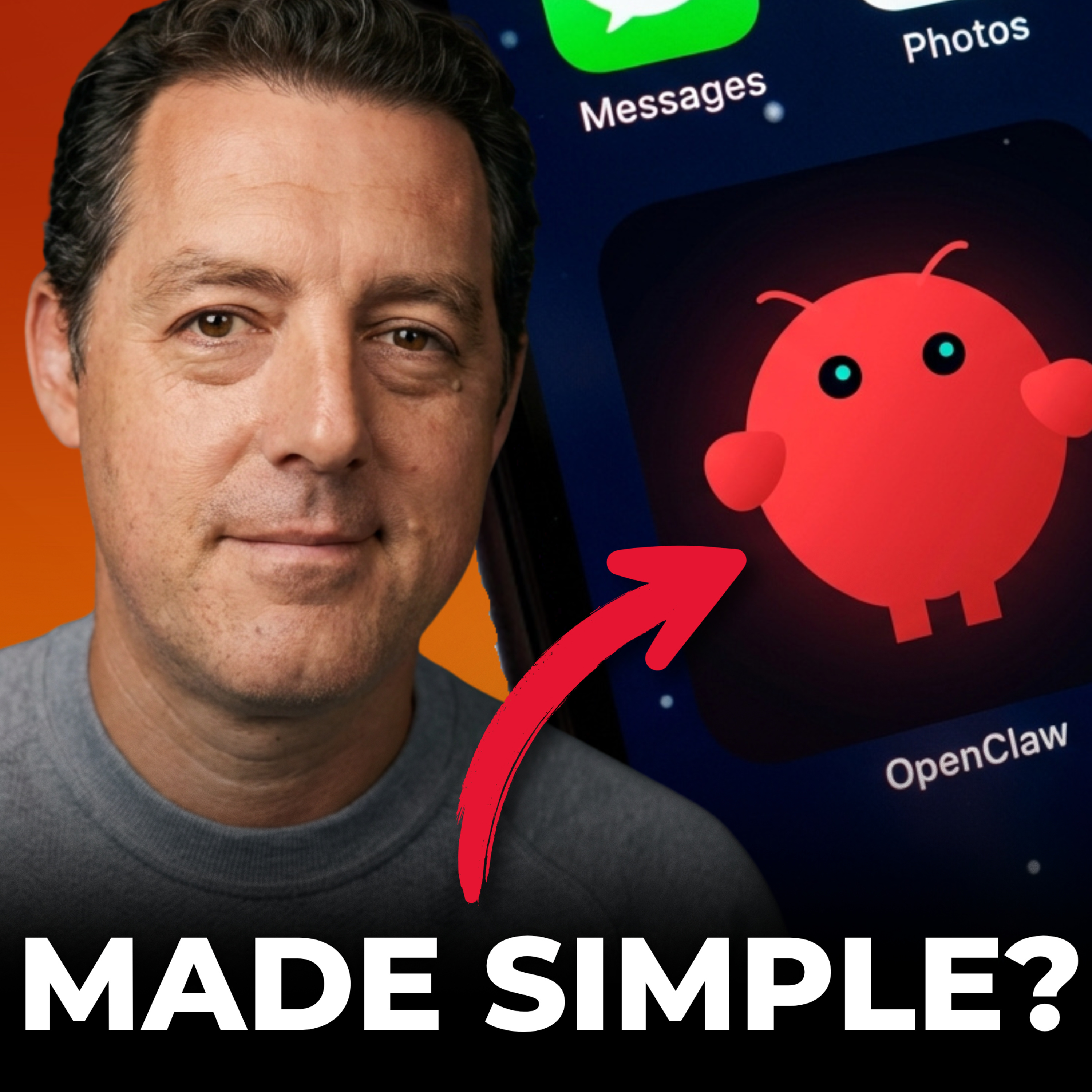
The primary hurdle for potential AI agent users isn't the technical setup; it's the inability to imagine what to do with the tool. Even technically proficient individuals get stuck on the "what can I do with this?" question, indicating that mainstream adoption requires clear, relatable examples and blueprints, not just easier installation.
OpenAI learned that users don't connect esoteric AI demonstrations to their own needs. The most effective marketing strategy is to showcase concrete, relatable use cases—like designing a candle holder and seeing the physical result. This approach makes the AI's value immediately tangible and drives organic exploration.