Get your free personalized podcast brief
We scan new podcasts and send you the top 5 insights daily.
Being a public company truncates the extremes of a company's potential outcomes. It prevents catastrophic decisions but also stifles the 'generational bold bets' that create massive value. The pressure for predictable quarterly performance forces a steady, less risky path.

Related Insights
Quoting Jeff Bezos, the speaker highlights that business outcomes have a 'long-tailed distribution.' While you will strike out often, a single successful venture can generate asymmetric returns that are orders of magnitude larger than the failures, making boldness a rational strategy.

Corporate creativity follows a bell curve. Early-stage companies and those facing catastrophic failure (the tails) are forced to innovate. Most established companies exist in the middle, where repeating proven playbooks and playing it safe stifles true risk-taking.

The public markets offer a unique advantage over staying private indefinitely: discipline during transitions. Daily stock prices and investor scrutiny force management to confront hard truths and balance growth, profitability, and innovation. As seen with Netflix's pivot to streaming, this pressure is crucial for realigning employee incentives and making tough capital decisions during strategic shifts.
![Henry Ellenbogen - Man Versus Machine - [Invest Like the Best, EP.452] thumbnail](https://megaphone.imgix.net/podcasts/498a0910-d6ea-11f0-aae4-8f837283e00f/image/9b60f0353346cd1b5cbd326c86e22287.jpg?ixlib=rails-4.3.1&max-w=3000&max-h=3000&fit=crop&auto=format,compress)
Venture capitalist Bruce Booth explains that bankers, lawyers, audit firms, and VCs all have strong financial incentives for a company to go public. This creates systemic pressure that may not align with the company's best long-term interests.

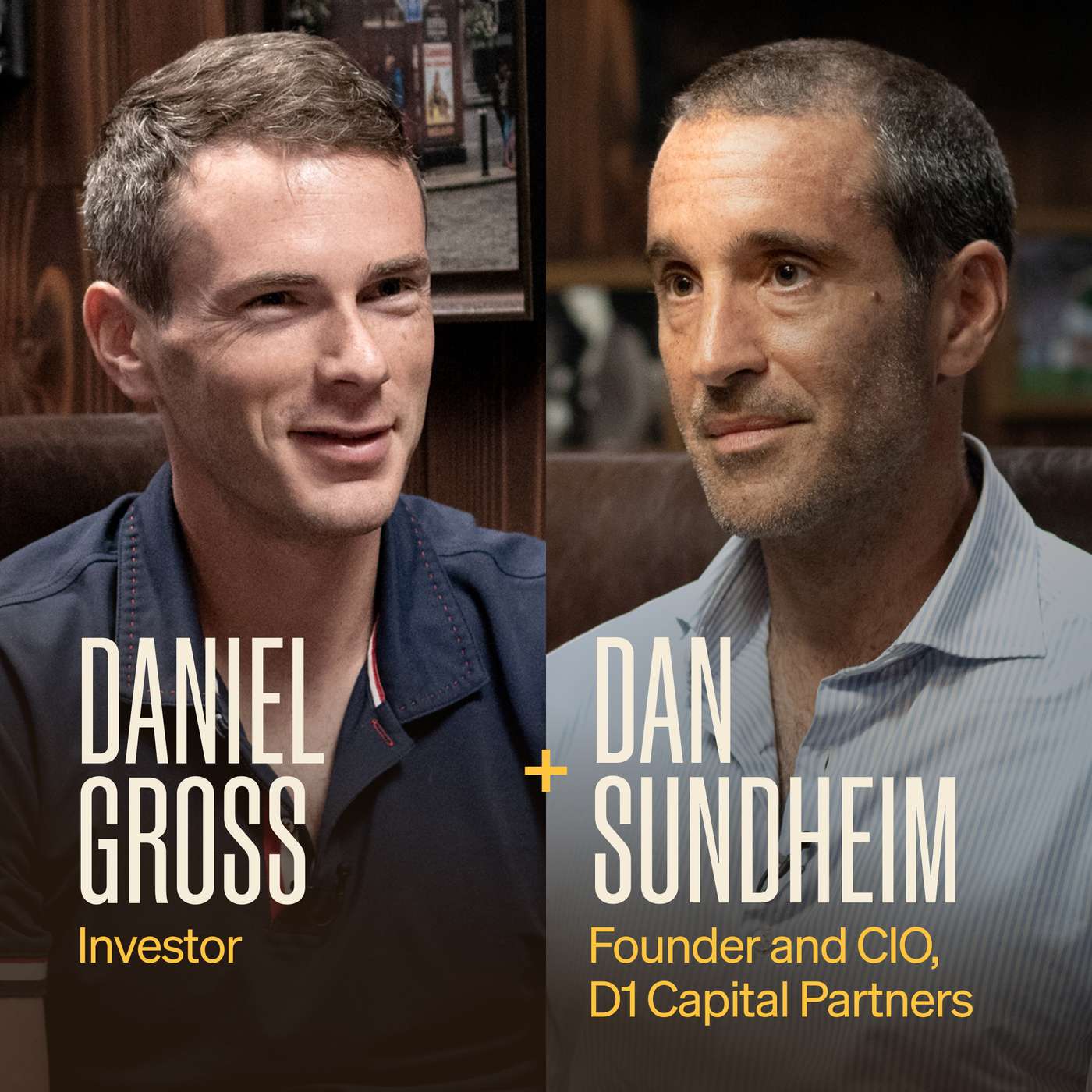
Dan Sundheim argues successful private companies should avoid going public. Public market volatility means stock prices, and thus employee compensation, are driven by sentiment, not fundamental value creation. Being dramatically overvalued can be as harmful as being undervalued, as it misaligns incentives for future hires.
Public market investors systematically underestimate sustained high growth (e.g., 60%+), defaulting to models that assume rapid deceleration. This creates an opportunity for private investors with longer time horizons to more accurately value these companies.

Marc Andreessen asserts the common belief in corporate profit optimization is '100% not true.' The existence of massive, long-term bloat in major companies proves that other incentives, such as managerial empire-building or risk aversion, often override the goal of pure financial efficiency.
A manager won't take a bet with a 50% chance of a huge win and a 20% chance of a moderate loss, because the loss could get them fired. The CEO wants everyone to take these bets for the net positive outcome, but the corporate structure incentivizes individual downside avoidance over collective upside.

Unlike baseball where the best outcome is four runs, business has a long-tail distribution of returns. A single successful venture can return 1000x, paying for all failed experiments. This asymmetric risk profile means it's rational to be bolder and take more calculated risks.
The trend of companies staying private longer and raising huge late-stage rounds isn't just about VC exuberance. It's a direct consequence of a series of regulations (like Sarbanes-Oxley) that made going public extremely costly and onerous. As a result, the private capital markets evolved to fill the gap, fundamentally changing venture capital.
