Get your free personalized podcast brief
We scan new podcasts and send you the top 5 insights daily.
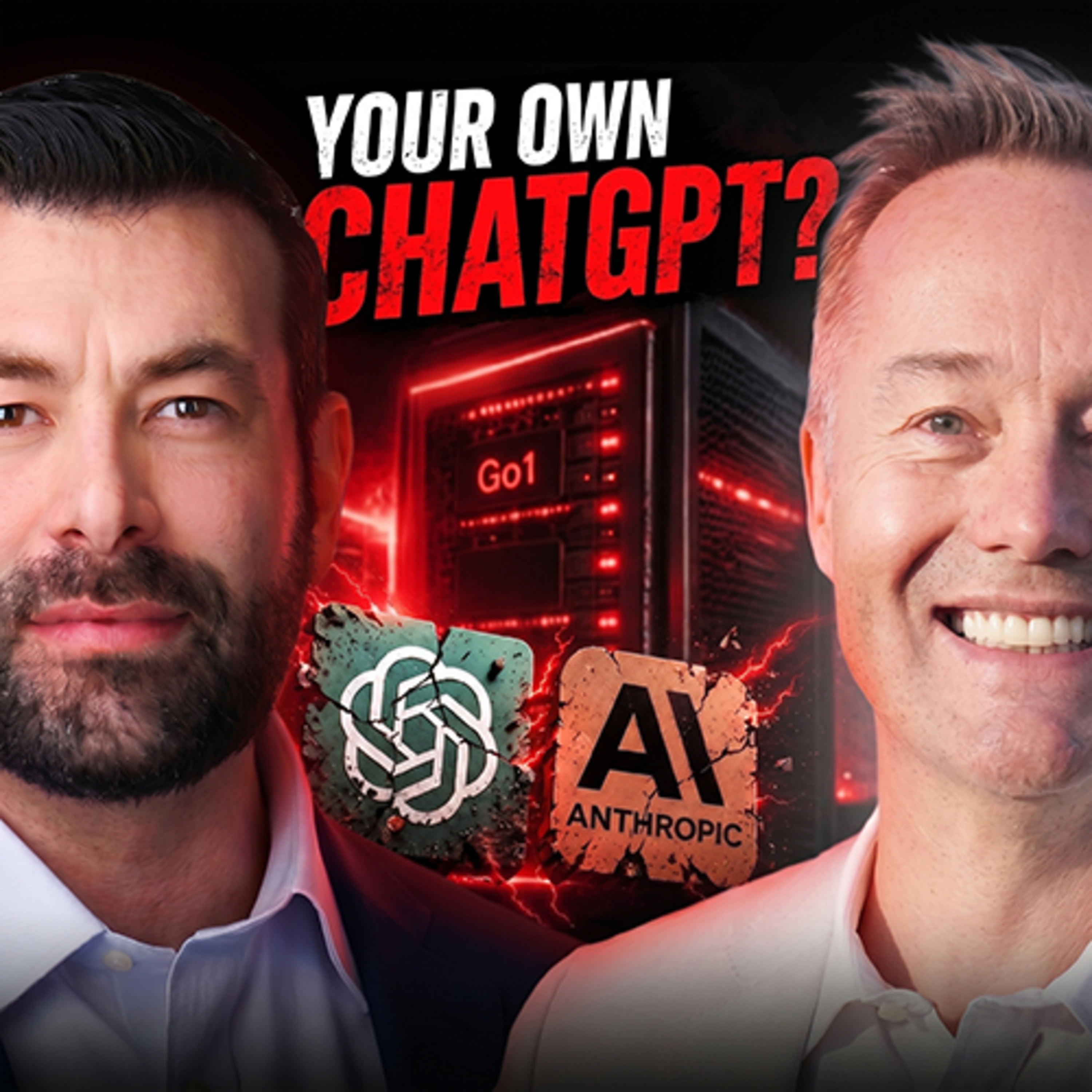
GoAbacus decentralizes the cost of AI model training by utilizing its deployed customer hardware during off-hours. With customer consent (often incentivized by a discount), they perform batch training on local data and aggregate only the resulting model weights, not the sensitive underlying content.
Related Insights
While often discussed for privacy, running models on-device eliminates API latency and costs. This allows for near-instant, high-volume processing for free, a key advantage over cloud-based AI services.
The vast network of consumer devices represents a massive, underutilized compute resource. Companies like Apple and Tesla can leverage these devices for AI workloads when they're idle, creating a virtual cloud where users have already paid for the hardware (CapEx).

Projects like BitTensor represent a fundamental threat to the centralized, capital-intensive AI labs. By distributing the model training process via open-source orchestration, they offer an "orthogonal attack vector" that could democratize AI if capital markets stop writing multi-billion dollar checks for compute.

Centralized AI labs have a massive advantage in capital for compute and data. Crypto offers a coordination layer for decentralized competitors to crowdsource GPUs and data, allowing individual participants to collectively fund and own AI models, creating a viable alternative to the dominance of large corporations.

By training a smaller, specialized model where company data is in the weights, firms avoid the high token costs of repeatedly feeding context to large frontier models. This makes complex, data-intensive workflows significantly cheaper and faster.

The high cost and data privacy concerns of cloud-based AI APIs are driving a return to on-premise hardware. A single powerful machine like a Mac Studio can run multiple local AI models, offering a faster ROI and greater data control than relying on third-party services.
A cost-effective AI architecture involves using a small, local model on the user's device to pre-process requests. This local AI can condense large inputs into an efficient, smaller prompt before sending it to the expensive, powerful cloud model, optimizing resource usage.

Companies in finance and healthcare are hesitant to use public AI providers due to data privacy concerns. On-premise solutions like GoAbacus's "Go One" box allow them to leverage AI locally, ensuring no data leaves their infrastructure and providing cost predictability.
The primary driver for running AI models on local hardware isn't cost savings or privacy, but maintaining control over your proprietary data and models. This avoids vendor lock-in and prevents a third-party company from owning your organization's 'brain'.
Instead of relying on multi-million dollar data centers, IOTA's distributed training protocol harnesses small pockets of idle compute from consumer devices like MacBooks. This 'meatloaf' approach aims to make training frontier AI models accessible and affordable for everyone.