Get your free personalized podcast brief
We scan new podcasts and send you the top 5 insights daily.
Timing factor allocations is notoriously challenging, so portfolios should avoid relying on a single positioning methodology. Instead, allocators can diversify across a market similarity model, a factor momentum model, and a valuation dispersion model. Combining these models allows modest, humble tilts while controlling active tracking error risk.

Related Insights
Many factor ETFs are 'closet indexers' that only slightly tilt a benchmark. A purer, academic approach builds concentrated portfolios (e.g., top 10% on momentum), creating high active share and true differentiation. This method risks severe, prolonged deviation from benchmarks, making it suitable only for investors with very long time horizons.

Unlike past low-volatility bull markets, the current reflationary environment sees wider spreads between winning and losing factors. A 'rising tide' no longer lifts all boats, making active asset selection and alpha strategies more critical than passive beta exposure.

David Kaiser's system doesn't try to predict cyclical peaks. Instead, it mitigates the risk of buying hot cyclical stocks by owning a diversified portfolio and rebalancing consistently. This structural approach ensures that if the model over-allocates to a sector at its peak, the error is contained and corrected relatively quickly.

Construct a multi-asset portfolio in two steps. First, focus the entire team on a bottom-up search for alpha-generating investments, regardless of market exposure. Second, run a separate, top-down process to aggregate the resulting portfolio beta and adjust it to desired market weights.

Beyond its primary role of reducing drawdowns, trend following acts as a premier diversifier that can solve several portfolio construction flaws at once. It can dynamically allocate to foreign markets (solving home bias), value stocks (when they're trending), and real assets like gold and silver, providing exposure that traditional portfolios often neglect.

Standard risk models (e.g., BARA) fail to capture emergent, thematic risks. The real edge comes from identifying what these models don't explain (like AI hype or geopolitical events) and creating custom factors to hedge the portfolio's sensitivity to these non-traditional drivers.

Market efficiency increases with company size and liquidity. Therefore, the excess returns (alpha) from investment factors like value are significantly larger in the inefficient micro-cap space. For large-caps, the market is so efficient that factor premiums are minimal, making low-cost indexing a superior strategy.

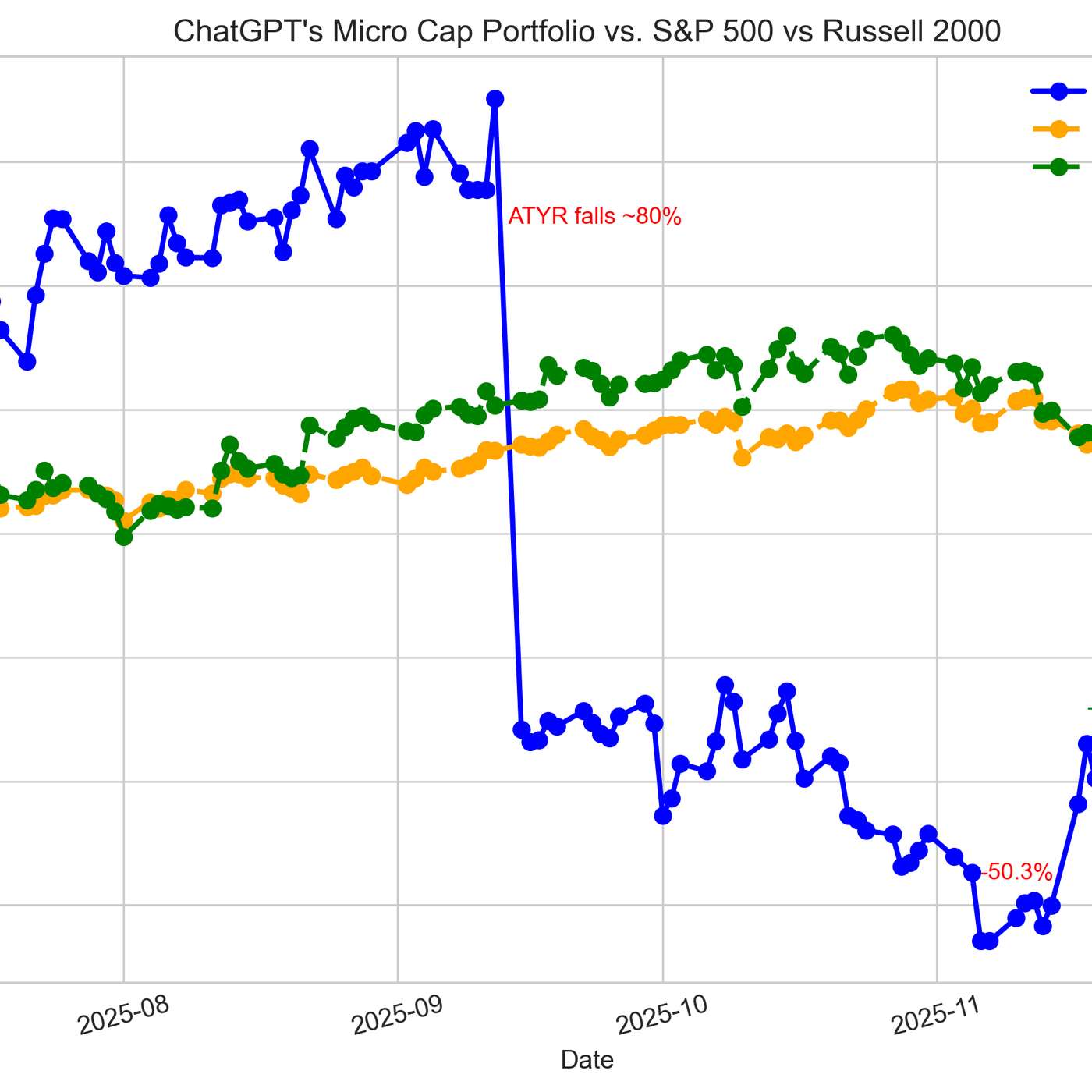
The AI's portfolio construction goes beyond simple asset diversification by intentionally balancing three distinct investment theses: a de-risked 'anchor' (Mist), an asymmetric 'moonshot' (SLS), and a valuation-driven 'rebound' (JSPR). This strategy diversifies risk across different potential paths to success.
Market cap indexing acts like a basic trend-following system by buying more of what's rising. However, its Achilles' heel is the lack of a valuation anchor, causing investors to over-concentrate in expensive assets at market peaks. In high-valuation environments, almost any other weighting method, like equal-weight or value, is likely to outperform over the long term.
Since 2020, even top-quartile stock pickers have faced extreme drawdowns with concentrated portfolios. A more diversified approach, holding more names than usual (e.g., 50-75 stocks for an institutional manager), has proven superior for mitigating risk and achieving better performance.
