Get your free personalized podcast brief
We scan new podcasts and send you the top 5 insights daily.
Sam Harris argues one can simultaneously believe that toppling the Iranian regime is a correct moral objective, while also recognizing that the Trump administration's execution is dangerously inept. This separates the strategic goal from the tactical and political leadership carrying it out.

Related Insights
The idea that airstrikes can decapitate the Iranian regime is a fallacy. The IRGC's influence is too deeply embedded within the society and its institutions. Killing leaders at the top will not remove this "rot," and the IRGC will simply re-constitute control, likely in an even more repressive form.

The US military action against Iran lacks a clear off-ramp or stated goal, violating the Powell Doctrine. This ambiguity between objectives like "regime change" and other aims creates strategic confusion and risks prolonged engagement without a defined victory condition.

The bombing campaign, aimed at regime change, could be counterproductive. Prior to the conflict, Iran's regime was seen as unpopular and frail, potentially heading for collapse or moderation. The external attack risks creating a rally-round-the-flag effect, allowing the regime to consolidate power where mere survival becomes a victory.
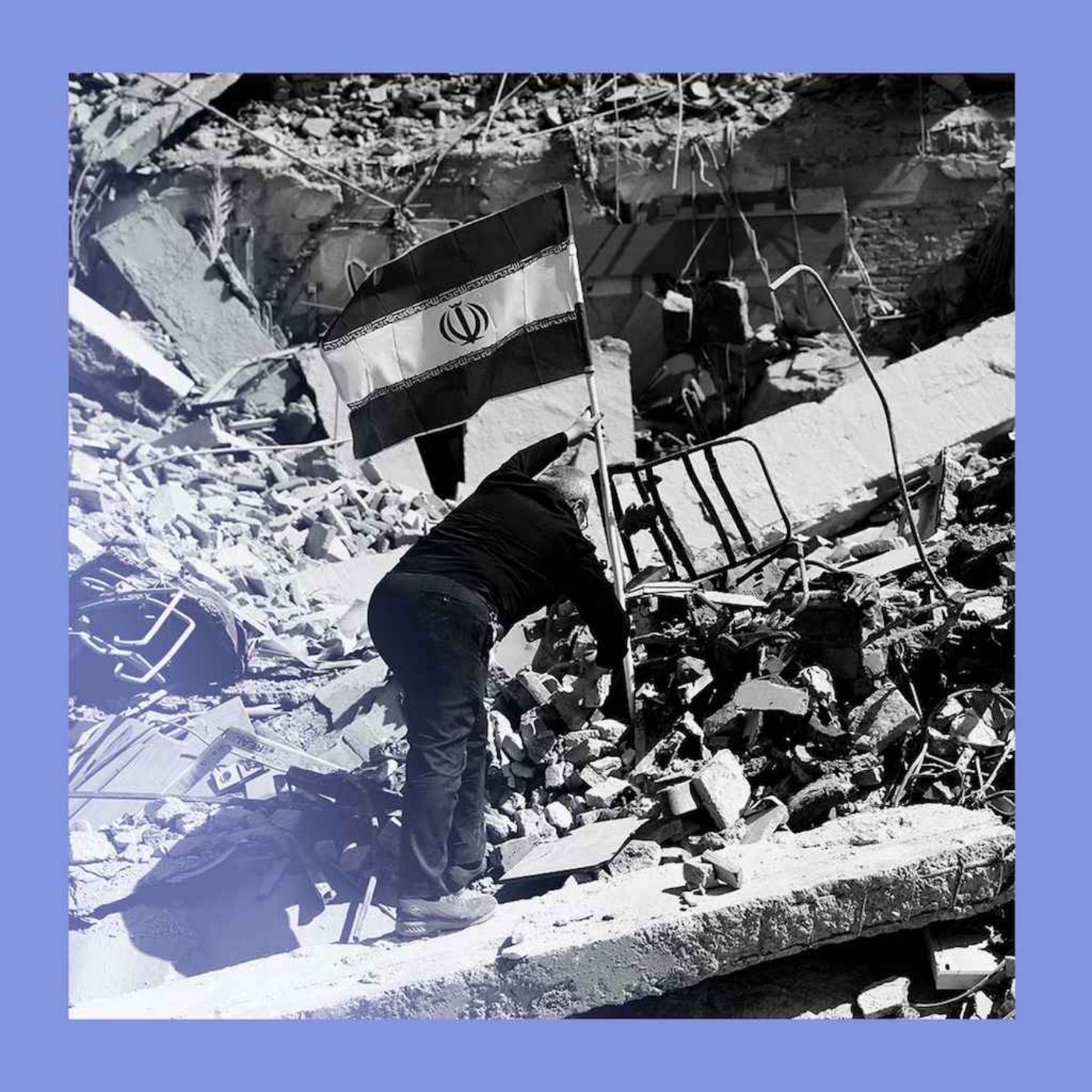
One can believe that Iran's jihadist regime must be removed for global security, while simultaneously believing the Trump administration is too corrupt and incompetent to be trusted with that task. These seemingly contradictory thoughts are necessary for an adequate view of the situation.

The administration aggressively talks about regime change, making promises to the Iranian opposition. However, the military actions and follow-up policies are not scaled to achieve this ambitious goal, creating a strategic disconnect that undermines the operation's credibility and clarity of purpose.

Harris argues that any credible critique of military action against Iran must begin by acknowledging the theocratic regime's fundamental evil and the suffering it inflicts. Critics who skip this step and frame it as an attack on a normal sovereign country are operating under a "delusional" moral framework.
Despite overwhelming military force, the US lacks a clear, singular objective in its war with Iran. With at least five distinct goals—from targeting nuclear and missile programs to regime change and settling historical scores—it's unclear what constitutes victory, making the application of force dangerously unfocused.
The U.S. military is succeeding in tactical objectives, like damaging Iranian vessels. However, the overarching strategy is failing due to a lack of allied support and unclear long-term goals. Attacking oil infrastructure, for instance, signals an implicit abandonment of regime change as a viable outcome.

The US and Israel are operationally successful in degrading Iran's military capabilities. However, leadership has failed to articulate a coherent strategic objective for the war, making it difficult to define victory or know when the conflict will end.

An ideologue, even an anarchist advocating against the state, may support a massive state action if it serves a higher strategic purpose—in this case, disrupting a system they oppose. The perceived hypocrisy is dismissed as irrelevant when compared to the desired outcome, framing it as a solution, not a preferred method of governance.
