Get your free personalized podcast brief
We scan new podcasts and send you the top 5 insights daily.
As AI democratizes the ability to create products, rigid job titles like "Product Manager" and "Engineer" will become obsolete. Meta PM Zevi Arnovitz predicts that responsibilities will merge, and the focus will shift to the act of creation. In the near future, everyone on a product team will simply be a "builder."

Related Insights
The "AI PM" title is a temporary distinction that will become redundant. The expert view is that within a few years, all products will have smart functionality. As a result, every Product Manager will de facto be an AI PM, and the specialized title will become obsolete, just like "Internet PM" did.
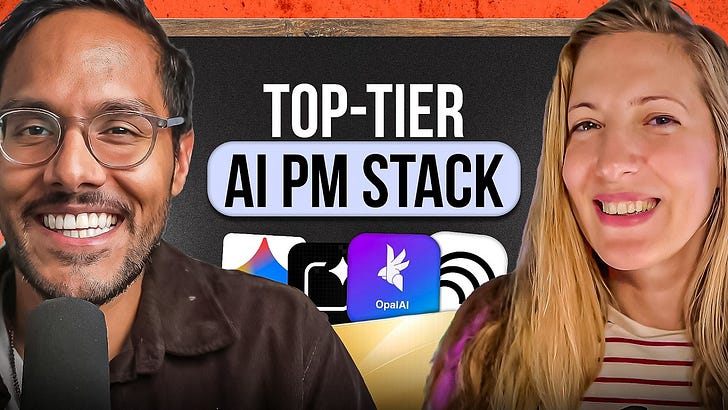
AI tools are blurring the lines between product, design, and engineering. The future PM will leverage AI to not only spec features but also create mockups and even write and check in code for smaller tasks, owning the entire lifecycle from idea to delivery.

Industry leaders from LinkedIn and Salesforce predict that AI will automate narrow, specialized tasks, fundamentally reshaping careers. The future workforce will favor 'professional generalists' who can move fluidly between projects and roles, replacing rigid departmental structures with dynamic 'work charts.'
Advanced AI models are blurring the lines between coding, design, and marketing, enabling a new "vibe building" workflow. This paradigm shift allows a single person to manage the entire product stack holistically, moving beyond simple "vibe coding" to full-fledged product creation.

Generative AI and low-code tools empower individuals to perform tasks previously owned by specialized roles, like a PM creating a functional prototype. This blurs traditional job descriptions. The critical skill shifts from mere tool proficiency to learning how to collaborate effectively in new, blended team structures.

Dylan Field predicts that AI tools will blur the lines between design, engineering, and product management. Instead of siloed functions, teams will consist of 'product builders' who can contribute across domains but maintain a deep craft in one area. Design becomes even more critical in this new world.

AI tools are collapsing the traditional moats around design, engineering, and product. As PMs and engineers gain design capabilities, designers must reciprocate by learning to code and, more importantly, taking on strategic business responsibilities to maintain their value and influence.
As AI tools empower individuals to handle tasks across the entire product development lifecycle, traditional, siloed roles are merging. This fundamental shift challenges how tech professionals define their value and contribution, causing significant professional anxiety.

AI's rise means traditional product roles are merging. Instead of identifying as a PM or designer, focus on your core skills (e.g., visual aesthetics, systems thinking) and use AI to fill gaps. This 'builder' mindset, focused on creating end-to-end, is key for future relevance.

The traditional tasks of a product manager—writing specs, building plans, prototyping—are being automated by AI. The role will likely evolve into a hybrid "Experience Engineer" who combines product, design, and engineering skills to build experiences, or a highly commercial "GM" role with direct P&L responsibility.
