Get your free personalized podcast brief
We scan new podcasts and send you the top 5 insights daily.
Auditing frontier AI models cannot follow a traditional, once-a-year checklist model. Due to rapid development, verifiers must be deeply embedded with labs, working "hip-to-hip" to continuously assess systems from pre-deployment through their entire lifecycle.

Related Insights
AI audits are not a one-time, "risk-free" certification but an iterative process with quarterly re-audits. They quantify risk by finding vulnerabilities (which can initially have failure rates as high as 25%) and then measuring the improvement—often a 90% drop—after safeguards are implemented, giving enterprises a data-driven basis for trust.

Beyond model capabilities and process integration, a key challenge in deploying AI is the "verification bottleneck." This new layer of work requires humans to review edge cases and ensure final accuracy, creating a need for entirely new quality assurance processes that didn't exist before.

Treating AI evaluation like a final exam is a mistake. For critical enterprise systems, evaluations should be embedded at every step of an agent's workflow (e.g., after planning, before action). This is akin to unit testing in classic software development and is essential for building trustworthy, production-ready agents.
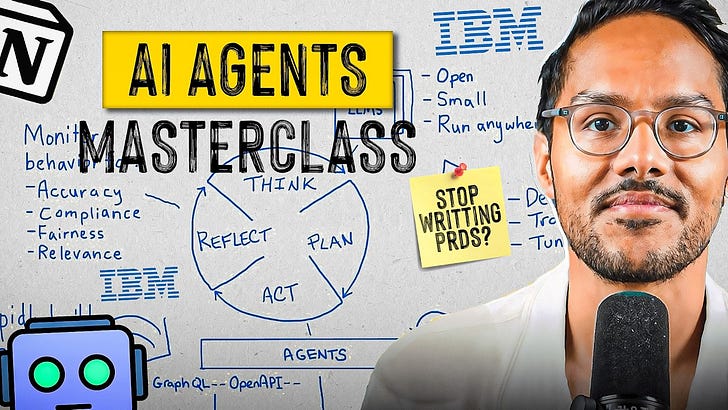
Treating AI risk management as a final step before launch leads to failure and loss of customer trust. Instead, it must be an integrated, continuous process throughout the entire AI development pipeline, from conception to deployment and iteration, to be effective.

Shift the view of AI from a singular product launch to a continuous process encompassing use case selection, training, deployment, and decommissioning. This broader aperture creates multiple intervention points to embed responsibility and mitigate harm throughout the lifecycle.

AIUC's certification process runs two tracks in parallel. One involves a traditional audit partner collecting evidence and reviewing policies. Simultaneously, AIUC's internal team conducts hands-on, live red teaming on a deployed instance of the agent, combining process validation with real-world security testing.
Treating AI evaluation as a single, pre-launch check is a mistake. Model behavior drifts due to fine-tuning, infrastructure changes, and shifts in user queries. Production AI systems demand a continuous evaluation pipeline integrated into the deployment lifecycle to catch regressions and ensure ongoing reliability.

A pilot AI certification program revealed that even simplified criteria were interpreted inconsistently. This proves AI systems are too dynamic for static, checklist-based certification. The solution is to empower auditors with discretion and focus heavily on their specialized training and education.
The popular idea of a government 'sign-off' before an AI model's release is based on a false premise. Risk isn't a one-time event at launch; it's continuous, existing during model development, internal use, and post-release updates. Effective oversight must reflect this ongoing reality.
A one-time certification is insufficient for rapidly evolving AI agents. The AIUC-1 standard requires quarterly re-testing of certified agents via API. This ensures security controls remain effective as the underlying models and agent logic are updated, treating security as an ongoing process rather than a static snapshot.