Get your free personalized podcast brief
We scan new podcasts and send you the top 5 insights daily.
Shift the view of AI from a singular product launch to a continuous process encompassing use case selection, training, deployment, and decommissioning. This broader aperture creates multiple intervention points to embed responsibility and mitigate harm throughout the lifecycle.

Related Insights
Leaders must resist the temptation to deploy the most powerful AI model simply for a competitive edge. The primary strategic question for any AI initiative should be defining the necessary level of trustworthiness for its specific task and establishing who is accountable if it fails, before deployment begins.

Effective enterprise AI deployment involves running human and AI workflows in parallel. When the AI fails, it generates a data point for fine-tuning. When the human fails, it becomes a training moment for the employee. This "tandem system" creates a continuous feedback loop for both the model and the workforce.

Instead of waiting for AI models to be perfect, design your application from the start to allow for human correction. This pragmatic approach acknowledges AI's inherent uncertainty and allows you to deliver value sooner by leveraging human oversight to handle edge cases.

Implementing trust isn't a massive, year-long project. It's about developing a "muscle" for small, consistent actions like adding a badge, clarifying data retention, or citing sources. These low-cost, high-value changes can be integrated into regular product development cycles.
Treating AI evaluation like a final exam is a mistake. For critical enterprise systems, evaluations should be embedded at every step of an agent's workflow (e.g., after planning, before action). This is akin to unit testing in classic software development and is essential for building trustworthy, production-ready agents.
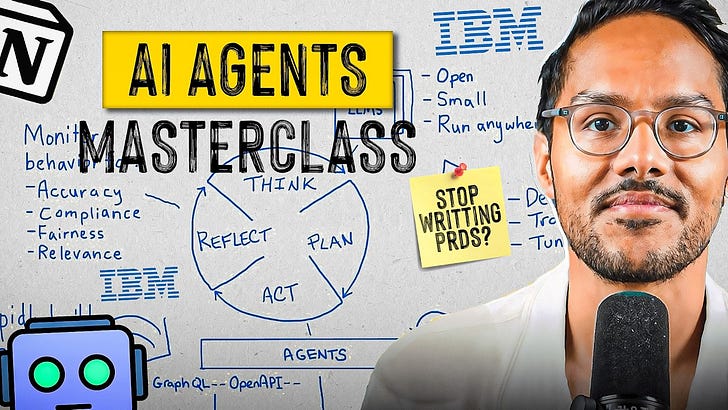
Avoid deploying AI directly into a fully autonomous role for critical applications. Instead, begin with a human-in-the-loop, advisory function. Only after the system has proven its reliability in a real-world environment should its autonomy be gradually increased, moving from supervised to unsupervised operation.
People overestimate AI's 'out-of-the-box' capability. Successful AI products require extensive work on data pipelines, context tuning, and continuous model training based on output. It's not a plug-and-play solution that magically produces correct responses.

Treating AI risk management as a final step before launch leads to failure and loss of customer trust. Instead, it must be an integrated, continuous process throughout the entire AI development pipeline, from conception to deployment and iteration, to be effective.
To successfully implement AI, approach it like onboarding a new team member, not just plugging in software. It requires initial setup, training on your specific processes, and ongoing feedback to improve its performance. This 'labor mindset' demystifies the technology and sets realistic expectations for achieving high efficacy.

To mitigate risks like AI hallucinations and high operational costs, enterprises should first deploy new AI tools internally to support human agents. This "agent-assist" model allows for monitoring, testing, and refinement in a controlled environment before exposing the technology directly to customers.
