Get your free personalized podcast brief
We scan new podcasts and send you the top 5 insights daily.
Neuroscience distinguishes between the motivation to pursue a goal ('wanting') and the pleasure derived from achieving it ('liking'). Dopamine modulates the pursuit, while opioid neurotransmitters are linked to the hedonic experience. This explains why addicts can compulsively seek drugs they no longer enjoy.

Related Insights
The brain's "wanting" (dopamine) and "liking" (endorphins) systems are separate. Intense reinforcement of the wanting system can create a powerful craving for a person who no longer brings pleasure, explaining why people stay hung up on those who treat them badly or with whom there is no future.

Dopamine is often misunderstood as a 'pleasure molecule.' Its more crucial role is in motivation—the drive to seek a reward. Experiments show rats without dopamine receptors enjoy food but won't move to get it, starving to death. This seeking behavior is often triggered by the brain's craving to escape a dopamine deficit state.
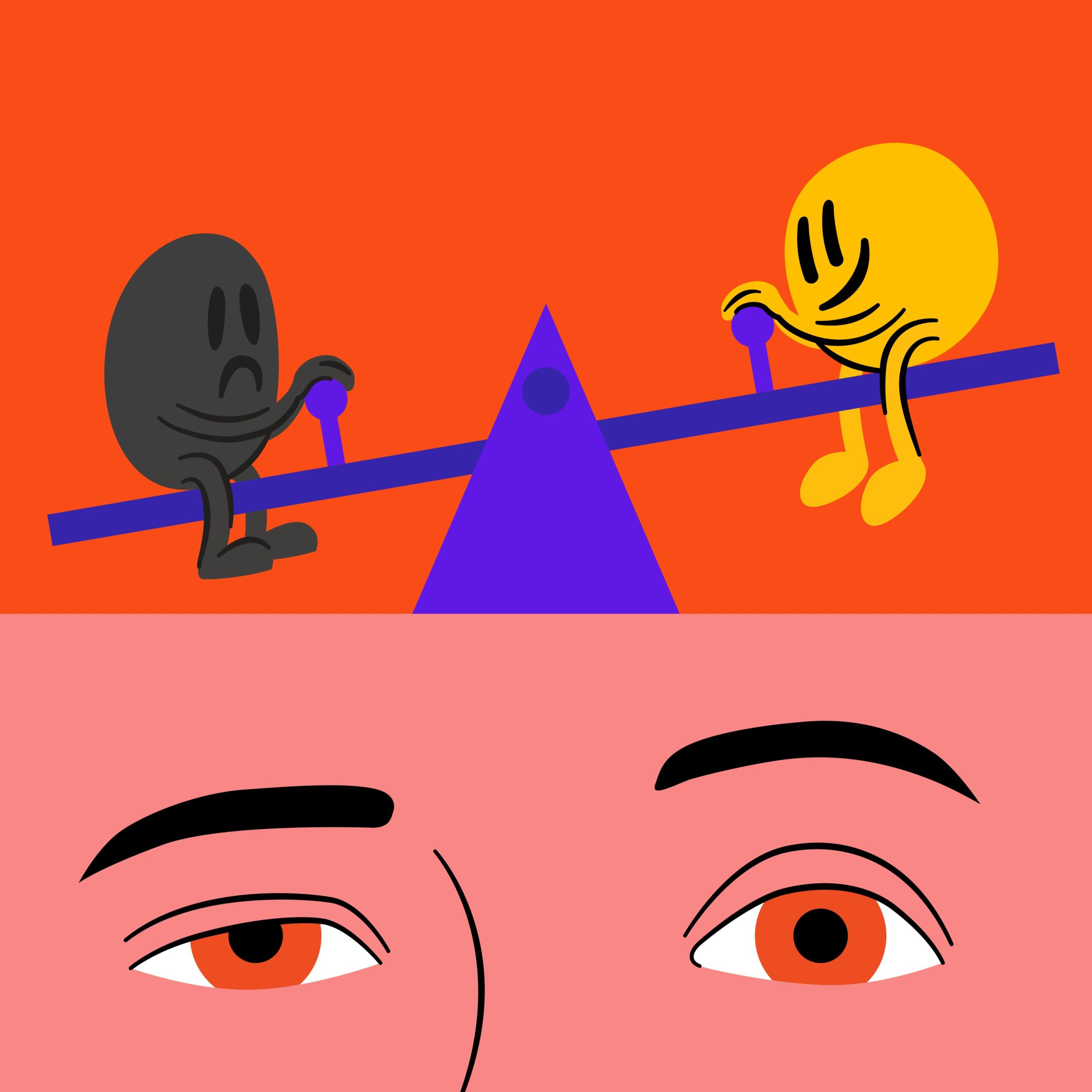
The popular narrative that social media scrolling provides constant 'dopamine hits' is likely inaccurate. While dopamine is involved in motivation to act, the compulsive, numbing nature of this behavior suggests it's driven by other mechanisms, distinguishing 'wanting' (to scroll) from 'liking' (the content).
Addiction isn't defined by the pursuit of pleasure. It's the point at which a behavior, which may have started for rational reasons, hijacks the brain’s reward pathway and becomes compulsive. The defining characteristic is the inability to stop even when the behavior no longer provides pleasure and begins causing negative consequences.
Initially, addictive behaviors are pursued for a pleasurable dopamine rush. Over time, the brain's dopamine system adapts and down-regulates, diminishing the pleasure. The behavior then becomes a compulsive habit driven not by a desire for a high, but by the urgent need to avoid the anxiety and physical discomfort of withdrawal.

The feeling of motivation isn't abstract; it's chemical energy. Dopamine directly initiates cellular energy production by binding to the outside of mitochondria. This activates the electron transport chain to make ATP available for action, physically linking the brain's desire to act with the cellular fuel required to do so.
We mistakenly think kids are drawn to screens for pleasure. Neuroscience shows dopamine drives the desire and craving for an activity, creating a compulsion loop even when the activity itself ceases to be enjoyable or even becomes negative. It's the brain's 'do-it-again' button, not its 'feel-good' button.
The feeling of dissatisfaction after achieving a major goal is a feature, not a bug. The brain's dopamine system is designed to keep you moving forward. If any single achievement—a partner, a food, a drug—were permanently satisfying, the drive to live and procreate would cease. The system ensures you always have another place to go.
The neurochemical for wanting (dopamine) is stronger than the one for liking (serotonin). This wiring creates the "arrival fallacy," where we perpetually chase achievements, mistakenly believing external validation will provide lasting fulfillment, which it is neurochemically unequipped to do.

Dopamine released from consuming sugar activates the brain's reward pathway. This circuit doesn't create satiety; instead, it generates a state of motivation and craving, compelling you to seek more of the sweet substance.
