Get your free personalized podcast brief
We scan new podcasts and send you the top 5 insights daily.
While most CMOs want end-to-end AI transformation, their current focus on task automation is not a failure. It is a crucial cultural phase that gives teams hands-on exposure, building the necessary comfort and literacy for broader adoption.

Related Insights
While most CMOs feel AI is transforming their function, BCG data shows it's broad but not deep. Only a third have undertaken the difficult work of rewiring their organization, upskilling teams, and integrating the necessary technology stack to achieve true, meaningful change beyond surface-level pilots.
Instead of trying to automate a whole job like "running ads," break it down into its smallest component tasks (e.g., "write copy," "set budgets"). Use AI as a tutor to help automate each tiny task individually, making the overall process manageable and effective.

The best initial use for AI in marketing operations is automating high-volume, low-complexity "digital janitor" tasks. Focus AI agents on answering repetitive questions (e.g., "Why didn't this lead qualify?") and cleaning data (e.g., event lists) to free up specialist time for more strategic work.

A successful AI strategy isn't about replacing humans but smart integration. Marketing leaders should have their teams audit all workflows and categorize them into three buckets: fully automated by AI (AI-driven), enhanced by AI tools (AI-assisted), or requiring human expertise (human-driven). This creates a practical roadmap for adoption.

The path to enterprise AI adoption follows a typical change curve. To bypass initial fear and rejection, organizations should first apply AI to transform familiar, high-friction workflows. This strategy builds momentum and demonstrates value before tackling entirely new, innovative business models.

Early AI adoption focused on idea generation and copy help. The next wave involves autonomous AI agents that execute tasks like creating webpages, optimizing campaigns, and auto-building reports, moving AI from a thought-partner to an active tool that 'does' the work.

The most effective AI companies don't try to automate everything. They ask which specific, repetitive task creates the most value when partially automated. This pragmatic approach delivers measurable results by using AI to augment human workers, not replace them.
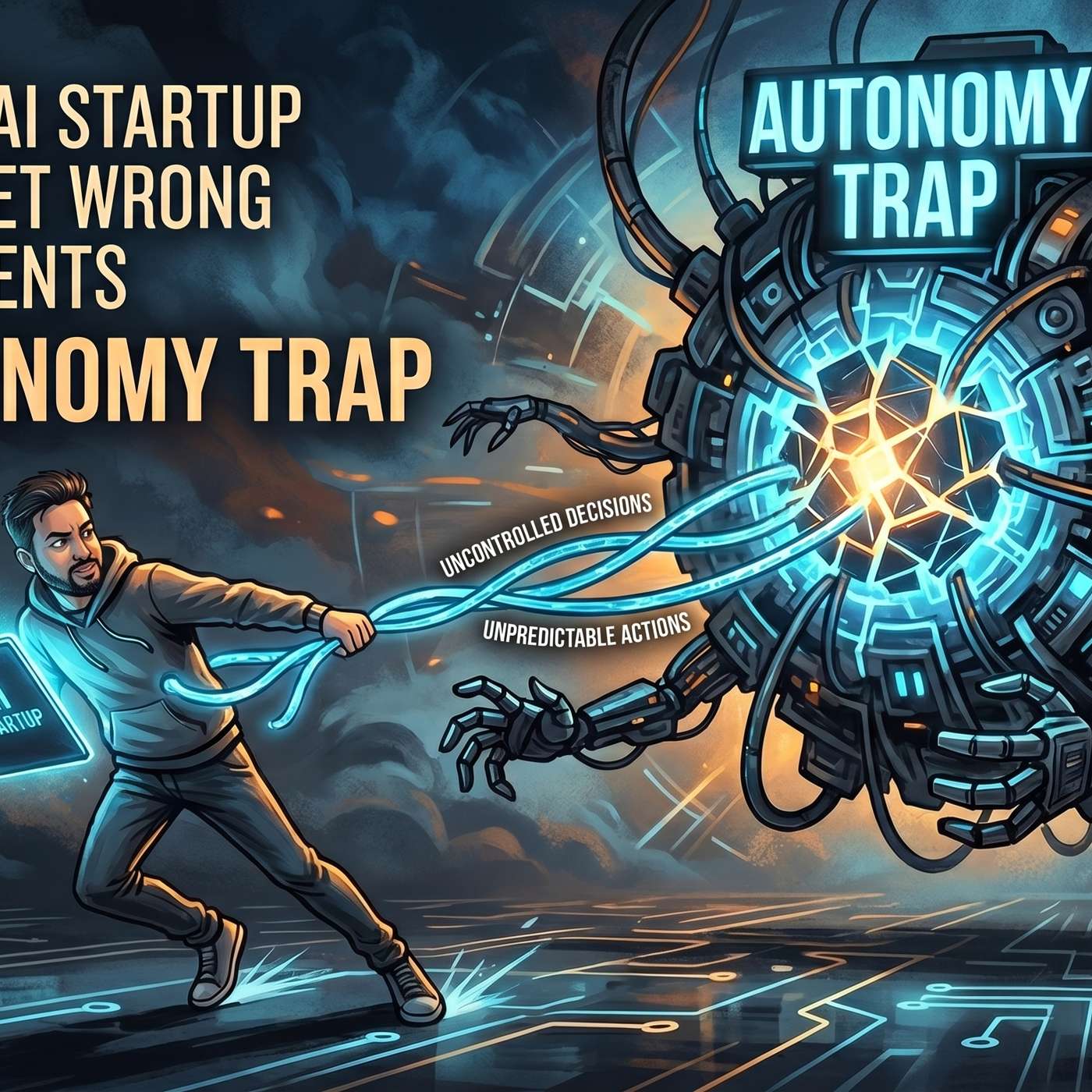
To overcome sales team resistance to an AI-powered CRM, the CMO framed it as an augmentation tool. AI handles tedious tasks like pulling email lists, freeing reps to focus on higher-value activities like relationship-building and ensuring a great customer experience.
The key to leveraging AI in sales isn't just about learning new tools. It's about embedding AI into the company's culture, making it a natural part of every process from forecasting to customer success. This cultural integration is what unlocks its full potential, moving beyond simple technical usage.
True AI transformation is not achieved by employees automating individual tasks from the bottom up. It requires a top-down strategic mandate from the C-level to fundamentally change systems, processes, and metrics, even if it means throwing away established and once-successful playbooks. This shift requires executive bravery.
