Get your free personalized podcast brief
We scan new podcasts and send you the top 5 insights daily.
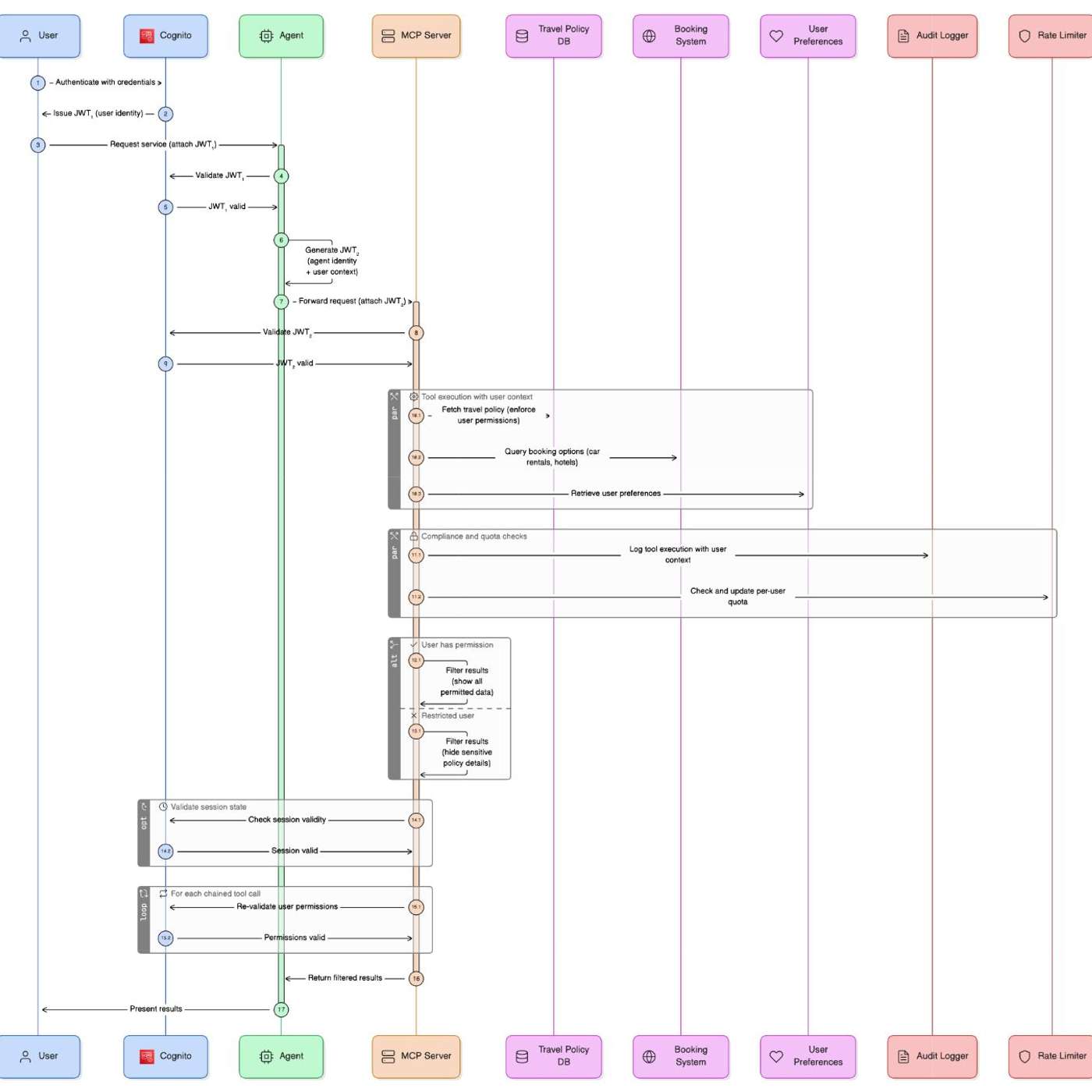
An MCP server must not run with its own powerful credentials. To prevent a "confused deputy" attack, the end-user's identity must be passed through the agent to the MCP server, which then authorizes every action against that specific user's permissions, not the server's.

Related Insights
Frameworks from firms like KPMG and AWS emphasize that AI agents must be treated as entities with identities and permissions. A strong IAM foundation is a critical control layer to prevent agents from accessing or unintentionally leaking sensitive information, reflecting a broader shift to treat agents like any other privileged user in an IT ecosystem.
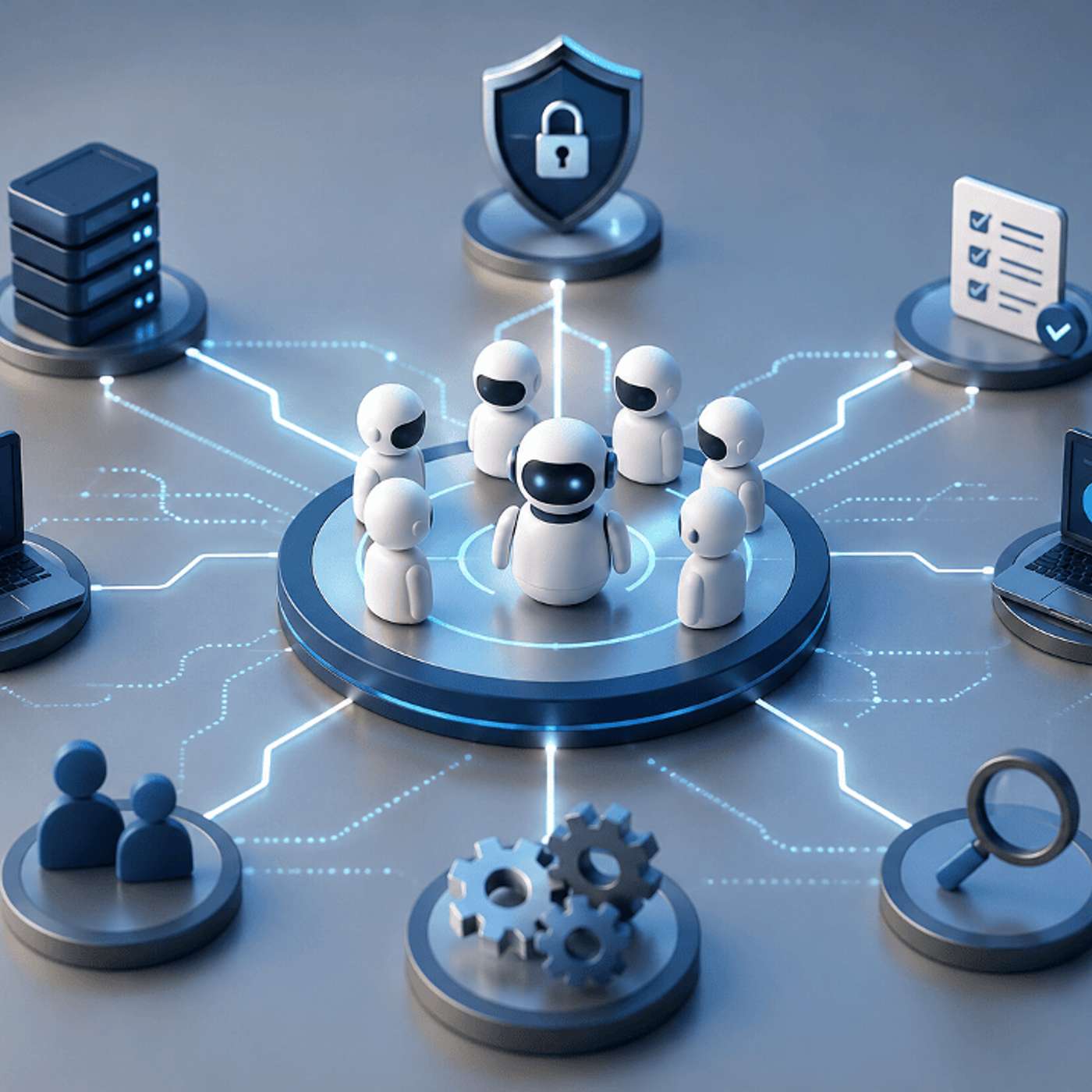
Simply giving an agent a user account is dangerous. An agent creator is liable for its actions, and the agent has no right to privacy. This requires a new identity and access management (IAM) paradigm, distinct from human user accounts, to manage liability and oversight.
Current agent frameworks create massive security risks because they can't differentiate between a user and the agent acting on their behalf. This results in agents receiving broad, uncontrolled access to production credentials, creating a far more dangerous version of the 'secret sprawl' problem that plagued early cloud adoption.

Current AI tools are in "easy mode" because they operate with the user's direct authentication and permissions. The much harder, yet-to-be-solved problem is "hard mode": autonomous agents that need their own scoped access to enterprise resources without dramatically increasing security risks.
An AI agent cannot simply use a human's credentials. It requires its own identity, permissions, and access controls for security and traceability. This means SaaS companies will likely charge for agent seats, creating a significant new revenue stream.
An AI agent capable of operating across all SaaS platforms holds the keys to the entire company's data. If this "super agent" is hacked, every piece of data could be leaked. The solution is to merge the agent's permissions with the human user's permissions, creating a limited and secure operational scope.

To maintain security across multiple services, a JWT propagation pattern is key. This creates a secure chain of trust where an AI agent's permissions are never inferred from its responses. Instead, the user's identity and permissions are cryptographically verified at every step of the entire request chain, ensuring robust security.
Unlike deterministic workflows, AI agents can behave in unpredictable ways. The key to securing them is not to restrict every possible action, but to tightly control their identity and permissions. Knowing *who* the agent is and *what systems* it can access becomes the primary security control.

Traditional security principles are insufficient for AI agents. An "air-gapped" model can still find unexpected tunnels to the internet. Agents require their own unique identities, separate from user tokens, to properly scope permissions, monitor actions, and contain breaches. Simply running them "as the user" is a recipe for disaster.
Instead of building complex new control layers for AI, the emerging best practice is to treat each agent as a separate entity. This means giving them their own accounts, API keys, and permissions, mirroring how you would onboard a new human employee to manage access and security.