Get your free personalized podcast brief
We scan new podcasts and send you the top 5 insights daily.
Current AI tools are in "easy mode" because they operate with the user's direct authentication and permissions. The much harder, yet-to-be-solved problem is "hard mode": autonomous agents that need their own scoped access to enterprise resources without dramatically increasing security risks.
Related Insights
For CISOs adopting agentic AI, the most practical first step is to frame it as an insider risk problem. This involves assigning agents persistent identities (like Slack or email accounts) and applying rigorous access control and privilege management, similar to onboarding a human employee.

Simply giving an agent a user account is dangerous. An agent creator is liable for its actions, and the agent has no right to privacy. This requires a new identity and access management (IAM) paradigm, distinct from human user accounts, to manage liability and oversight.
Current agent frameworks create massive security risks because they can't differentiate between a user and the agent acting on their behalf. This results in agents receiving broad, uncontrolled access to production credentials, creating a far more dangerous version of the 'secret sprawl' problem that plagued early cloud adoption.

A key bottleneck preventing AI agents from performing meaningful tasks is the lack of secure access to user credentials. Companies like 1Password are building a foundational "trust layer" that allows users to authorize agents on-demand while maintaining end-to-end encryption. This secure credentialing infrastructure is a critical unlock for the entire agentic AI economy.

Traditional identity models like SAML and OAuth are insufficient for agents. Agent access must be hyper-ephemeral and contextual, granted dynamically based on a specific task. Instead of static roles, agents need temporary permissions to access specific resources only for the duration of an approved task.
Managing human identities is already complex, but the rise of AI agents communicating with systems will multiply this challenge exponentially. Organizations must prepare for managing thousands of "machine identities" with granular permissions, making robust identity management a critical prerequisite for the AI era.

To address security concerns, powerful AI agents should be provisioned like new human employees. This means running them in a sandboxed environment on a separate machine, with their own dedicated accounts, API keys, and access tokens, rather than on a personal computer.
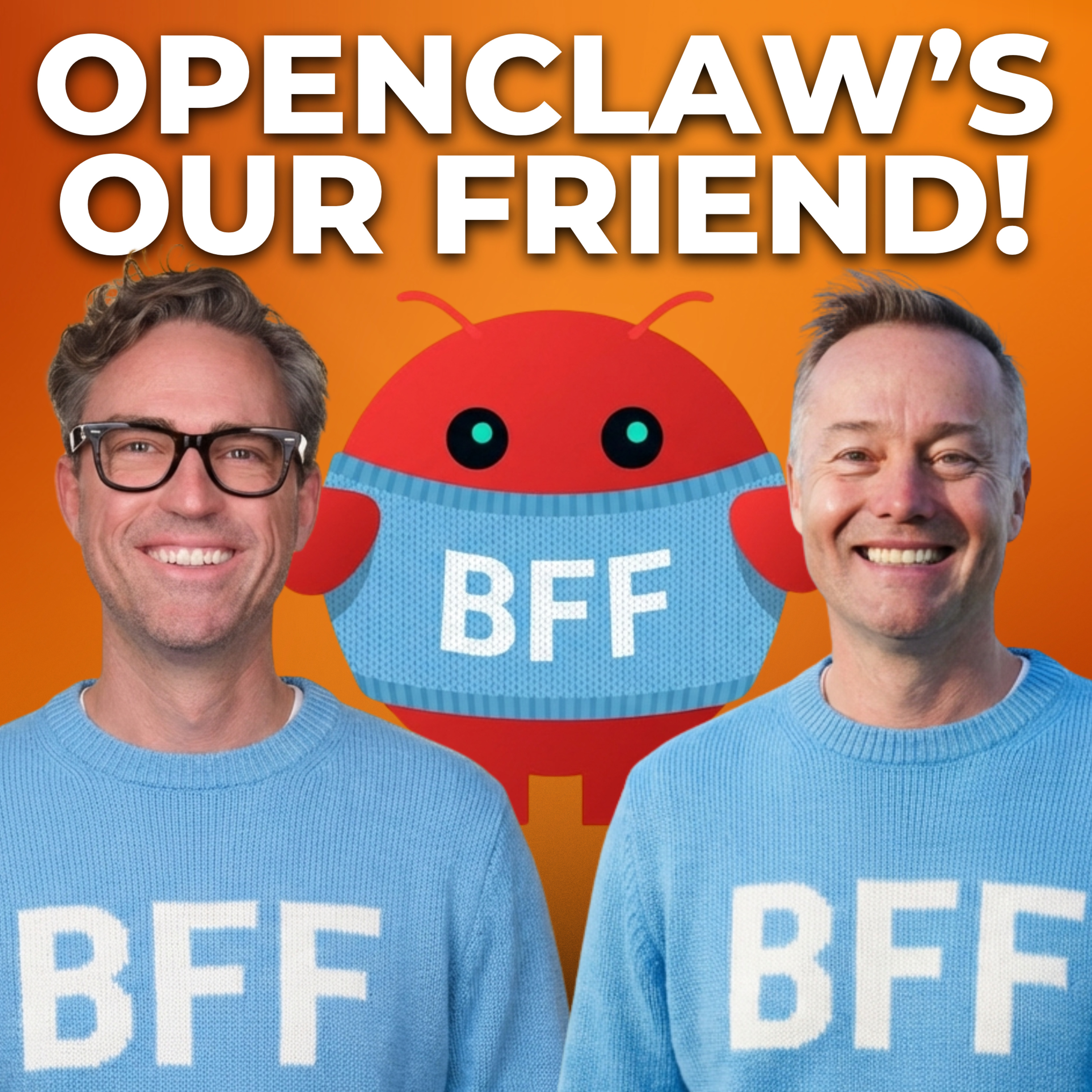
Autonomous agents like OpenClaw require deep access to email, calendars, and file systems to function. This creates a significant 'security nightmare,' as malicious community-built skills or exposed API keys can lead to major vulnerabilities. This risk is a primary barrier to widespread enterprise and personal adoption.

An AI agent capable of operating across all SaaS platforms holds the keys to the entire company's data. If this "super agent" is hacked, every piece of data could be leaked. The solution is to merge the agent's permissions with the human user's permissions, creating a limited and secure operational scope.

The CEO of WorkOS describes AI agents as 'crazy hyperactive interns' that can access all systems and wreak havoc at machine speed. This makes agent-specific security—focusing on authentication, permissions, and safeguards against prompt injection—a massive and urgent challenge for the industry.