Get your free personalized podcast brief
We scan new podcasts and send you the top 5 insights daily.
PGIM intentionally underweights popular sectors like software, not due to a negative view, but to maintain broad diversification. They believe the risk-reward in illiquid credit is punitive for concentration and focus on finding relative value across the economy, even in "boring" industries, rather than chasing overbought trends.

Related Insights
An LP's diversification strategy across different venture funds is undermined when every fund converges on a single theme like AI. This creates a highly correlated portfolio, concentrating systemic risk rather than spreading it. The traditional diversification benefits of investing across multiple managers, stages, and geographies are nullified.

New Mountain Capital holds a formal process every year to reassess its target sectors. This discipline leads them to abandon previously lucrative areas, like post-secondary education, when long-term headwinds emerge, ensuring capital is always deployed in areas with tailwinds.

A robust alternative investment portfolio isn't just about adding a new asset class. Goldman Sachs emphasizes a three-pronged diversification approach: across different strategies (buyout, venture), multiple managers (GPs), and different vintage years to smooth out market cycles.

While the market trends toward sector specialization, LPs should maintain a significant allocation to generalist VCs. These funds are uniquely positioned to invest in outlier founders and "weird" ideas that don't fit into a specific thesis, which are often the source of the greatest returns.

Unlike the public equity markets, software exposure in credit markets is concentrated in private, not public, companies. An estimated 80% of these issuers are private, and 50% are rated B- or lower, creating a unique and more challenging risk profile due to lower credit quality and less transparency.

David Kaiser reveals his model specifically limits exposure to financial stocks. Because financials frequently screen cheap on metrics like price-to-book, a pure value model can become dangerously over-concentrated in the sector. The limit is a pragmatic override to ensure diversification and avoid the unique, often hidden risks inherent in banks.

Private credit funds have taken massive market share by heavily lending to SaaS companies. This concentration, often 30-40% of public BDC portfolios, now poses a significant, underappreciated risk as AI threatens to disintermediate the cash flows of these legacy software businesses.
The AI's portfolio construction goes beyond simple asset diversification by intentionally balancing three distinct investment theses: a de-risked 'anchor' (Mist), an asymmetric 'moonshot' (SLS), and a valuation-driven 'rebound' (JSPR). This strategy diversifies risk across different potential paths to success.
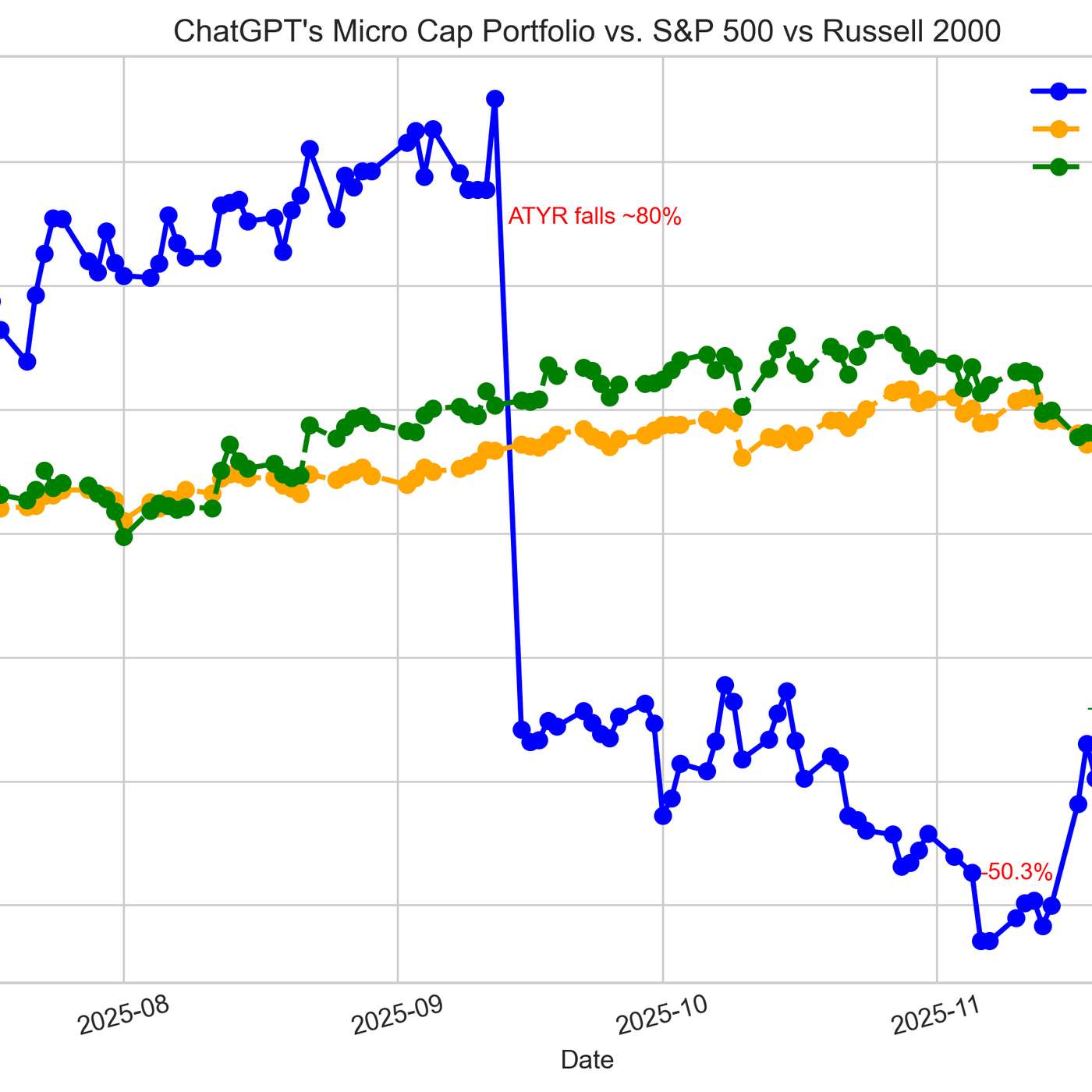
Investor Mark Ein argues against sector-specific focus, viewing his broad portfolio (prop tech, sports, etc.) as a key advantage. It enables him to transfer insights and best practices from one industry to another, uncovering opportunities that specialists might miss.

While S&P 500 returns rival private equity's, these gains are dangerously concentrated, with just 17 stocks driving 75% of the return in 2025. This makes PE, with its access to a broader set of private companies, an essential allocation for investors seeking to avoid overexposure to a few public market winners.
