Get your free personalized podcast brief
We scan new podcasts and send you the top 5 insights daily.
Mark Zuckerberg's primary innovation strategy has been acquiring and cloning, as seen with Instagram and WhatsApp. In a heightened regulatory environment where large acquisitions are blocked, his core playbook is neutralized, forcing him into the less proven territory of zero-to-one product development—a significant strategic challenge for Meta.

Related Insights
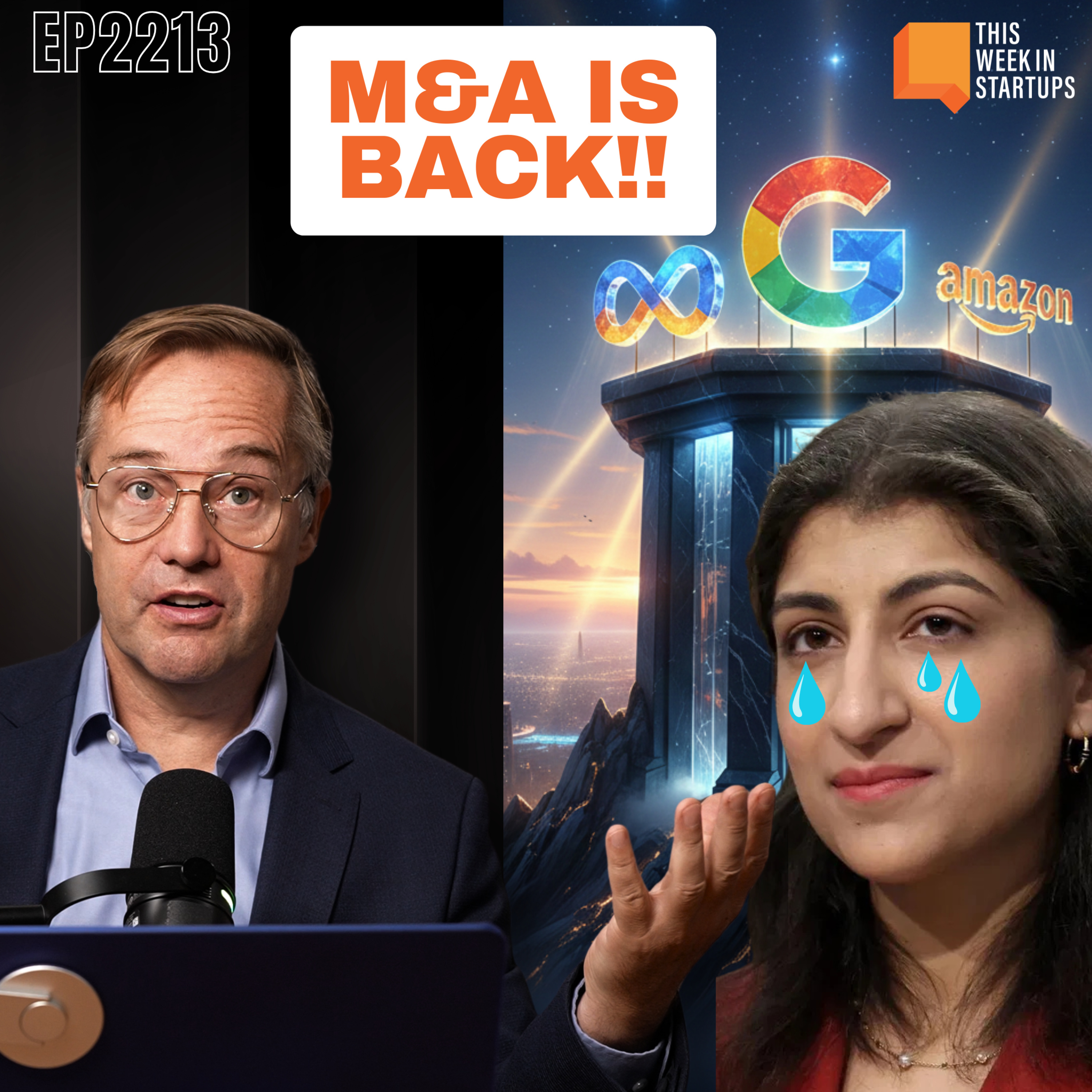
Recent antitrust lawsuits against Meta and Google resulted in minimal consequences ("nothing burgers"), signaling a more permissive regulatory environment. Combined with anticipated economic stimulus, this creates ideal conditions for a wave of large-scale M&A ($25B-$250B) among major tech companies in the coming year.
Platforms grew dominant by acquiring competitors, a direct result of failed antitrust enforcement. Cory Doctorow argues debates over intermediary liability (e.g., Section 230) are a distraction from the core issue: a decades-long drawdown of anti-monopoly law.

As traditional economic-based antitrust enforcement weakens, a new gatekeeper for M&A has emerged: political cronyism. A deal's approval may now hinge less on market concentration analysis and more on a political leader’s personal sentiment towards the acquiring CEO, fundamentally changing the risk calculus for corporate strategists.

Despite Meta's core business strength and Reels' massive success ($50B run rate), the stock is hampered by a lack of investor confidence in Mark Zuckerberg's long-term, costly metaverse strategy—a stark contrast to how investors eventually embraced Jeff Bezos's AWS bet.

The fastest path to generating immense wealth is shifting from pure innovation to achieving regulatory capture via proximity to the president. This strategy is designed to influence policy, secure government contracts, or even acquire state-seized assets like TikTok at a steep discount, representing a new form of crony capitalism.
Zuckerberg categorizes AI players by their AGI timeline predictions (optimist, moderate, pessimist), which dictates investment. He positions Meta's strong cash flow as a durable advantage to survive a potential bubble burst that would bankrupt unprofitable competitors like OpenAI.
A strategic rift has emerged at Meta. Long-time executives like Chris Cox want the new AI team to leverage Instagram and Facebook data to improve core ads and feeds. However, new AI leader Alexander Wang is pushing to prioritize building a frontier model to compete with OpenAI and Google first.

Meta benefits from a "do nothing, win" position in consumer-facing AI. The company can avoid costly R&D for new social features, knowing that any successful AI-driven application developed by a competitor can be quickly replicated and scaled across its massive user base, similar to how it handled Stories.
Meta's victory over the FTC's antitrust challenge is not just a legal footnote; it signals the end of a highly restrictive regulatory era. This will likely trigger a massive wave of M&A, as large tech companies are now emboldened to acquire stagnant, late-stage private "unicorns" that have been stuck without an exit path.

The FTC's failure to prove Meta held a monopoly set a powerful legal precedent, signaling that regulators face a high burden of proof. This has effectively given a green light to large-scale acquisitions, kicking off a "golden age of M&A" as companies feel emboldened to pursue mega-deals without fear of being blocked.
