Get your free personalized podcast brief
We scan new podcasts and send you the top 5 insights daily.
Custom Claude Mods run logic by spinning up a "forked agent" that inherits the main conversation's prompt cache. This makes auxiliary tasks like classifying a project's state extremely token-efficient, as most of the context is already processed.

Related Insights
By making quick, cheap judgments, Jev can route tasks to the appropriate model, select relevant skills from a library, or decide how much "reasoning effort" an LLM needs. This pre-processing step drastically reduces token consumption, cost, and latency for AI agents.

Counterintuitively, the goal of Claude's `.clodmd` files is not to load maximum data, but to create lean indexes. This guides the AI agent to load only the most relevant context for a query, preserving its limited "thinking room" and preventing overload.

The "Agent Skills" format was created by Anthropic to solve a key performance bottleneck. As capabilities were added, system prompts became too large, degrading speed and reliability. Skills use "progressive disclosure," loading only relevant information as needed, which preserves the context window for the task at hand.
Unlike ChatGPT's Custom GPTs which often "forget" past interactions, Claude's "Projects" feature builds a persistent memory. It learns from all previous threads within a project, layering that knowledge on top of initial instructions to improve its output over time.

To optimize costs, users configure powerful models like Claude Opus as the 'brain' to strategize and delegate execution tasks (e.g. coding) to cheaper, specialized models like ChatGPT's Codec, treating them as muscles.
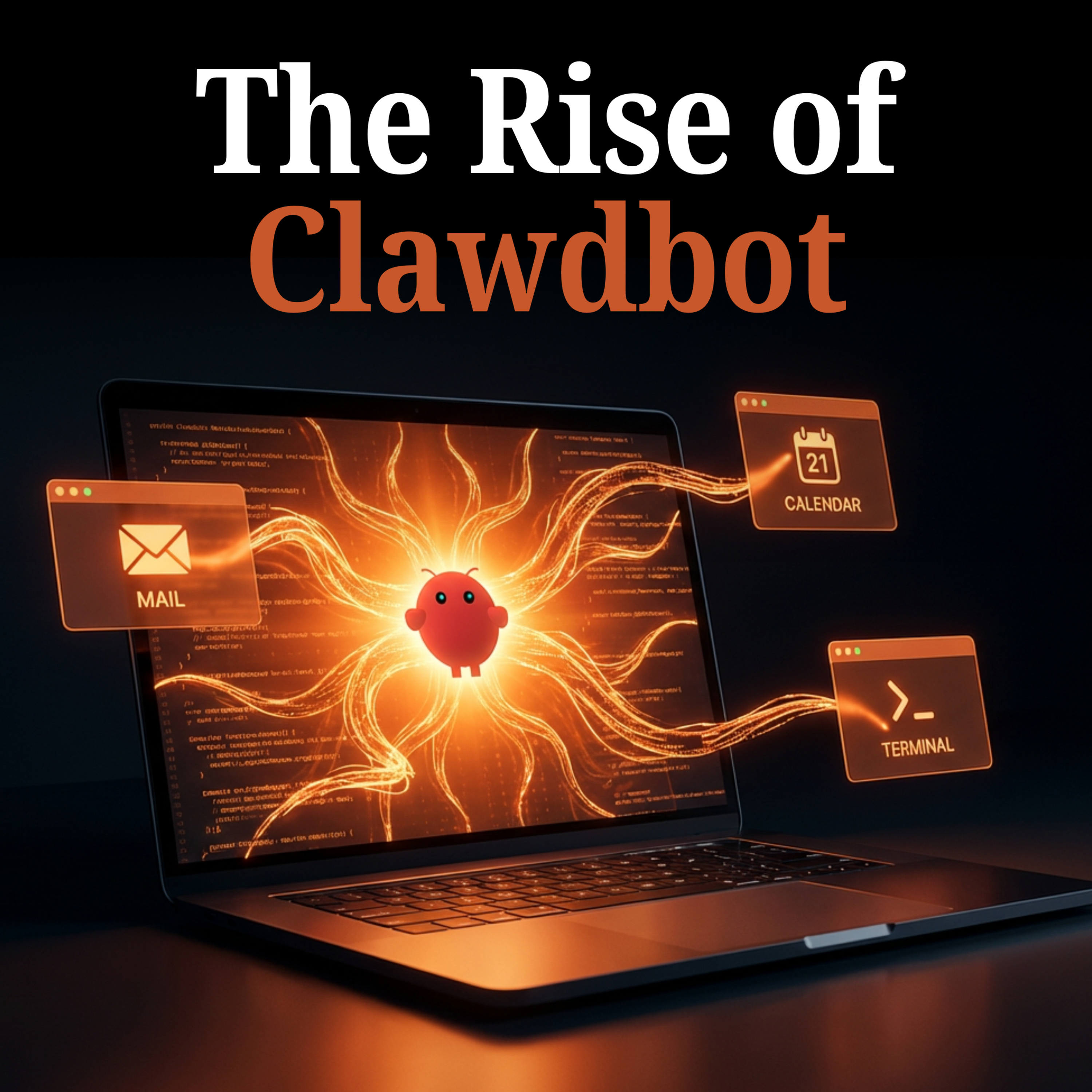
A hybrid approach to AI agent architecture is emerging. Use the most powerful, expensive cloud models like Claude for high-level reasoning and planning (the "CEO"). Then, delegate repetitive, high-volume execution tasks to cheaper, locally-run models (the "line workers").

Advanced agentic memory can act as a cache for LLM-generated answers. For similar queries, an agent can retrieve a cached response via vector search and validate it with a cheap evaluative LLM. This avoids expensive generative calls, combating “token maxing” and preventing inconsistent answers.
Instead of loading large context files on every turn, use "skills." The agent only sees a skill's name and description initially, loading the full instructions only when needed. This method, called progressive disclosure, drastically saves tokens and improves performance.

Separate your workflow into two steps. Use a less expensive model like ChatGPT for the conversational, clarification-heavy task of building the perfect prompt. Then, use the more powerful (and costly) Claude model specifically for the code-generation task to maximize its value and save tokens.

A single AI agent can run multiple "sub-bots" for different tasks. To optimize performance and cost, assign different underlying models to each. Use a powerful model like Claude Opus for complex tasks, and a cheaper model like Sonnet for routine functions.
