Get your free personalized podcast brief
We scan new podcasts and send you the top 5 insights daily.
The case of a patient named Elliott showed that removing the brain's emotional integration center rendered him incapable of making simple decisions, despite retaining a high IQ. This proves emotion is a necessary component for decision computation, not an obstacle to logic.
Related Insights
Cases like Phineas Gage, whose personality completely changed after a brain injury, demonstrate that altering the brain's physical structure fundamentally changes a person's identity. This proves that 'you' are your biology, not a separate entity controlling it.
Shopping decisions are often a battle between brain systems. The primal limbic system, governing emotion, reacts instantly to sensory cues like a sugary display. This happens long before the rational cerebral cortex can process thoughts like 'budget' or 'health,' explaining why willpower often fails against our own biology in the aisles.

Despite teaching at an institution that prizes intellect, Leslie John states that if she had to choose between Emotional Intelligence (EQ) and IQ, she would choose EQ "hands down." She attributes her own failed first marriage to a lack of emotional self-understanding, not a lack of intelligence.
Extremely high intelligence can be a double-edged sword. Very smart people are more prone to depression and often over-rely on their intellect, leading to underdeveloped emotional intelligence. This imbalance can ultimately be detrimental to their overall success and well-being.
Emotions are not superfluous but are a critical, hardcoded value function shaped by evolution. The example of a patient losing emotional capacity and becoming unable to make decisions highlights this. This suggests our 'gut feelings' are a robust system for guiding actions, a mechanism current AI lacks.

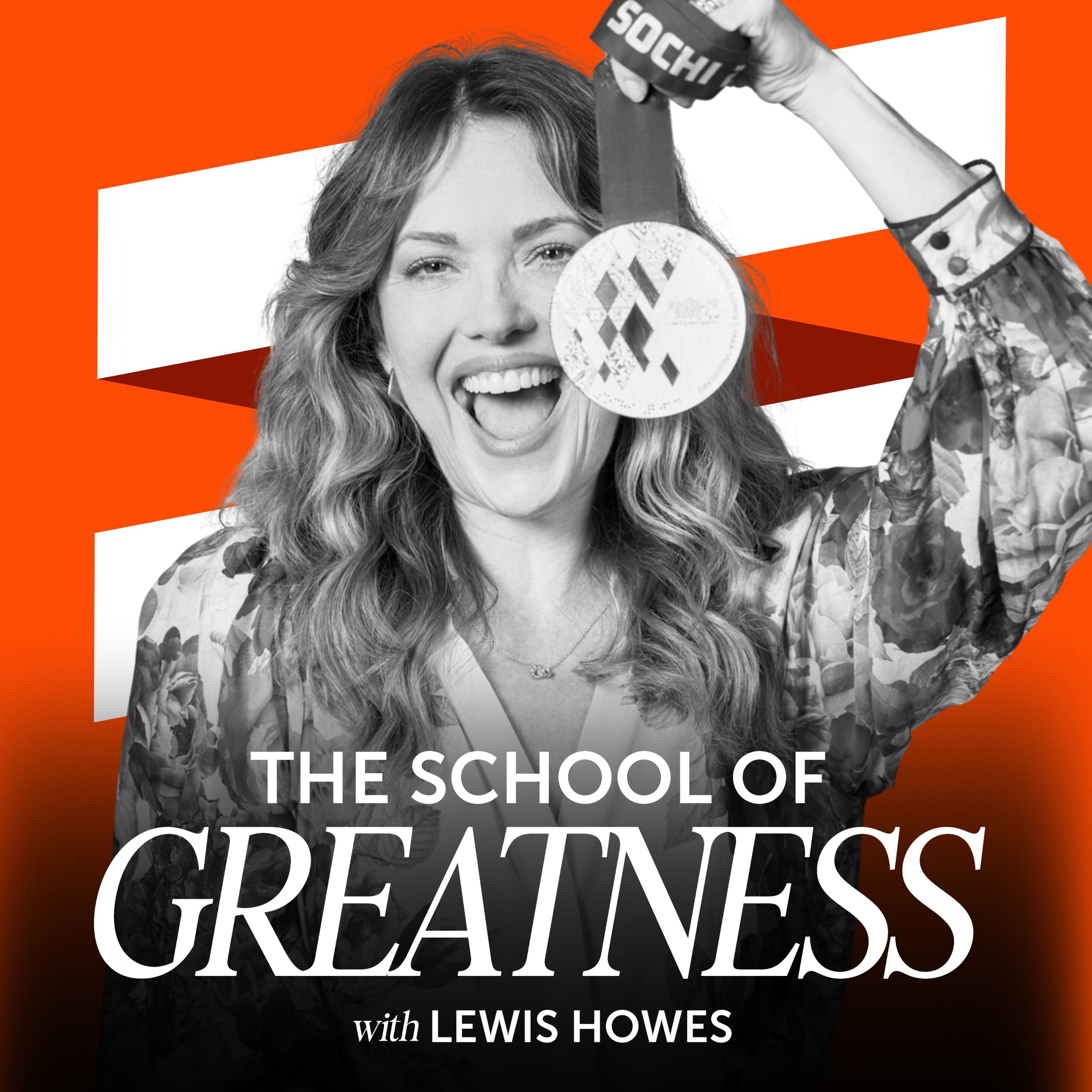
Paralympian Amy Purdy recalls that when doctors said they had to amputate her legs, she didn't cry. Her mind shifted into a pure survival mode, cutting out emotion to rationally accept the necessary action to live.
Evolution designed emotions to help you move forward and make decisions, not to accurately perceive the world. Relying on them for truth leads to poor long-term outcomes. Your feelings don't have inherent "validity"; they are biological reactions.

Dr. Anderson defines emotions as internal states that change the brain's input-output transformation. This perspective shifts the focus from subjective feelings (the "tip of the iceberg") to the underlying neurobiological processes that control behavior, making them more scientifically tractable.

Emotions act as a robust, evolutionarily-programmed value function guiding human decision-making. The absence of this function, as seen in brain damage cases, leads to a breakdown in practical agency. This suggests a similar mechanism may be crucial for creating effective and stable AI agents.

AI, lacking an emotional system, cannot truly make decisions or have "taste." Referencing neuroscience, the host argues that humans decide with emotion, not logic, making this our unique and vital contribution in any human-AI partnership.
