Get your free personalized podcast brief
We scan new podcasts and send you the top 5 insights daily.
According to Ondos CEO Eric Brock, the defense technology industry has reached a maturity point. The primary challenge is no longer building a single drone or robot, but integrating these various autonomous platforms into a cohesive, interoperable "system of systems" that combines air and ground capabilities.

Related Insights
As drone hardware becomes commoditized, the key strategic value is shifting to software. Companies creating hardware-agnostic 'middleware' platforms to orchestrate diverse drone fleets, manage data, and enable swarming are becoming more critical than the drone manufacturers themselves.

Identifying the defense industrial base as "rotted out," Mock Industries is taking a bottom-up approach. Instead of just building platforms, it vertically integrates to produce high-performance subsystems (radars, engines) and sells them to other primes, aiming to fix the entire ecosystem.
While first-wave defense tech leaders like Anduril pursue a vertically integrated "Apple" model (hardware and software), a new approach is emerging. Companies like Auterion are building a common, open operating system for drones from various manufacturers. This "Android for drones" strategy focuses on creating a wide, interoperable ecosystem rather than a closed, proprietary one.

The era of large prime contractors owning an entire system is ending. The companies that will win are those who are highly interoperable, collaborate with other vendors, and integrate best-of-breed capabilities with a low-ego approach, focusing on delivering a mission capability rather than a standalone widget.

The Pentagon is moving away from decades-long, multi-billion dollar projects like aircraft carriers. The new focus is on mass-produced, attributable, low-cost systems like drones, which allows for faster innovation and deployment from new defense tech startups, not just the old primes.

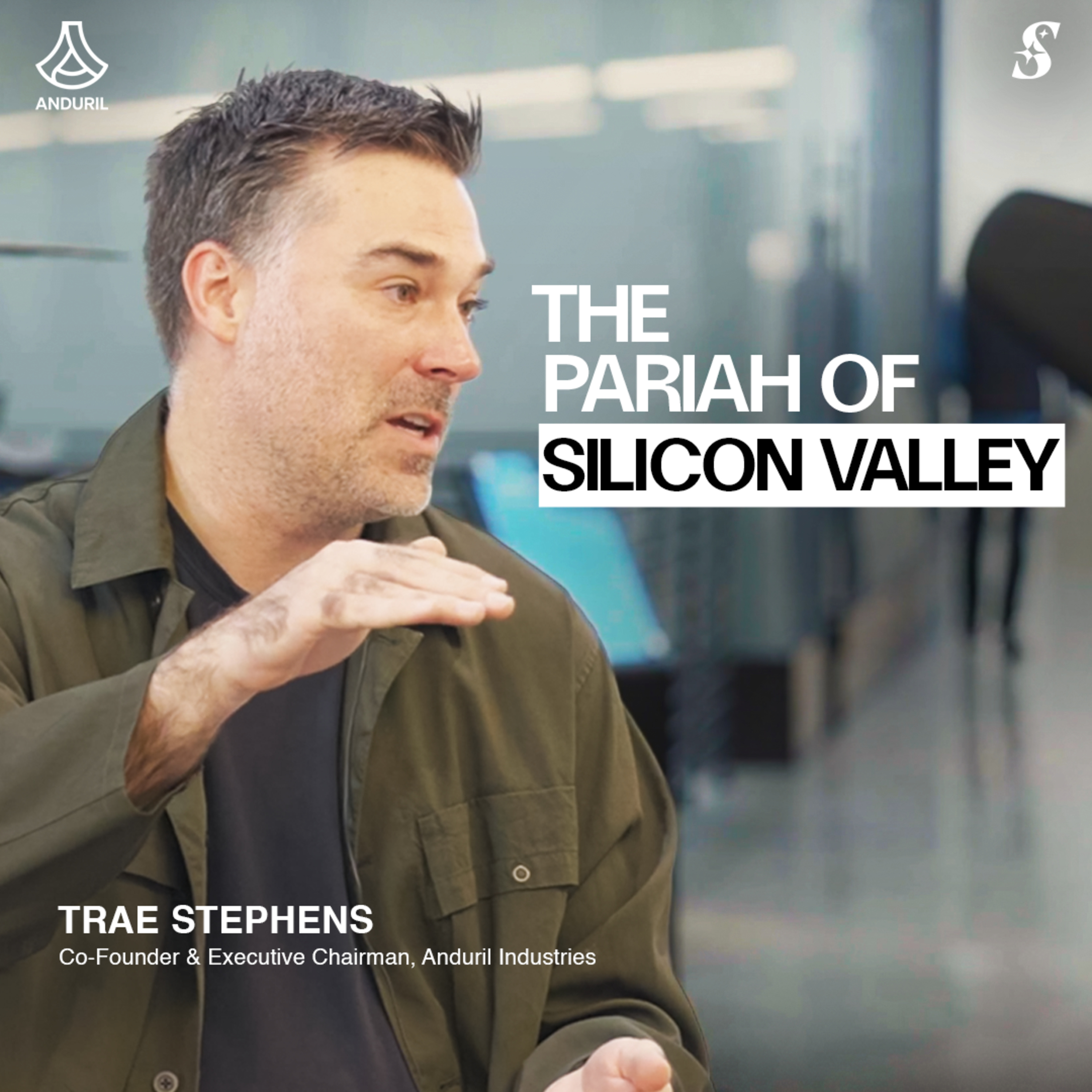
Despite building large physical systems like drones, Anduril's co-founder states their core competency and original vision is software. They are a "software-defined and hardware-enabled" company, which fundamentally differentiates their approach from traditional defense contractors who are the opposite.
Defense tech firm Smack Technologies clarifies the objective is not to remove humans entirely. Instead, AI should handle low-value tasks to free up personnel for critical, high-value decisions. This framework, 'intelligent autonomy,' orchestrates manned and unmanned systems while keeping humans in the loop.
Silicon Valley investors are backing companies building cheap, quickly manufacturable, and expendable ("attritable") systems like autonomous boats. The core innovation is the ability to rapidly scale production from one to 10,000 units, fundamentally changing warfighting economics away from expensive, long-cycle platforms like aircraft carriers.

Unlike consumer or enterprise software, the defense industry has a single major customer per country. This structure favors consolidation. The path to success is not to be a niche SaaS tool but to build a platform that becomes a "national champion," deeply integrated with the nation's defense strategy.

The rise of drones is more than an incremental improvement; it's a paradigm shift. Warfare is moving from human-manned systems where lives are always at risk to autonomous ones where mission success hinges on technological reliability. This changes cost-benefit analyses and reduces direct human exposure in conflict.
