Get your free personalized podcast brief
We scan new podcasts and send you the top 5 insights daily.
Focusing solely on AI for efficiency misses its most transformative potential. The real value comes from AI's ability to generate novel insights that expand human perspective. This allows organizations to develop the ambition and credibility to solve problems that were once considered impossible.

Related Insights
The primary effect of AI isn't just making existing tasks more efficient; it's dramatically expanding the scope of what is considered possible. CEOs aren't aiming for a more efficient version of their current company, but a vastly larger one. The new bottleneck for growth is a lack of ambition and imagination.

The true power of AI lies beyond optimizing existing workflows. The key skill is shifting from asking 'How can AI help my job?' to 'What can we do now that was previously impossible or uneconomic?' This reframes AI as a tool for radical innovation, not just incremental efficiency.

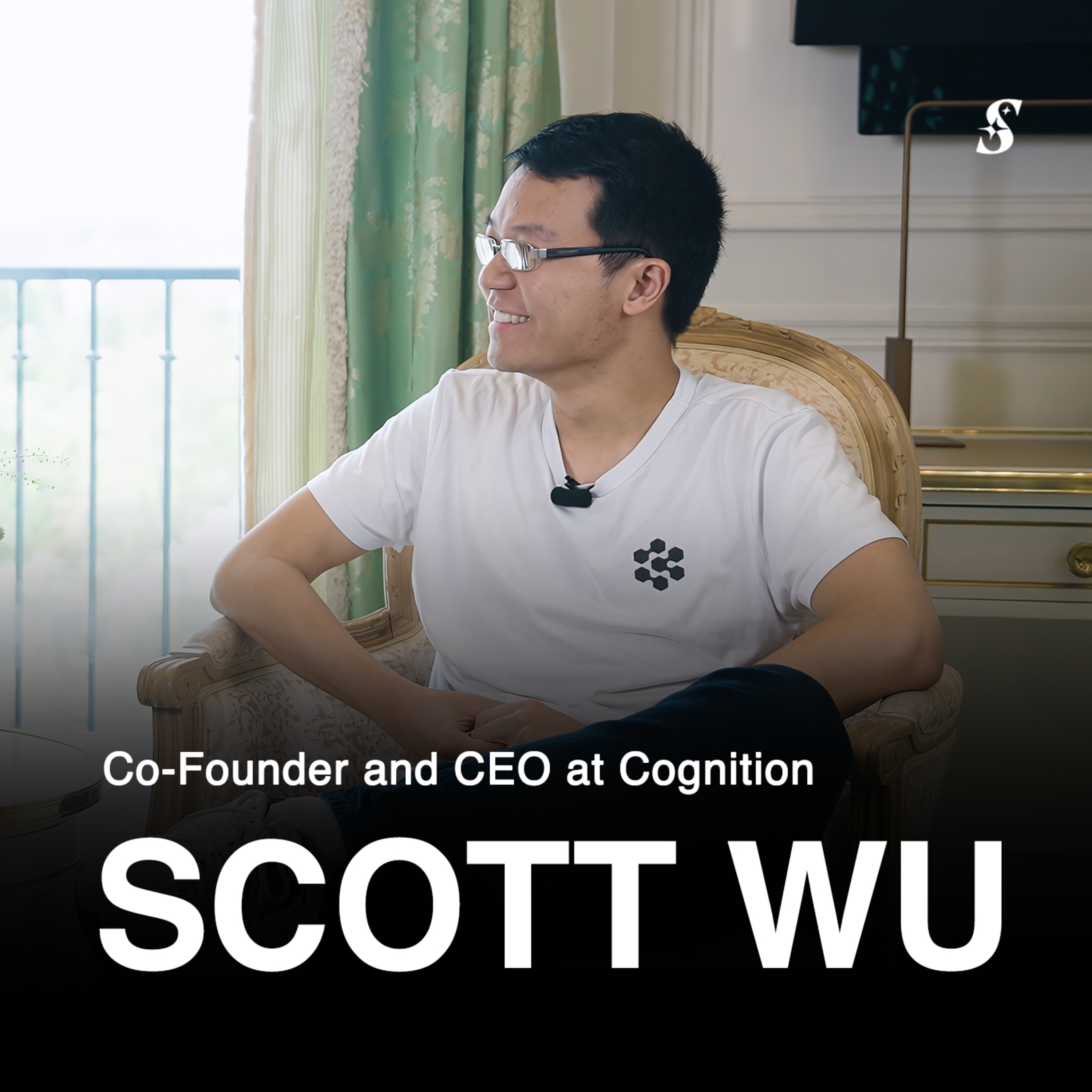
Scott Wu argues that focusing on AI's ability to make existing work more efficient misses the point. The real transformation comes from creating new capacity—enabling the development of things previously impossible, like "single-use software" or "self-driving software," fundamentally changing what businesses can build.
The biggest opportunity with AI isn't simply generating content or saving time on minor tasks. It is using AI as a sophisticated thought partner to challenge assumptions, surface non-obvious solutions, and ultimately raise the quality of your own strategic thinking.

Businesses are fixated on using AI for productivity and cost-cutting, a path that leads to a "race to the bottom." Its real value lies in democratizing creativity and creating new opportunities for growth that were previously inaccessible.

A common but flawed reaction to AI-driven efficiency is to ask 'how many fewer people do we need?' The more powerful question is 'how much more can we build now?' AI unlocks the potential for teams to tackle previously impossible goals, making it a time to accelerate.

The most significant value from AI is not in automating existing tasks, but in performing work that was previously too costly or complex for an organization to attempt. This creates entirely new capabilities, like analyzing every single purchase order for hidden patterns, thereby unlocking new enterprise value.

Initial AI productivity gains (e.g., turning a 2-day task into 10 minutes) are just the start. The true, transformative value emerges when business experts, newly empowered by AI thinking, use that saved time to pursue entirely new, previously impossible work, fundamentally changing business outcomes.
Most companies use AI for automation, making existing processes faster. The real breakthrough comes from a 'reconception mindset,' which uses AI’s scalable intelligence to ask and answer entirely new questions. This approach fundamentally changes how work is done and creates order-of-magnitude improvements.

While AI provides operational efficiency, its most profound value lies in enabling tasks that were previously impossible due to scale, like instantly rewriting 10 million pages of web content after a terminology change. This capability transcends traditional ROI calculations.