Get your free personalized podcast brief
We scan new podcasts and send you the top 5 insights daily.
While AI makes prototyping easy, it's not always the right first step. A prototype can create a "primal mark" that biases the team towards a specific execution. For clarifying a vague problem space, a document may be better to avoid anchoring to a visual solution too early.

Related Insights
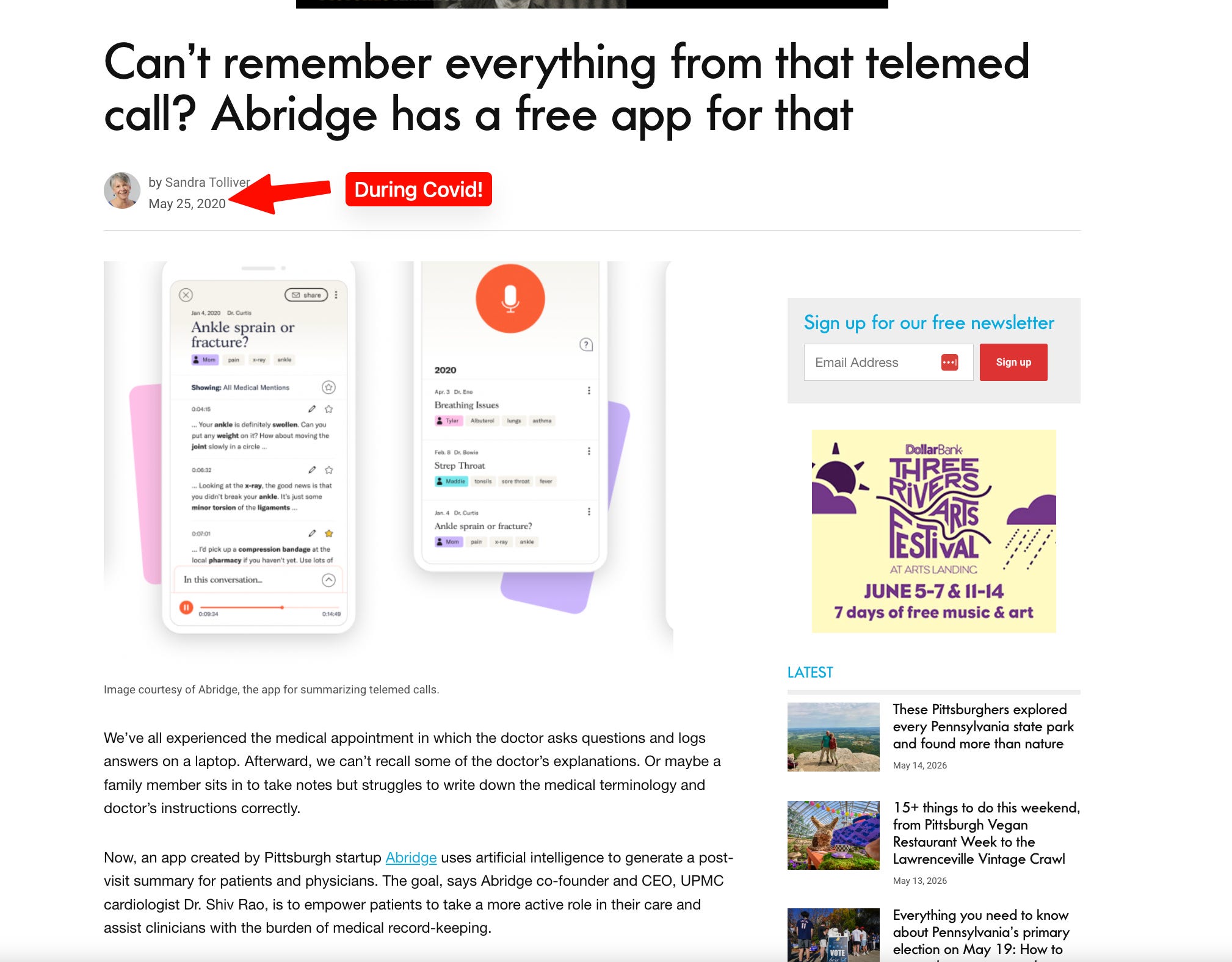
Countering the popular "prototype-first" mantra, Abridge finds that in its complex, high-stakes environment, written documents (PRDs) are essential. They force strategic clarity on a product's defensibility and implementation complexity—questions a simple prototype cannot answer, preventing wasted cycles on "cool" but unviable ideas.
In an age of rapid AI prototyping, it's easy to jump to solutions without deeply understanding the problem. The act of writing a spec forces product managers to clarify their thinking and structure context. Writing is how PMs "refactor their thoughts" and avoid overfitting to a partially-baked solution.

The goal isn't to build one perfect prototype quickly. The real strategic advantage of AI tools is the ability to generate three or four distinct variations of a feature in a short time. This allows teams to explore a wider solution space and make better decisions after hands-on testing.

A key criticism of AI prototyping is that it encourages teams to immediately build solutions without sufficient problem-space research. PMs must consciously complete user research and define the problem, user story, and rough feature shape before using these powerful solutioning tools.
While AI can accelerate prototyping, Linear's CEO deliberately uses a manual, slower design process for initial exploration. The friction of drawing things manually forces self-reflection and a deeper understanding of the problem, a benefit that can be lost when optimizing purely for speed.

When a non-designer provides a polished mockup, designers often feel constrained to only refine it. Presenting intentionally rough sketches signals you're communicating an idea's intent, not a proposed execution, freeing designers to reimagine the solution and collaborate more creatively.

Without a strong foundation in customer problem definition, AI tools simply accelerate bad practices. Teams that habitually jump to solutions without a clear "why" will find themselves building rudderless products at an even faster pace. AI makes foundational product discipline more critical, not less.

Contrary to the 'prototype is the new PRD' trend, early prototypes can prematurely focus feedback on visual details. A written document is a more effective tool for getting buy-in on the core idea and strategy from stakeholders before investing in high-fidelity design.
When designing ambiguous systems, resist creating visual mockups immediately. First, establish alignment on the fundamental concepts or "primitives." At Paradigm, this meant defining the core objects of a 'workflow' to ensure the team shared a mental model before exploring any UI.

AI prototyping tools have broken the traditional link between visual fidelity and process maturity. Designers can now create highly realistic, functional prototypes on day one. This makes it challenging to signal to stakeholders that a concept is still early and exploratory, leading to feedback on pixels instead of strategy.