Get your free personalized podcast brief
We scan new podcasts and send you the top 5 insights daily.
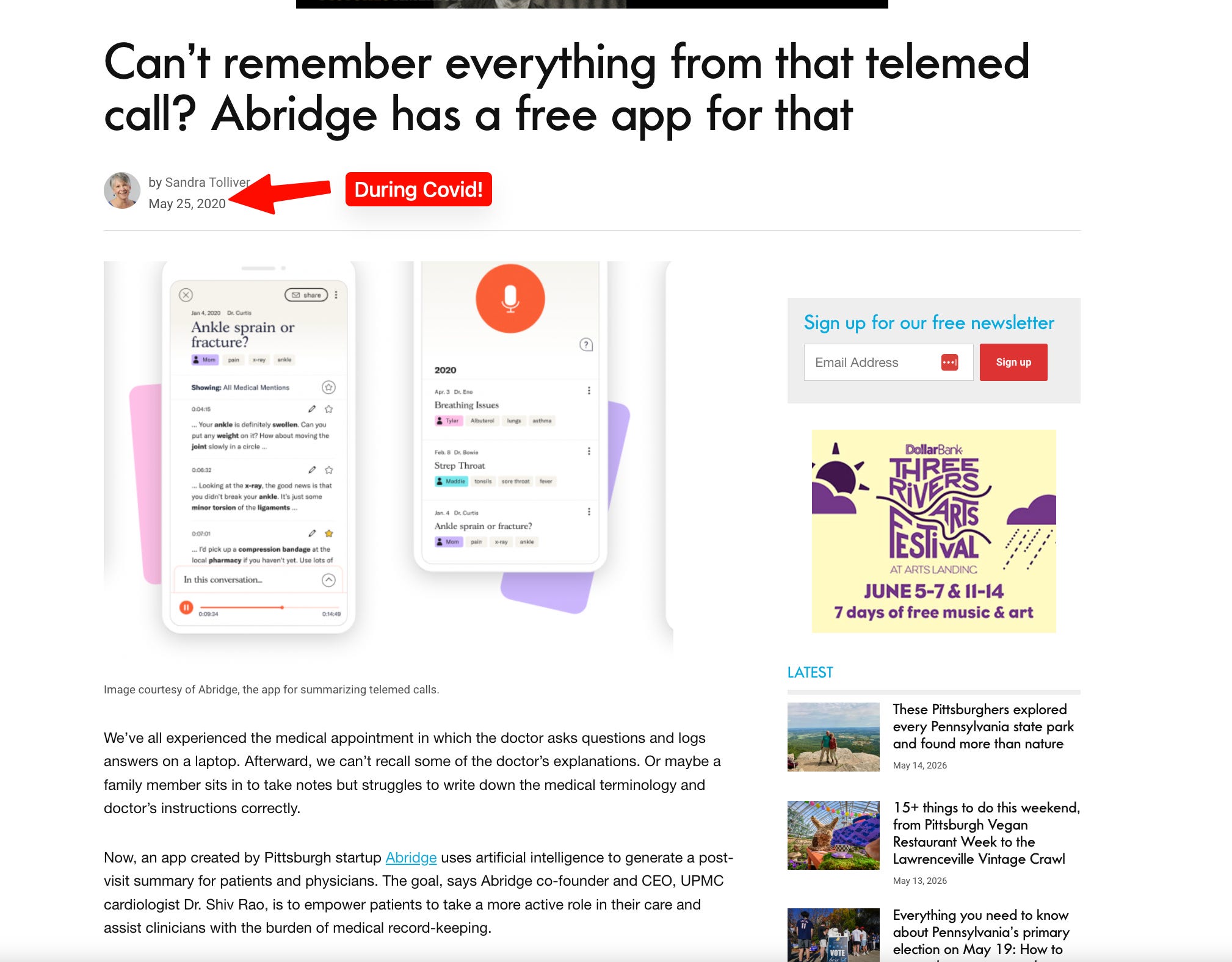
Countering the popular "prototype-first" mantra, Abridge finds that in its complex, high-stakes environment, written documents (PRDs) are essential. They force strategic clarity on a product's defensibility and implementation complexity—questions a simple prototype cannot answer, preventing wasted cycles on "cool" but unviable ideas.
Related Insights
To get superior results from AI coding agents, treat them like human developers by providing a detailed plan. Creating a Product Requirements Document (PRD) upfront leads to a more focused and accurate MVP, saving significant time on debugging and revisions later on.

An AI prototype is a powerful artifact that details user experience and functional requirements. However, it doesn't replace the Product Requirements Document (PRD). The PRD remains essential for outlining the strategic "why"—market differentiation, user acquisition, and monetization—which a prototype cannot convey.
AI prototyping doesn't replace the PRD; it transforms its purpose. Instead of being a static document, the PRD's rich context and user stories become the ideal 'master prompt' to feed into an AI tool, ensuring the initial design is grounded in strategic requirements.
In an age of rapid AI prototyping, it's easy to jump to solutions without deeply understanding the problem. The act of writing a spec forces product managers to clarify their thinking and structure context. Writing is how PMs "refactor their thoughts" and avoid overfitting to a partially-baked solution.

The high-fidelity AI prototype is becoming the primary document for communicating user experience. The Product Requirements Document (PRD) is evolving to focus on edge cases and provide structured context that can be fed back into the AI for future iterations.

The Product Requirements Document (PRD) isn't obsolete, but its position in the workflow has become flexible. A team might build and test a prototype first to validate a solution, then write the PRD to formalize the strategy, goals, and metrics behind it.

Even for a simple personal project, starting with a Product Requirements Document (PRD) dramatically improves the output from AI code generation tools. Taking a few minutes to outline goals and features provides the necessary context for the AI to produce more accurate and relevant code, saving time on rework.

The quality of AI-generated products depends on the input, not 'one-shot' magic. Effective use requires detailed specifications and context—essentially a modern, well-structured Product Requirements Document (PRD)—to guide the AI and minimize random, low-quality guesses.
Product Requirement Documents (PRDs) are often written and then ignored. AI-generated prototypes change this dynamic by serving as powerful internal communication tools. Putting an interactive model in front of engineering and design teams sparks better, more tangible conversations and ideas than a flat document ever could.

Contrary to the 'prototype is the new PRD' trend, early prototypes can prematurely focus feedback on visual details. A written document is a more effective tool for getting buy-in on the core idea and strategy from stakeholders before investing in high-fidelity design.
