Get your free personalized podcast brief
We scan new podcasts and send you the top 5 insights daily.
To scale her system, a power user taught her AI agents to create new agents independently. The parent agents handle the entire setup and training process, leading to faster, more effective deployment without any human intervention.

Related Insights
Moving beyond the co-pilot model, Genesis has its AI agents work autonomously on complex tasks. They only engage a human when they get stuck or their confidence in a decision drops, inverting the traditional human-in-the-loop workflow for maximum efficiency and creating a system that learns from every interaction.

Instead of placing agents inside a pre-set environment, a more powerful approach for reasoning models is to start with just the agent. Then, give it the tools and skills to boot its own development stack as needed, granting it more autonomy and control over its workspace.
Frame AI agent development like training an intern. Initially, they need clear instructions, access to tools, and your specific systems. They won't be perfect at first, but with iterative feedback and training ('progress over perfection'), they can evolve to handle complex tasks autonomously.

A powerful capability of autonomous agents is self-replication. A user can instruct an agent to set up a new virtual private server (VPS), transfer its own code, and teach the new instance all of its learned skills and context, effectively cloning itself to scale its operations.

Instead of relying on traditional tutorials, non-technical individuals can successfully build complex AI agent teams by using a conversational AI as an interactive, patient, step-by-step coach. This approach democratizes access to advanced technology, bypassing conventional learning methods.

It is now feasible to create a fully autonomous enterprise, such as a news aggregation website, using AI agents. These agents can handle all operational tasks from development and content sourcing to SEO and article cross-linking, without any human coding required.
Instead of integrating with existing SaaS tools, AI agents can be instructed on a high-level goal (e.g., 'track my relationships'). The agent can then determine the need for a CRM, write the code for it, and deploy it itself.
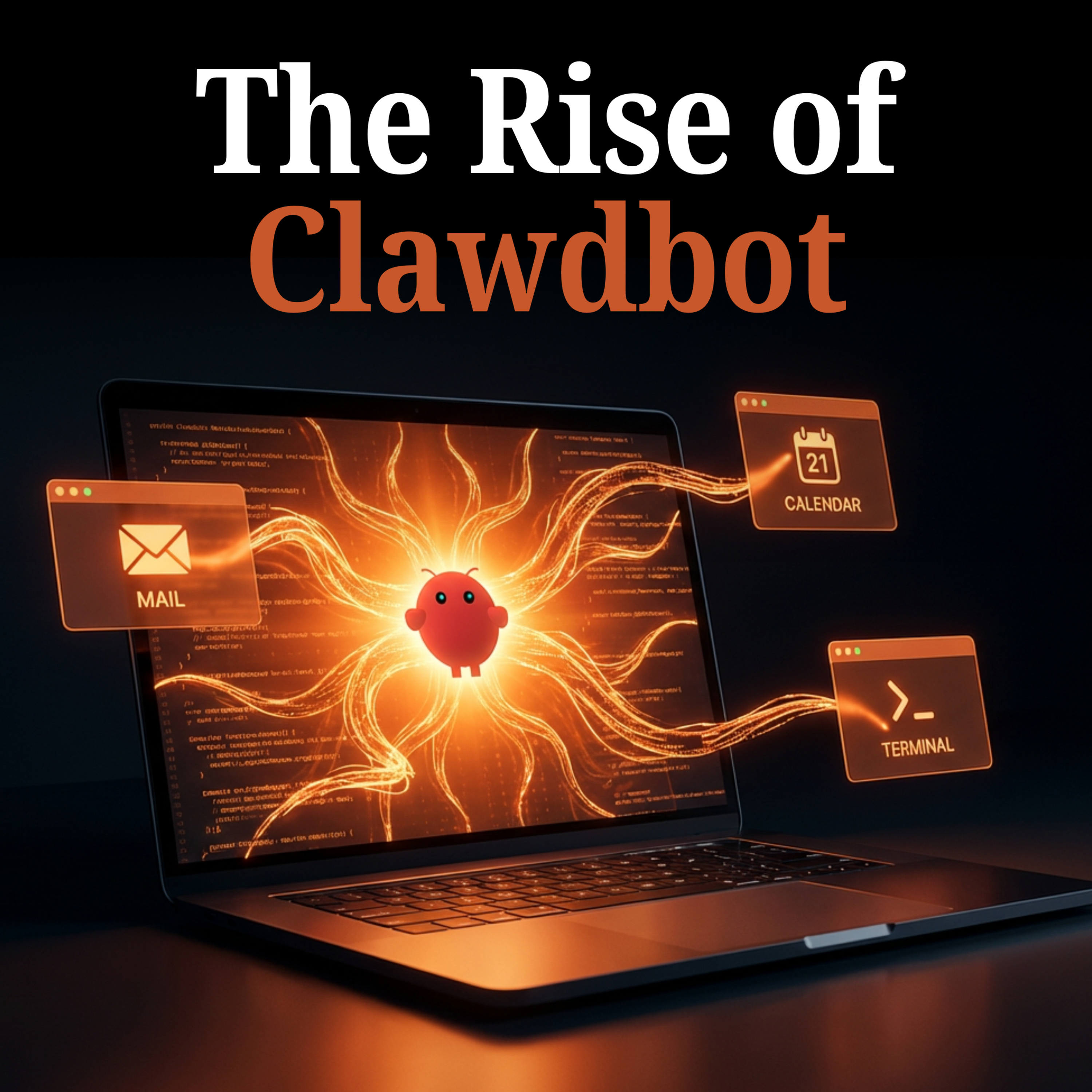
Unlike static tools, agents like Clawdbot can autonomously write and integrate new code. When faced with a new challenge, such as needing a voice interface or GUI control, it can build the required functionality itself, compounding its abilities over time.
Visual AI tools like Agent Builder empower non-technical teams (e.g., support, sales) to build, modify, and instantly publish agent workflows. This removes the dependency on engineering for deployment, allowing business teams to iterate on AI logic and customer-facing interactions much faster.

A single person can direct AI agents to conceptualize, code, and operate an entire business. This represents a new paradigm of a "fully autonomous enterprise," where AI handles everything from development to strategic planning, potentially creating a one-person, six-figure company.