Get your free personalized podcast brief
We scan new podcasts and send you the top 5 insights daily.
Hinge dedicates a massive portion of its resources—one-third of its total headcount—to trust and safety. This team, which falls under the CPTO, uses AI to proactively identify and remove bad actors, underscoring that user safety is a core pillar of the product, not just a cost center.

Related Insights
A company's biggest security threat isn't a hacker scanning for open ports, but a compromised internal account or a malicious insider. This shifts the security focus to rigorous hiring practices, including background checks and reference calls, to prevent bad actors from gaining access from within.

To maintain a reliable and safe environment for millions of users, marketplace Whatnot dedicates a massive 40% of its entire staff to trust and safety. This significant investment reflects their view that trust is not a feature but a foundational pillar of the business, essential for both buyer and seller confidence.

At massive scale, the product focus must shift from delight to trust. At LinkedIn, any change directly impacts users' economic opportunities, making risk mitigation the first principle. This contrasts with smaller products where prioritizing user delight and rapid innovation is more feasible.

Unlike past tech waves where security was a trade-off against speed, with AI it's the foundation of adoption. If users don't trust an AI system to be safe and secure, they won't use it, rendering it unproductive by default. Therefore, trust enables productivity.

In response to emerging security threats, OpenAI declared an internal 'code red,' halting projects for a quarter of its production engineering team. They were redeployed to use OpenAI's own models to find and fix critical vulnerabilities in their systems, demonstrating an extreme commitment to defense.
Initially driven by their mission, Anthropic's investments in safety, interpretability, and alignment have become a commercial asset. For enterprises running their most sensitive workloads on AI, this demonstrated commitment to responsible development builds the trust necessary to win large deals.
![Krishna Rao - Anthropic's CFO on Compute, Scaling to $30B ARR, and the Returns to Frontier Intelligence - [Invest Like the Best, EP.471] thumbnail](https://megaphone.imgix.net/podcasts/fdfca472-4e43-11f1-bf1a-cf5adcc9aeb5/image/b1ed0c54d8c57aae09fe68adc7d1fb32.jpg?ixlib=rails-4.3.1&max-w=3000&max-h=3000&fit=crop&auto=format,compress)
Anthropic's commitment to AI safety, exemplified by its Societal Impacts team, isn't just about ethics. It's a calculated business move to attract high-value enterprise, government, and academic clients who prioritize responsibility and predictability over potentially reckless technology.
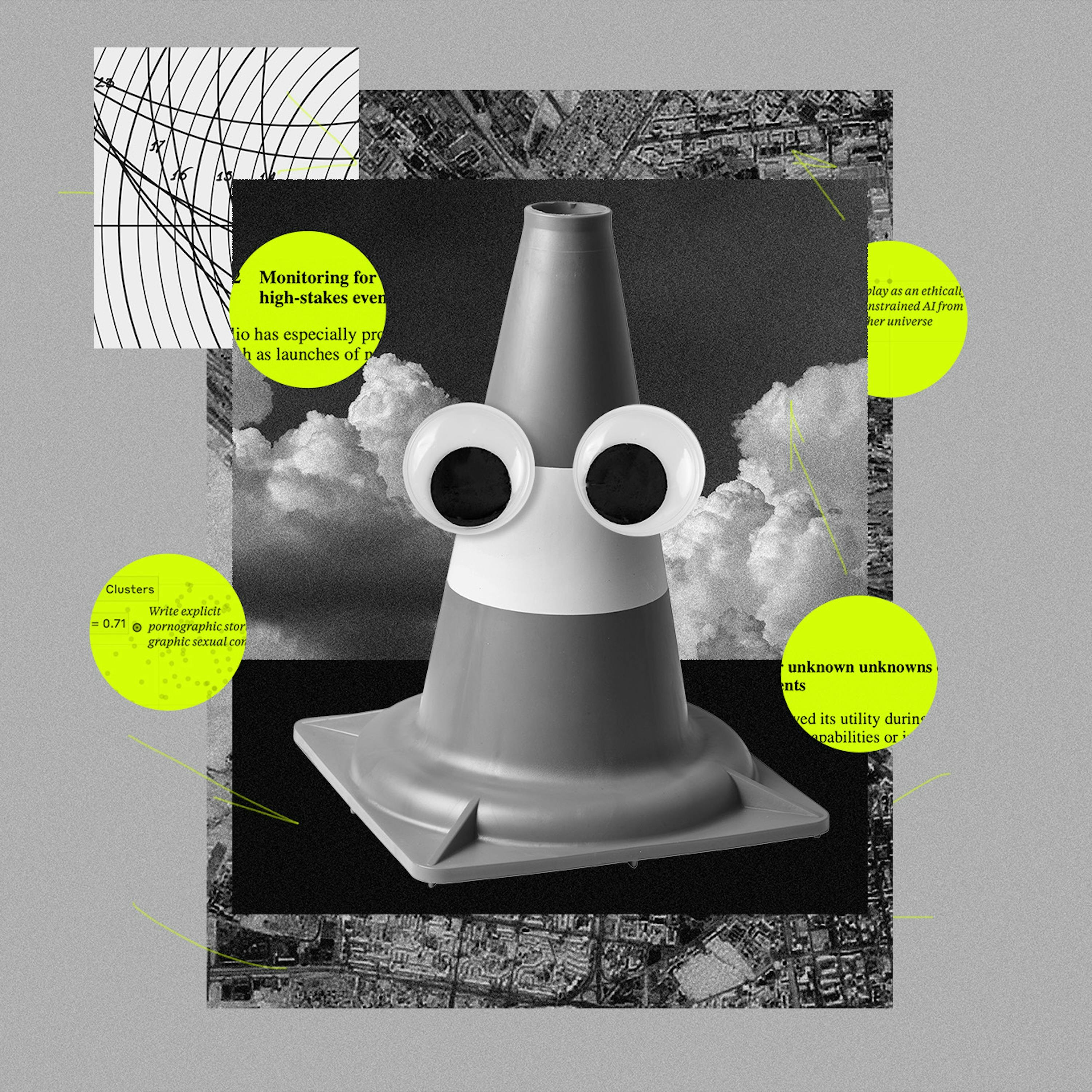
The company's strategy for managing threats from malicious AI agents is to use AI for defense. They are building the capacity to scan everything happening on the platform in real-time, believing that monitoring AI can be just as powerful as generative AI.
The decision to invest in formal security measures like anti-phishing training should be based on team size and industry risk, not revenue milestones. The attack surface grows with each new employee, making a headcount of 15-20 a practical trigger point to implement such policies.

Synthesia views robust AI governance not as a cost but as a business accelerator. Early investments in security and privacy build the trust necessary to sell into large enterprises like the Fortune 500, who prioritize brand safety and risk mitigation over speed.