Get your free personalized podcast brief
We scan new podcasts and send you the top 5 insights daily.
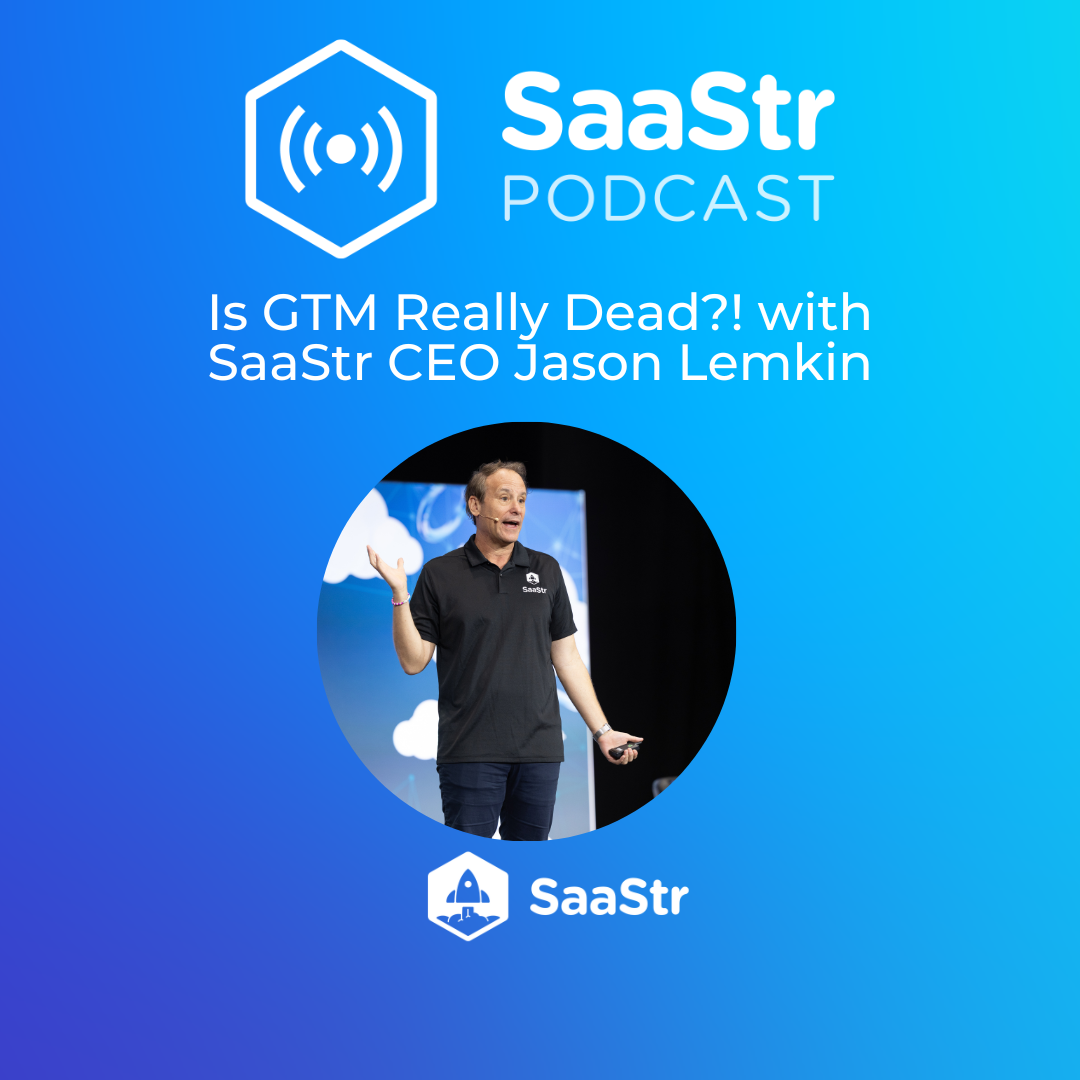
The business case for AI isn't always about revenue or cost-savings. For SaaStr, the primary driver was solving employee burnout and churn in repetitive roles like SDR and content review. AI can provide operational consistency when people no longer want to do the work.
Related Insights
Despite proven cost efficiencies from deploying fine-tuned AI models, companies report the primary barrier to adoption is human, not technical. The core challenge is overcoming employee inertia and successfully integrating new tools into existing workflows—a classic change management problem.

Business owners should view AI not as a tool for replacement, but for multiplication. Instead of trying to force AI to replace core human functions, they should use it to make existing processes more efficient and to complement human capabilities. This reframes AI from a threat into a powerful efficiency lever.

The true ROI of AI lies in reallocating the time and resources saved from automation towards accelerating growth and innovation. Instead of simply cutting staff, companies should use the efficiency gains to pursue new initiatives that increase demand for their products or services.
To overcome employee fear of AI, don't provide a general-purpose tool. Instead, identify the tasks your team dislikes most—like writing performance reviews—and demonstrate a specific AI workflow to solve that pain point. This approach frames AI as a helpful assistant rather than a replacement.
When employees are 'too busy' to learn AI, don't just schedule more training. Instead, identify their most time-consuming task and build a specific AI tool (like a custom GPT) to solve it. This proves AI's value by giving them back time, creating the bandwidth and motivation needed for deeper learning.
Coastline Academy frames AI's value around productivity gains, not just expense reduction. Their small engineering team increased output by 80% in one year without new hires by using AI as an augmentation tool. This approach focuses on scaling capabilities rather than simply shrinking teams.
Instead of abstract productivity metrics, define your AI goal in terms of concrete headcount avoidance. Sensei's objective is to achieve the output of a 700-person company with half the staff by using AI to bridge the gap. This makes the ROI tangible and aligns AI investment with scalable, capital-efficient growth.

To achieve employee buy-in for AI, position it as a tool that eliminates mundane tasks no one would put on a resume, like processing Salesforce cases. This frames AI as a career accelerator that frees up time for strategic, high-impact work, rather than as a job replacement.

Adopt a 'more intelligent, more human' framework. For every process made more intelligent through AI automation, strategically reinvest the freed-up human capacity into higher-touch, more personalized customer activities. This creates a balanced system that enhances both efficiency and relationships.
To gain organizational buy-in for AI, start by asking teams to document their most draining, repetitive daily tasks. Building agents to eliminate these specific pain points creates immediate value, generates enthusiasm, and builds internal champions for broader strategic initiatives, making it an approachable path to adoption.